Abdominal Pain: Causes, Symptoms, Diagnosis, and Treatment
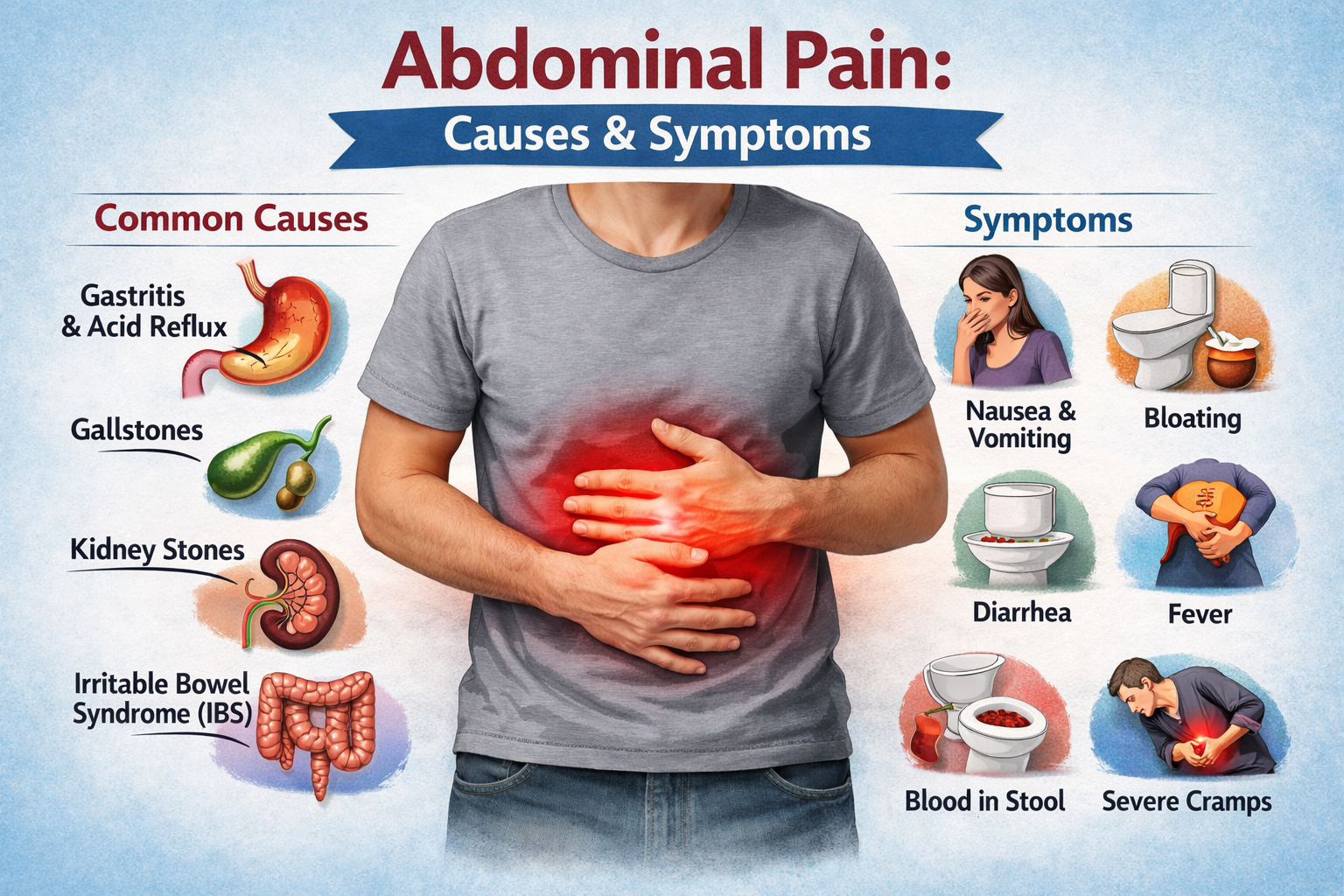
Abdominal pain is a common health complaint that can range from mild discomfort to severe cramping. This type of stomach ache may be caused by digestive issues, infections, or organ-related conditions. Early evaluation helps prevent complications.
Introduction
Pain in the abdomen affects people of all ages. It may be mild and temporary, or sharp and severe enough to require immediate medical attention. This discomfort can originate from the digestive, urinary, or reproductive organs. Therefore, understanding the possible causes is essential for proper treatment and prevention.
What Is It?
This condition refers to discomfort felt anywhere between the chest and pelvis. It may be:
Acute – Sudden and severe
Chronic – Long-lasting or recurring
Localized – Limited to one specific area
Generalized – Spread across the belly
Cramping – Comes and goes in waves
The location and nature of the pain often help doctors identify the underlying problem.
Common Causes
Several conditions may trigger stomach discomfort. Some are mild, while others require urgent care.
1. Digestive Causes
Gas and bloating
Indigestion
Gastritis
Acid reflux
Peptic ulcer
Constipation
Food poisoning
2. Infections
Gastroenteritis (stomach flu)
Urinary tract infection (UTI)
Appendicitis
3. Organ-Related Conditions
Gallstones
Kidney stones
Pancreatitis
Liver disease
4. Intestinal Disorders
Irritable Bowel Syndrome (IBS)
Inflammatory Bowel Disease (IBD)
Intestinal obstruction
5. Reproductive Causes (in women)
Menstrual cramps
Ovarian cyst
Ectopic pregnancy
Associated Symptoms
Stomach pain may occur along with other symptoms, including:
Nausea and vomiting
Diarrhea or constipation
Fever
Bloating
Loss of appetite
Blood in stool
Burning sensation
If the discomfort becomes severe or persistent, it should not be ignored.
When to See a Doctor
Seek immediate medical attention if you experience:
Severe or unbearable pain
High fever
Persistent vomiting
Chest pain
Difficulty breathing
Bloody stools
A swollen or hard abdomen
Sudden intense pain may indicate appendicitis, perforation, or internal bleeding.
Diagnosis
To determine the exact cause, doctors may recommend:
Physical examination
Blood tests
Urine tests
Ultrasound
CT scan
Endoscopy
Accurate evaluation ensures the right treatment plan.
Treatment Options
Treatment depends on the underlying condition.
Mild Cases
Rest
Adequate hydration
Antacids
Doctor-recommended pain relievers
Moderate to Severe Cases
Antibiotics (for infections)
Acid-reducing medications
Surgery (for appendicitis, gallstones, or obstruction)
Avoid self-medication without professional advice, especially if symptoms are severe.
Home Remedies for Mild Discomfort
For minor stomach issues:
Drink warm water
Try ginger tea
Use a heating pad
Avoid spicy or oily foods
Eat small, light meals
However, home remedies should not replace medical care in serious cases.
Prevention Tips
You can lower the risk of digestive discomfort by:
Eating a balanced diet
Drinking plenty of water
Limiting junk and spicy foods
Managing stress effectively
Maintaining good hygiene
Exercising regularly
Conclusion
Abdominal pain can result from simple indigestion or serious medical emergencies. Because the causes vary widely, early diagnosis and proper care are important. If symptoms persist, worsen, or appear with warning signs, consult a healthcare professional immediately.