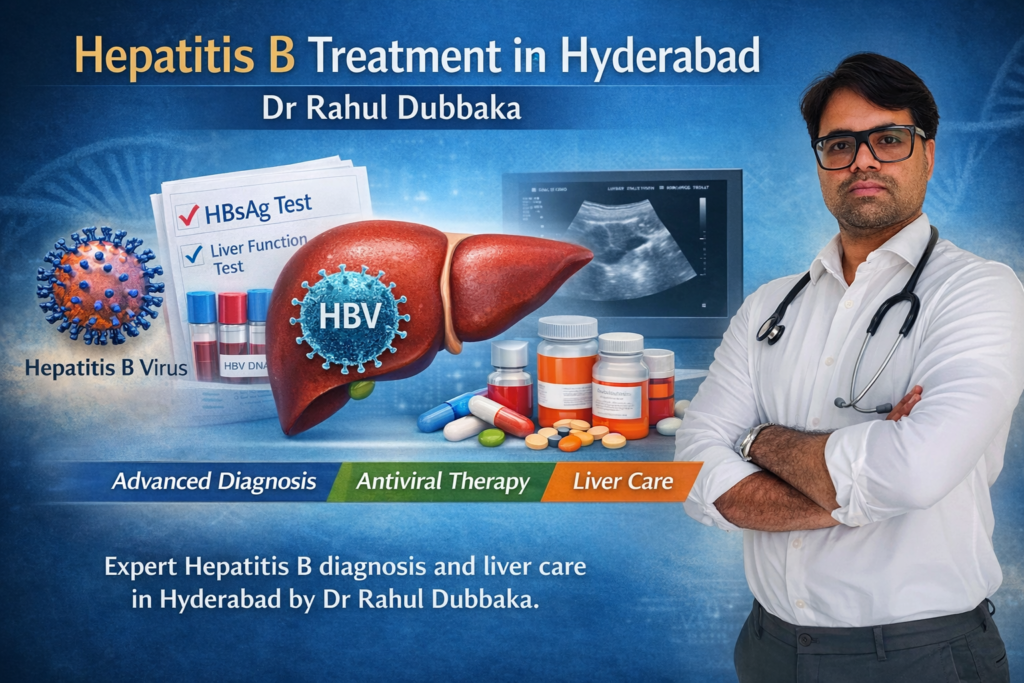
Hepatitis B Treatment in Hyderabad
Liver diseases require timely diagnosis and expert medical care. Hepatitis B is a serious viral liver infection that can lead to long-term complications if not treated properly. If you are searching for Hepatitis B treatment in Hyderabad, consulting an experienced gastroenterologist like Dr Rahul Dubbaka is essential for accurate diagnosis and advanced liver care.
What is Hepatitis B?
Hepatitis B is a liver infection caused by the Hepatitis B virus (HBV). Unlike Hepatitis A, Hepatitis B can become chronic and may lead to severe liver conditions such as cirrhosis or liver cancer if left untreated.
The virus spreads through infected blood and body fluids.
How Does Hepatitis B Spread?
Hepatitis B can spread through:
Unprotected sexual contact
Sharing needles or syringes
Blood transfusion with infected blood
Mother-to-child transmission during childbirth
Sharing personal items like razors or toothbrushes
Early detection is crucial to prevent complications and transmission.
Symptoms of Hepatitis B
Some people may not show symptoms initially. When symptoms appear, they may include:
Fatigue
Fever
Loss of appetite
Nausea and vomiting
Abdominal pain (right upper abdomen)
Dark urine
Jaundice (yellowing of eyes and skin)
In chronic cases, symptoms may be mild for years while liver damage continues silently.
When Should You See a Doctor?
You should consult a specialist if you experience:
Persistent jaundice
Unexplained fatigue
Swelling in legs or abdomen
Ongoing digestive discomfort
Early evaluation helps prevent serious liver damage.
Diagnosis of Hepatitis B
Dr Rahul Dubbaka performs a thorough clinical evaluation and may recommend:
HBsAg Test – To detect active infection
HBV DNA Test – To measure viral load
Liver Function Tests (LFT) – To assess liver inflammation
Ultrasound or FibroScan – To evaluate liver condition
Accurate diagnosis helps determine whether the infection is acute or chronic.
Treatment for Hepatitis B
Treatment depends on whether the infection is acute or chronic.
1. Acute Hepatitis B
Most cases require supportive care such as:
Rest
Proper hydration
Balanced nutrition
Regular monitoring
2. Chronic Hepatitis B
If the infection becomes chronic, antiviral medications may be prescribed to:
Reduce viral replication
Prevent liver damage
Lower the risk of cirrhosis and liver cancer
Regular follow-up and monitoring are essential for long-term management.
Can Hepatitis B Be Cured?
Acute Hepatitis B often resolves on its own.
Chronic Hepatitis B cannot always be completely cured, but it can be effectively managed with proper medical treatment and monitoring.
Prevention of Hepatitis B
Prevention is highly important. Key measures include:
Vaccination (highly effective and recommended for all age groups)
Safe blood transfusion practices
Avoid sharing needles
Safe sexual practices
Screening during pregnancy
Vaccination remains the best protection against Hepatitis B.
Why Choose Dr Rahul Dubbaka for Hepatitis B Treatment in Hyderabad?
Patients trust Dr Rahul Dubbaka because of:
Expertise in liver and digestive diseases
Advanced diagnostic methods
Personalized treatment plans
Long-term monitoring for chronic liver disease
Patient-centered approach
Early consultation ensures better outcomes and reduces the risk of serious complications.
Book a Consultation
If you are looking for expert Hepatitis B treatment in Hyderabad, consult Dr Rahul Dubbaka for comprehensive liver evaluation and advanced care. Early diagnosis and timely treatment can protect your liver and improve long-term health.
Frequently Asked Questions (FAQ)
1. Is Hepatitis B serious?
Yes, if untreated, it can lead to cirrhosis or liver cancer.
2. How is Hepatitis B transmitted?
Through infected blood, body fluids, and mother-to-child transmission.
3. Can Hepatitis B be prevented?
Yes, vaccination provides strong protection.
4. How long does treatment last?
Chronic cases may require long-term or lifelong monitoring.
5. Should family members get tested?
Yes, close contacts should be screened and vaccinated if necessary.