Why Does Your Stomach Hurt After Every Meal?
Have you ever finished eating only to be greeted by stomach pain, bloating, or discomfort? If this happens occasionally, it may not be a cause for concern. But if your stomach hurts after almost every meal, it’s your body’s way of telling you that something isn’t right.
Many people ignore recurring digestive discomfort, hoping it will go away on its own. Unfortunately, persistent stomach pain after eating can indicate an underlying digestive disorder that requires medical attention.
In this comprehensive guide, we’ll explore the common causes of stomach pain after meals, associated symptoms, diagnosis, treatment options, and when you should consult a gastroenterologist.
Why Does Your Stomach Hurt After Eating?
When you eat, your digestive system works hard to break down food and absorb nutrients. If any part of this process is disrupted, pain or discomfort can occur.
The pain may be:
- Sharp or stabbing
- Burning
- Cramping
- Dull and aching
- Associated with bloating or fullness
It may occur immediately after eating or develop 30 minutes to several hours later.
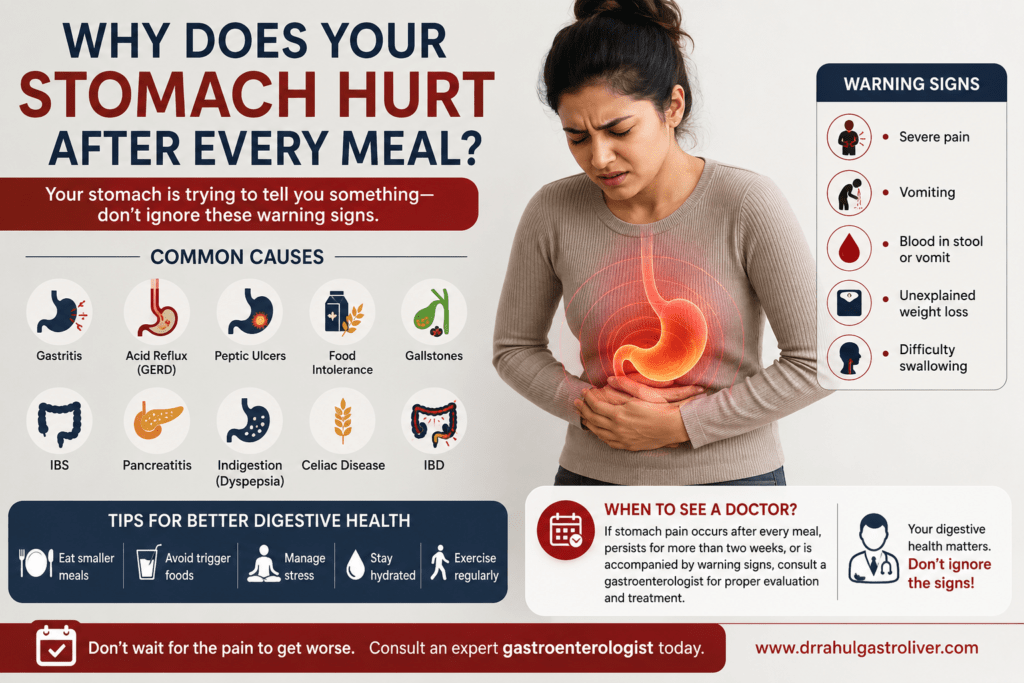
Common Causes of Stomach Pain After Every Meal
1. Gastritis
Gastritis refers to inflammation of the stomach lining.
Common causes include:
- Helicobacter pylori (H. pylori) infection
- Excessive use of painkillers
- Alcohol consumption
- Smoking
- Stress
- Spicy foods
Symptoms
- Burning stomach pain
- Nausea
- Vomiting
- Indigestion
- Feeling full quickly
2. Acid Reflux (GERD)
Acid reflux occurs when stomach acid flows back into the food pipe.
After meals, symptoms often worsen.
Symptoms
- Heartburn
- Chest burning
- Sour taste
- Difficulty swallowing
- Upper abdominal pain
3. Peptic Ulcers
Ulcers are open sores in the stomach or upper small intestine.
Pain often appears shortly after eating or a few hours later depending on the ulcer’s location.
Risk Factors
- H. pylori infection
- Long-term NSAID use
- Smoking
- Alcohol
Symptoms
- Burning stomach pain
- Nausea
- Bloating
- Black stools
- Vomiting blood (medical emergency)
4. Food Intolerance
Some people struggle to digest certain foods.
Examples include:
- Lactose intolerance
- Gluten sensitivity
- Fructose intolerance
Symptoms
- Cramping
- Gas
- Diarrhea
- Bloating
- Pain after specific foods
Keeping a food diary often helps identify triggers.
5. Gallstones
The gallbladder releases bile after meals, especially fatty foods.
Gallstones may block this flow, causing severe pain.
Symptoms
- Pain after fatty meals
- Pain in the upper right abdomen
- Pain radiating to the back or shoulder
- Nausea
- Vomiting
6. Irritable Bowel Syndrome (IBS)
IBS affects how the digestive tract functions.
Eating often triggers symptoms.
Symptoms
- Abdominal pain
- Constipation
- Diarrhea
- Bloating
- Excessive gas
Stress often makes IBS worse.
7. Pancreatitis
The pancreas produces digestive enzymes.
Inflammation of the pancreas can cause severe pain after eating.
Symptoms
- Severe upper abdominal pain
- Pain spreading to the back
- Fever
- Vomiting
- Loss of appetite
This requires immediate medical attention.
8. Functional Dyspepsia
Many people experience indigestion without an obvious cause.
This condition is called functional dyspepsia.
Symptoms
- Early fullness
- Stomach discomfort
- Upper abdominal pain
- Bloating
- Belching
9. Celiac Disease
People with celiac disease develop an immune reaction after eating gluten.
This damages the small intestine.
Symptoms
- Stomach pain
- Diarrhea
- Weight loss
- Fatigue
- Nutritional deficiencies
10. Inflammatory Bowel Disease (IBD)
Conditions like Crohn’s disease and ulcerative colitis cause chronic inflammation.
Symptoms
- Persistent abdominal pain
- Bloody stools
- Weight loss
- Chronic diarrhea
- Fatigue
Which Foods Commonly Trigger Stomach Pain?
Some foods are more likely to cause digestive discomfort.
These include:
- Spicy foods
- Oily foods
- Fried foods
- Fast food
- Alcohol
- Coffee
- Carbonated drinks
- Dairy products (for lactose intolerance)
- Wheat products (for gluten sensitivity)
- Highly processed foods
Warning Signs You Should Never Ignore
Seek medical evaluation if stomach pain is accompanied by:
- Blood in vomit
- Black stools
- Persistent vomiting
- Severe abdominal pain
- High fever
- Difficulty swallowing
- Unexplained weight loss
- Loss of appetite
- Severe bloating
- Persistent diarrhea
- Yellowing of the eyes or skin
These symptoms could indicate a serious digestive condition requiring prompt treatment.
How Is the Cause Diagnosed?
A gastroenterologist begins with a detailed medical history and physical examination.
Depending on your symptoms, diagnostic tests may include:
Blood Tests
Used to detect:
- Infection
- Inflammation
- Liver problems
- Pancreatic disorders
- Anemia
Stool Tests
Can detect:
- Infection
- Blood
- Digestive disorders
Ultrasound
Useful for examining:
- Gallbladder
- Liver
- Pancreas
Upper GI Endoscopy
A flexible camera examines:
- Esophagus
- Stomach
- Duodenum
It helps diagnose:
- Gastritis
- Ulcers
- GERD
- Polyps
- Early cancers
Colonoscopy
Recommended if lower digestive tract disease is suspected.
CT Scan or MRI
Provides detailed images of abdominal organs.
H. pylori Testing
May involve:
- Breath test
- Stool antigen test
- Biopsy during endoscopy
Treatment Depends on the Underlying Cause
Treatment varies depending on the diagnosis.
It may include:
Medications
- Antacids
- Proton pump inhibitors (PPIs)
- Antibiotics for H. pylori
- Antispasmodics
- Digestive enzyme supplements
- Probiotics
Lifestyle Changes
Doctors often recommend:
- Eat smaller meals
- Avoid overeating
- Eat slowly
- Drink enough water
- Avoid lying down immediately after meals
- Maintain a healthy weight
- Stop smoking
- Limit alcohol
- Exercise regularly
Dietary Modifications
Patients may benefit from:
- Low-fat diet
- Low-acid foods
- High-fiber foods
- Avoiding trigger foods
- Keeping a food diary
Tips to Prevent Stomach Pain After Meals
Simple habits can make a big difference.
Eat Smaller Portions
Large meals put extra strain on digestion.
Chew Food Properly
Proper chewing improves digestion and reduces bloating.
Stay Hydrated
Drink enough water throughout the day.
Avoid excessive sugary drinks.
Reduce Stress
Stress directly affects digestion.
Helpful techniques include:
- Yoga
- Meditation
- Walking
- Deep breathing
Avoid Trigger Foods
Identify foods that consistently cause discomfort.
Maintain Healthy Eating Habits
Include:
- Fruits
- Vegetables
- Whole grains
- Lean protein
- Healthy fats
Can Stress Cause Stomach Pain After Eating?
Yes.
The brain and digestive system are closely connected.
Stress can:
- Increase stomach acid
- Slow digestion
- Cause bloating
- Trigger IBS symptoms
- Increase abdominal pain
Managing stress is an important part of digestive health.
When Should You Visit a Gastroenterologist?
You should consult a gastroenterologist if:
- Pain occurs after every meal
- Symptoms persist for more than two weeks
- Over-the-counter medicines don’t help
- Pain is getting worse
- You have unexplained weight loss
- You experience frequent vomiting
- You notice blood in stools or vomit
- Digestive symptoms interfere with daily life
Early diagnosis often leads to better treatment outcomes.
Frequently Asked Questions
Is stomach pain after eating normal?
Occasional discomfort may occur after overeating or eating very spicy foods. Persistent pain after every meal is not normal and should be evaluated.
Can gas cause stomach pain after meals?
Yes. Excess gas can cause cramping, bloating, and abdominal discomfort, especially after consuming gas-producing foods.
Does spicy food always cause stomach pain?
Not for everyone. However, people with gastritis, ulcers, or acid reflux often experience worsening symptoms after eating spicy foods.
Can anxiety make stomach pain worse?
Yes. Anxiety and stress can affect gut function and increase digestive discomfort.
Can stomach pain after eating be a sign of cancer?
Although uncommon, persistent abdominal pain accompanied by weight loss, anemia, vomiting, or difficulty swallowing should be evaluated promptly to rule out serious conditions.
Final Thoughts
Your digestive system communicates through symptoms, and recurring stomach pain after every meal should never be ignored. While the cause may be as simple as food intolerance or indigestion, it could also indicate conditions such as gastritis, acid reflux, peptic ulcers, gallstones, or other gastrointestinal disorders.
Early evaluation, accurate diagnosis, and timely treatment can prevent complications and improve your quality of life. If stomach pain is becoming a regular part of your meals, consult a qualified gastroenterologist to identify the cause and receive personalized care.
Listening to your body today can help protect your digestive health for years to come.
Call to Action
Experiencing stomach pain after every meal? Don’t ignore persistent digestive symptoms. Schedule a consultation with an experienced gastroenterologist for a thorough evaluation, accurate diagnosis, and personalized treatment plan.
Learn more: https://drrahulgastroliver.com/