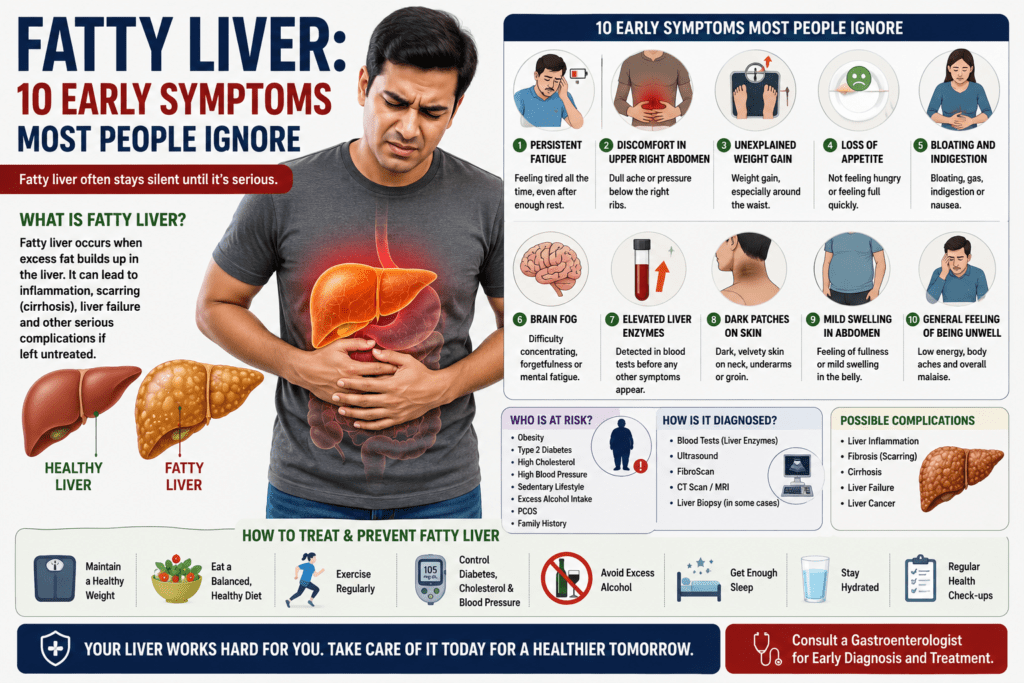
Fatty Liver: 10 Early Symptoms Most People Ignore
Your liver is one of the hardest-working organs in your body. It filters toxins, helps digest food, stores energy, and supports hundreds of essential functions that keep you healthy. But when excess fat starts building up in the liver, it can quietly damage this vital organ without causing obvious symptoms.
This condition is known as fatty liver disease, and it often develops silently. Many people don’t realize they have it until it’s discovered during a routine health check-up or when liver damage has already progressed.
The good news? Fatty liver disease is often reversible in its early stages with the right lifestyle changes and timely medical care.
In this guide, we’ll discuss the 10 early symptoms most people ignore, the common causes, risk factors, diagnosis, treatment options, and practical steps you can take to protect your liver.
What Is Fatty Liver Disease?
Fatty liver disease occurs when excess fat accumulates in liver cells. While a small amount of fat is normal, too much fat can interfere with the liver’s ability to function properly.
There are two main types:
1. Non-Alcoholic Fatty Liver Disease (NAFLD)
This is the most common type and is not caused by alcohol. It is strongly linked to obesity, diabetes, high cholesterol, and metabolic syndrome.
2. Alcohol-Related Fatty Liver Disease (AFLD)
This develops due to excessive alcohol consumption and can progress to more serious liver conditions if alcohol intake continues.
If left untreated, fatty liver disease may progress to inflammation, liver scarring (fibrosis), cirrhosis, and, in severe cases, liver failure or liver cancer.
Why Fatty Liver Is Often Missed
One of the biggest challenges with fatty liver disease is that it rarely causes noticeable symptoms in the early stages. The liver has an incredible ability to continue functioning even when it’s under stress.
As a result, many people feel perfectly healthy while fat continues to accumulate and damage the liver over time.
Recognizing subtle warning signs can lead to earlier diagnosis and better outcomes.
10 Early Symptoms Most People Ignore
1. Persistent Fatigue
Feeling unusually tired despite getting enough sleep can be one of the earliest signs of fatty liver disease.
When the liver doesn’t function efficiently, your body may struggle to process nutrients and eliminate toxins, leading to low energy levels.
Watch for:
- Constant tiredness
- Lack of motivation
- Reduced stamina
2. Discomfort or Pain in the Upper Right Abdomen
The liver is located in the upper right side of the abdomen.
As fat builds up and the liver enlarges, you may experience:
- Mild aching
- Pressure
- A feeling of fullness
- Dull pain below the ribs
Although often subtle, persistent discomfort should not be ignored.
3. Unexplained Weight Gain
Fatty liver is closely linked to metabolic health.
If you’re gaining weight—especially around the waist—despite no major changes in your lifestyle, it may indicate underlying insulin resistance and fat accumulation in the liver.
4. Loss of Appetite
Many people notice they don’t feel as hungry as usual.
This may happen because liver inflammation can affect digestion and metabolism.
If reduced appetite continues for several weeks, it’s worth discussing with your doctor.
5. Bloating and Indigestion
Frequent digestive discomfort may signal liver stress.
Common symptoms include:
- Feeling full quickly
- Gas
- Abdominal bloating
- Mild nausea
- Indigestion after meals
While these symptoms have many possible causes, they can also occur with fatty liver disease.
6. Brain Fog and Difficulty Concentrating
Some people with fatty liver report:
- Poor concentration
- Forgetfulness
- Difficulty focusing
- Mental fatigue
Although brain fog isn’t unique to fatty liver disease, it may be associated with metabolic changes and chronic inflammation.
7. Elevated Liver Enzymes
This isn’t a symptom you can feel, but it’s one of the earliest warning signs detected through routine blood tests.
Many people discover they have fatty liver only after blood work shows elevated liver enzyme levels.
Regular health check-ups can help identify liver problems before symptoms become severe.
8. Dark Patches on the Skin
People with insulin resistance may develop dark, velvety patches of skin, especially around the neck, underarms, or groin.
This condition, called acanthosis nigricans, may be associated with metabolic disorders that increase the risk of fatty liver disease.
9. Mild Swelling in the Abdomen
As liver disease progresses, fluid may begin to accumulate in the abdomen.
Although significant swelling is more common in advanced liver disease, mild abdominal fullness should not be overlooked.
10. General Feeling of Being Unwell
Many people simply feel “off.”
They may experience:
- Low energy
- Mild body aches
- Poor digestion
- Reduced physical performance
Because these symptoms are nonspecific, they are often dismissed as stress or aging.
Who Is at Higher Risk?
Several factors increase the likelihood of developing fatty liver disease.
These include:
- Obesity
- Type 2 diabetes
- Prediabetes
- High cholesterol
- High triglycerides
- High blood pressure
- Sedentary lifestyle
- Excessive alcohol consumption
- Polycystic ovary syndrome (PCOS)
- Sleep apnea
- Family history of liver disease
Even people with a normal body weight can develop fatty liver, especially if they have metabolic risk factors.
How Is Fatty Liver Diagnosed?
Early diagnosis is essential because fatty liver disease often has no obvious symptoms.
Your doctor may recommend:
Blood Tests
These help evaluate liver function and detect elevated liver enzymes.
Ultrasound
An abdominal ultrasound is commonly used to detect fat accumulation in the liver.
FibroScan
This non-invasive test measures liver stiffness and helps assess fibrosis (scarring).
CT Scan or MRI
These imaging tests provide a more detailed view of the liver when needed.
Liver Biopsy
In selected cases, a biopsy may be recommended to determine the extent of inflammation and liver damage.
Can Fatty Liver Be Reversed?
Yes. In many cases, especially during the early stages, fatty liver disease can be reversed.
The key is addressing the underlying causes before permanent liver damage occurs.
Treatment for Fatty Liver Disease
There is no single medication that cures fatty liver disease. Treatment focuses on improving liver health and reducing fat accumulation.
1. Lose Excess Weight
Losing even 5–10% of your body weight can significantly reduce liver fat and improve liver function.
Aim for gradual, sustainable weight loss through healthy eating and regular physical activity.
2. Follow a Liver-Friendly Diet
Choose foods such as:
- Fresh fruits
- Vegetables
- Whole grains
- Lean proteins
- Fish rich in omega-3 fatty acids
- Nuts and seeds
- Healthy fats like olive oil
Limit:
- Sugary drinks
- Processed foods
- Refined carbohydrates
- Fried foods
- Excess saturated fat
3. Exercise Regularly
Aim for at least 150 minutes of moderate-intensity exercise per week.
Walking, cycling, swimming, and strength training can all help reduce liver fat.
4. Manage Diabetes and Cholesterol
Keeping blood sugar and cholesterol under control reduces stress on the liver and lowers the risk of disease progression.
5. Avoid Excess Alcohol
If you have fatty liver disease, limiting or avoiding alcohol is one of the most important steps you can take to protect your liver.
6. Get Enough Sleep
Poor sleep is associated with metabolic disorders that may worsen fatty liver.
Aim for 7–9 hours of quality sleep each night.
Foods That Support Liver Health
Adding these foods to your diet may help support overall liver function:
- Leafy green vegetables
- Berries
- Citrus fruits
- Oats
- Beans and lentils
- Garlic
- Turmeric
- Green tea
- Walnuts
- Fatty fish such as salmon
Remember, no single “superfood” can cure fatty liver. A balanced diet and healthy lifestyle are what make the biggest difference.
When Should You See a Gastroenterologist?
Consult a gastroenterologist if you:
- Have persistent fatigue or abdominal discomfort
- Have obesity, diabetes, or high cholesterol
- Notice abnormal liver function tests
- Have a family history of liver disease
- Experience unexplained weight loss, jaundice, or swelling
- Have been diagnosed with fatty liver and need ongoing monitoring
Early evaluation can prevent progression to more serious liver conditions.
Tips to Protect Your Liver
- Maintain a healthy weight
- Eat a balanced diet
- Exercise regularly
- Limit alcohol intake
- Avoid unnecessary medications and supplements without medical advice
- Stay hydrated
- Get regular health check-ups
- Control diabetes, blood pressure, and cholesterol
- Avoid smoking
- Follow your doctor’s recommendations if you have liver disease
Frequently Asked Questions
Can fatty liver occur without alcohol?
Yes. Non-alcoholic fatty liver disease is the most common form and is closely linked to obesity, insulin resistance, and metabolic syndrome.
Is fatty liver dangerous?
Early-stage fatty liver is often reversible, but if left untreated it can progress to inflammation, fibrosis, cirrhosis, and, in some cases, liver cancer.
Can fatty liver be cured?
Many people can reverse fatty liver through weight loss, healthy eating, regular exercise, and management of underlying health conditions.
How often should I get my liver checked?
If you have risk factors such as obesity, diabetes, or high cholesterol, discuss routine liver screening with your healthcare provider.
Final Thoughts
Fatty liver disease is often called a “silent” condition because it can develop without obvious symptoms. However, subtle signs like persistent fatigue, upper abdominal discomfort, bloating, and unexplained weight gain should never be ignored.
The earlier fatty liver is detected, the better the chances of reversing it and preventing serious complications. Healthy lifestyle choices, regular medical check-ups, and timely consultation with a gastroenterologist can go a long way in protecting your liver and overall health.
If you suspect you may have fatty liver disease or have risk factors such as diabetes, obesity, or high cholesterol, don’t wait for symptoms to become severe. Seek medical advice and take proactive steps toward better liver health today.