Is Your Acidity Becoming Dangerous? Daily Acidity Isn’t Normal—Here’s When to See a Gastroenterologist
Almost everyone experiences acidity or heartburn occasionally after eating a spicy meal or overeating. But if you’re reaching for antacids every day or frequently waking up with a burning sensation in your chest, it’s time to pay attention.
Many people consider daily acidity a minor inconvenience and continue self-medicating without identifying the root cause. However, persistent acidity is not normal and may indicate an underlying digestive disorder that requires medical evaluation.
Ignoring chronic acid reflux can lead to complications affecting your esophagus, stomach, and overall quality of life.
In this comprehensive guide, we’ll explore why daily acidity occurs, warning signs that shouldn’t be ignored, possible complications, treatment options, and when you should consult a gastroenterologist.
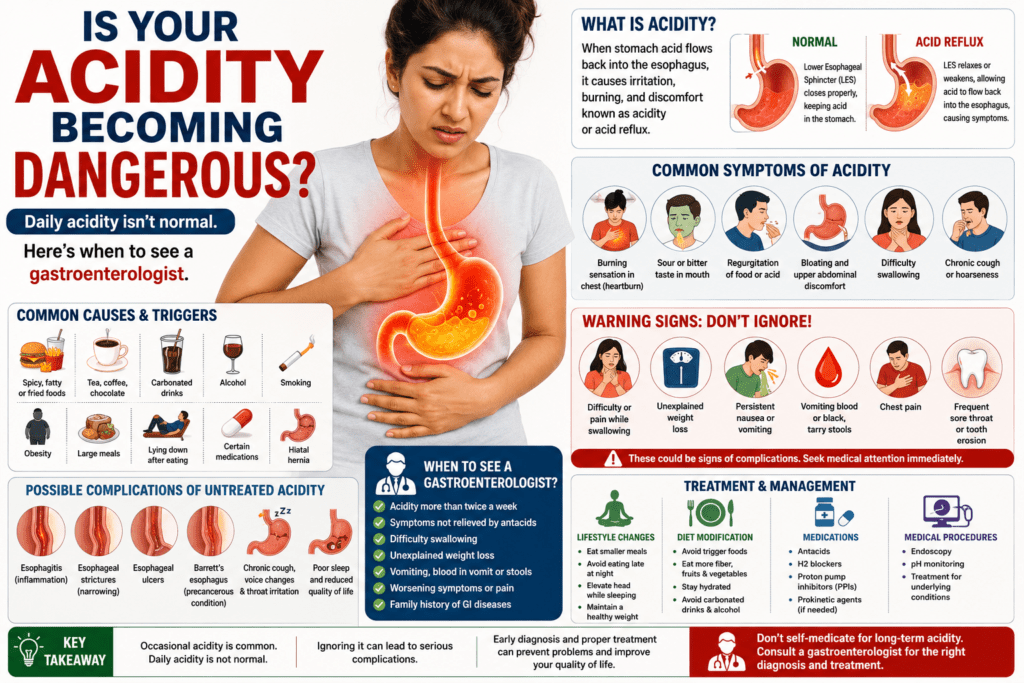
What Is Acidity?
Acidity occurs when stomach acid flows backward into the esophagus, the tube connecting your mouth to your stomach. This backward flow is called acid reflux.
Normally, a muscular valve called the lower esophageal sphincter (LES) prevents stomach contents from moving upward. When this valve weakens or relaxes at the wrong time, acid can escape into the esophagus, causing irritation and discomfort.
Occasional acid reflux is common, but frequent episodes may indicate Gastroesophageal Reflux Disease (GERD).
What Does Daily Acidity Feel Like?
People experience acidity differently, but common symptoms include:
- Burning sensation in the chest (heartburn)
- Sour or bitter taste in the mouth
- Regurgitation of food or acid
- Burping
- Bloating
- Nausea
- Upper abdominal discomfort
- Difficulty swallowing
- Feeling of food getting stuck
- Chronic throat irritation
Symptoms often worsen:
- After large meals
- After spicy or fatty foods
- When lying down
- At night
- During bending or lifting
Why Daily Acidity Should Never Be Ignored
Occasional heartburn usually isn’t dangerous.
However, daily acidity may signal ongoing damage to the esophagus.
Repeated exposure to stomach acid can cause inflammation, ulcers, narrowing of the esophagus, and long-term complications.
Early diagnosis can prevent these problems and improve your quality of life.
Common Causes of Daily Acidity
1. Gastroesophageal Reflux Disease (GERD)
GERD is the most common cause of frequent acidity.
It occurs when acid reflux happens repeatedly over time.
Without treatment, GERD can lead to chronic inflammation and complications.
2. Poor Eating Habits
Lifestyle choices often contribute to persistent acidity.
Common triggers include:
- Eating too quickly
- Overeating
- Late-night meals
- Skipping meals
- Eating immediately before bedtime
3. Trigger Foods
Certain foods increase acid production or relax the lower esophageal sphincter.
Common triggers include:
- Spicy foods
- Fried foods
- Fatty meals
- Chocolate
- Coffee
- Tea
- Carbonated beverages
- Citrus fruits
- Tomatoes
- Peppermint
Each person may have different trigger foods.
4. Obesity
Excess body weight increases pressure inside the abdomen.
This pressure encourages stomach acid to move upward into the esophagus.
Weight loss often improves reflux symptoms significantly.
5. Smoking
Smoking weakens the lower esophageal sphincter and increases acid reflux.
It also slows healing of the esophagus.
6. Alcohol
Alcohol relaxes the valve between the stomach and esophagus, making reflux more likely.
Frequent alcohol intake may worsen symptoms.
7. Pregnancy
Hormonal changes and pressure from the growing uterus make acid reflux common during pregnancy.
Most symptoms improve after delivery.
8. Hiatal Hernia
A hiatal hernia occurs when part of the stomach pushes upward through the diaphragm.
This condition commonly contributes to chronic acid reflux.
9. Certain Medications
Some medicines may worsen acidity, including:
- Pain relievers (NSAIDs)
- Calcium channel blockers
- Certain asthma medications
- Some antidepressants
Never stop prescribed medications without consulting your doctor.
Warning Signs That Your Acidity May Be Serious
Daily acidity accompanied by any of the following symptoms requires medical attention:
Difficulty Swallowing
Food sticking in the throat or chest may indicate narrowing of the esophagus.
Pain While Swallowing
This may suggest inflammation or ulcers.
Unexplained Weight Loss
Unexpected weight loss should always be evaluated.
Persistent Vomiting
Frequent vomiting can indicate severe digestive disease.
Vomiting Blood
This is a medical emergency requiring immediate evaluation.
Black or Tarry Stools
Dark stools may indicate bleeding in the digestive tract.
Chest Pain
Although heartburn causes chest discomfort, chest pain can also signal a heart attack.
If chest pain is severe, persistent, or associated with shortness of breath, sweating, dizziness, or pain spreading to the arm or jaw, seek emergency medical care immediately.
Chronic Cough or Hoarseness
Acid reaching the throat can irritate the voice box and airways.
Possible Complications of Untreated Acidity
Ignoring persistent acidity may lead to several complications.
Esophagitis
Repeated acid exposure causes inflammation of the esophagus.
Symptoms include pain, difficulty swallowing, and ulcers.
Esophageal Strictures
Chronic inflammation can lead to scarring and narrowing of the esophagus.
Patients may have trouble swallowing solid foods.
Barrett’s Esophagus
Long-term acid reflux may change the cells lining the esophagus.
Barrett’s esophagus increases the risk of esophageal cancer.
Although most people with Barrett’s do not develop cancer, regular monitoring is important.
Esophageal Ulcers
Persistent acid exposure may cause painful ulcers and bleeding.
Dental Damage
Stomach acid can erode tooth enamel over time.
Sleep Disturbances
Nighttime reflux often interrupts sleep and reduces quality of life.
How Is Chronic Acidity Diagnosed?
A gastroenterologist may recommend:
Medical History and Physical Examination
Understanding symptom frequency and triggers helps guide diagnosis.
Upper GI Endoscopy
A flexible camera examines:
- Esophagus
- Stomach
- Duodenum
Endoscopy can detect:
- GERD
- Ulcers
- Barrett’s esophagus
- Inflammation
- Hiatal hernia
24-Hour pH Monitoring
This test measures how often stomach acid enters the esophagus.
Esophageal Manometry
Measures muscle function and swallowing.
Barium Swallow
An imaging test that evaluates swallowing problems and structural abnormalities.
Treatment for Daily Acidity
Treatment depends on the underlying cause.
Lifestyle Changes
Doctors often recommend:
- Eat smaller meals
- Avoid overeating
- Maintain a healthy weight
- Avoid eating within 2–3 hours of bedtime
- Elevate the head of your bed
- Wear loose-fitting clothing
- Stop smoking
- Limit alcohol
These simple changes can significantly reduce symptoms.
Dietary Changes
Include:
- Oatmeal
- Bananas
- Green vegetables
- Whole grains
- Lean proteins
- Low-fat dairy (if tolerated)
Limit:
- Fried foods
- Spicy foods
- Sugary beverages
- Chocolate
- Citrus fruits
- Carbonated drinks
- Coffee
Keeping a food diary can help identify personal triggers.
Medications
Depending on your condition, your doctor may prescribe:
- Antacids
- H2 receptor blockers
- Proton pump inhibitors (PPIs)
- Prokinetic agents
Take medications only as directed by your healthcare provider.
Tips to Prevent Daily Acidity
Healthy habits can make a significant difference.
- Eat slowly and chew food thoroughly
- Avoid overeating
- Drink enough water
- Exercise regularly
- Maintain a healthy weight
- Reduce stress
- Sleep well
- Avoid tobacco
- Limit alcohol
- Follow your doctor’s treatment plan
When Should You See a Gastroenterologist?
You should consult a gastroenterologist if:
- Acidity occurs more than twice a week
- Symptoms continue despite over-the-counter medications
- You have difficulty swallowing
- You experience unexplained weight loss
- You wake up frequently because of reflux
- Symptoms interfere with daily life
- You notice blood in vomit or stools
- You have persistent nausea or vomiting
- Chest discomfort is recurring and needs evaluation
Early diagnosis helps prevent long-term complications and improves treatment outcomes.
Frequently Asked Questions
Is daily acidity normal?
No. Frequent acidity is not considered normal and should be evaluated, especially if it occurs several times a week or every day.
Can acidity damage the esophagus?
Yes. Long-term acid reflux can lead to inflammation, ulcers, scarring, Barrett’s esophagus, and other complications.
Can stress cause acidity?
Stress does not directly cause acid reflux but can worsen symptoms and make existing digestive conditions more noticeable.
Is milk good for acidity?
Milk may provide temporary relief for some people, but high-fat dairy products can worsen reflux in others.
Can acidity increase the risk of cancer?
Long-standing, untreated GERD can lead to Barrett’s esophagus, which is associated with an increased risk of esophageal cancer. The overall risk remains low, but regular follow-up is important for people with Barrett’s.
Final Thoughts
Occasional acidity after a heavy or spicy meal is common, but daily acidity is not something you should ignore. Frequent heartburn may be a sign of GERD or another digestive condition that requires medical attention.
The longer chronic acid reflux goes untreated, the greater the risk of complications such as esophagitis, ulcers, Barrett’s esophagus, and swallowing difficulties.
The good news is that most cases of chronic acidity can be effectively managed with the right combination of lifestyle changes, dietary adjustments, medications, and expert medical care.
If you’re experiencing heartburn several times a week, relying on antacids daily, or noticing warning signs such as difficulty swallowing or unexplained weight loss, schedule an appointment with a gastroenterologist. Early evaluation and treatment can help protect your digestive health and prevent serious complications in the future.