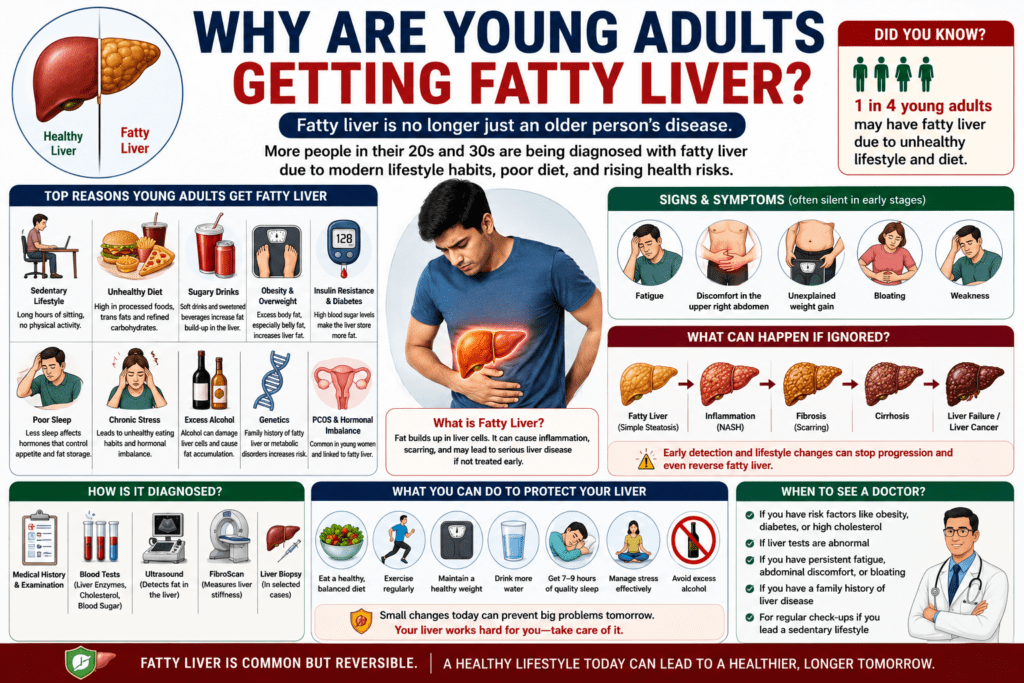
Why Are Young Adults Getting Fatty Liver? Fatty Liver Is No Longer Just an Older Person’s Disease
For years, fatty liver disease was considered a condition that mainly affected middle-aged or older adults. Today, that picture has changed dramatically. Increasingly, people in their 20s and 30s—and even teenagers—are being diagnosed with fatty liver disease, often during routine health check-ups or investigations for unrelated health issues.
The rise of sedentary lifestyles, processed foods, sugary drinks, obesity, and metabolic disorders has made fatty liver one of the fastest-growing liver conditions worldwide. The concerning part is that many young adults have no symptoms, allowing the disease to progress silently for years.
The good news is that fatty liver can often be prevented and, in its early stages, even reversed with healthy lifestyle changes and timely medical care.
In this guide, we’ll explore why fatty liver is becoming more common in young adults, its symptoms, risk factors, diagnosis, treatment, and practical ways to protect your liver.
What Is Fatty Liver Disease?
Fatty liver disease occurs when excess fat accumulates inside liver cells. While a small amount of fat is normal, too much fat can interfere with liver function and lead to inflammation or long-term liver damage.
The two main types are:
Non-Alcoholic Fatty Liver Disease (NAFLD)
This is the most common form and is linked to obesity, insulin resistance, diabetes, and unhealthy lifestyle habits.
Alcohol-Related Fatty Liver Disease
This develops due to excessive alcohol consumption and can progress if alcohol intake continues.
If left untreated, fatty liver disease may advance to inflammation (steatohepatitis), fibrosis, cirrhosis, liver failure, or even liver cancer.
Why Is Fatty Liver Increasing in Young Adults?
Several lifestyle and health factors are driving the rise in fatty liver among younger people.
1. Sedentary Lifestyle
Many young adults spend hours sitting while studying, working, gaming, or using electronic devices.
Lack of physical activity reduces calorie burning and promotes fat accumulation in the liver.
Even people who are not overweight can develop fatty liver if they are physically inactive.
2. Processed and Fast Foods
Fast food has become a regular part of many people’s diets.
Frequent consumption of:
- Burgers
- Pizza
- Fried foods
- Packaged snacks
- Instant noodles
- Processed meats
adds excess calories, unhealthy fats, and refined carbohydrates that contribute to liver fat.
3. Sugary Drinks
Soft drinks, sweetened coffee beverages, energy drinks, and packaged fruit drinks are major sources of added sugar.
Excess fructose is converted into fat in the liver, increasing the risk of fatty liver disease.
Replacing sugary beverages with water is one of the simplest ways to reduce this risk.
4. Obesity
Obesity remains one of the strongest risk factors for fatty liver.
Excess body fat—especially around the abdomen—is associated with increased fat storage in the liver and greater insulin resistance.
5. Type 2 Diabetes and Insulin Resistance
Young adults are increasingly developing type 2 diabetes and prediabetes.
Insulin resistance causes the liver to store more fat, making fatty liver disease more likely.
6. Poor Sleep
Sleep deprivation affects hormones that regulate appetite and metabolism.
People who consistently sleep too little may be at increased risk of obesity and fatty liver.
Aim for 7–9 hours of quality sleep each night.
7. Chronic Stress
Stress can influence eating habits, physical activity, sleep quality, and hormonal balance.
Many people respond to stress by consuming high-calorie comfort foods or sugary drinks, which can contribute to weight gain and fatty liver.
8. Genetic Factors
Some individuals have inherited genetic variations that increase their susceptibility to fatty liver disease, even if they maintain a healthy lifestyle.
A family history of liver disease or metabolic disorders may increase risk.
9. Polycystic Ovary Syndrome (PCOS)
Women with PCOS often have insulin resistance, making fatty liver more common.
Regular health check-ups and lifestyle management are important.
10. High Cholesterol and Triglycerides
Elevated blood lipids increase fat accumulation throughout the body, including the liver.
Managing cholesterol through diet, exercise, and medication when needed helps reduce risk.
Symptoms of Fatty Liver in Young Adults
One of the biggest challenges is that fatty liver often causes no symptoms, particularly in the early stages.
When symptoms do occur, they may include:
- Persistent fatigue
- Mild pain or discomfort in the upper right abdomen
- Feeling of fullness after meals
- Bloating
- Unexplained weakness
- Difficulty losing weight
Because these symptoms are nonspecific, many people do not realize they have liver disease until routine blood tests or imaging reveal it.
Who Is at Higher Risk?
Young adults are more likely to develop fatty liver if they have:
- Overweight or obesity
- Type 2 diabetes or prediabetes
- High blood pressure
- High cholesterol or triglycerides
- PCOS
- A family history of fatty liver
- Sedentary lifestyle
- Frequent consumption of sugary drinks
- Poor dietary habits
- Excess alcohol intake
Even individuals with a normal body weight can develop fatty liver if they have metabolic risk factors.
How Is Fatty Liver Diagnosed?
If fatty liver is suspected, your doctor may recommend:
Medical History and Physical Examination
Your doctor will discuss:
- Lifestyle habits
- Diet
- Alcohol intake
- Family history
- Existing medical conditions
Blood Tests
Blood tests help assess liver health by checking liver enzyme levels and ruling out other causes of liver disease.
Ultrasound
Ultrasound is commonly used to detect fat accumulation in the liver.
FibroScan
A FibroScan measures liver stiffness and helps evaluate the extent of fibrosis (scarring).
CT Scan or MRI
These imaging tests may provide additional information in selected cases.
Liver Biopsy
A biopsy is reserved for situations where the diagnosis is uncertain or to determine the severity of liver damage.
Can Fatty Liver Be Reversed?
Yes—particularly in the early stages.
Lifestyle modifications remain the cornerstone of treatment.
Losing 5–10% of body weight has been shown to reduce liver fat and improve liver function in many people.
Lifestyle Changes That Help
Eat a Liver-Friendly Diet
Choose:
- Vegetables
- Fruits
- Whole grains
- Millets
- Lean proteins
- Fish
- Legumes
- Nuts
- Healthy fats like olive oil
Limit:
- Sugary drinks
- Processed foods
- Fried foods
- Excess red meat
- Refined carbohydrates
Exercise Regularly
Aim for at least 150 minutes of moderate-intensity exercise per week, along with muscle-strengthening activities on two or more days weekly.
Maintain a Healthy Weight
Gradual, sustainable weight loss is more beneficial than rapid dieting.
Control Blood Sugar and Cholesterol
Managing diabetes, insulin resistance, and abnormal cholesterol levels helps reduce liver fat.
Avoid Excess Alcohol
Limiting or avoiding alcohol is recommended, especially if liver disease is present.
Sleep Well
Good sleep supports healthy metabolism and weight management.
Reduce Stress
Mindfulness, yoga, hobbies, and regular physical activity can help lower stress levels and improve overall well-being.
Can Fatty Liver Lead to Serious Problems?
If left untreated, fatty liver can progress to:
- Non-alcoholic steatohepatitis (NASH)
- Liver fibrosis
- Cirrhosis
- Liver failure
- Liver cancer
It also increases the risk of:
- Heart disease
- Stroke
- Type 2 diabetes
- Kidney disease
This is why early diagnosis and treatment are so important.
Frequently Asked Questions
Can a thin person have fatty liver?
Yes. People with normal body weight can still develop fatty liver, especially if they have insulin resistance, diabetes, or a poor diet.
Can exercise alone reverse fatty liver?
Exercise is extremely beneficial, but the best results come from combining regular physical activity with a healthy diet and weight management.
Is fatty liver common in people in their 20s?
Yes. Cases among young adults are becoming more common due to rising obesity rates, unhealthy diets, and sedentary lifestyles.
Is fatty liver permanent?
Not necessarily. Early-stage fatty liver often improves or reverses with sustained lifestyle changes.
When Should You See a Gastroenterologist?
Consult a gastroenterologist if you:
- Have abnormal liver function tests
- Experience persistent fatigue or upper abdominal discomfort
- Have obesity, diabetes, or high cholesterol
- Have a family history of liver disease
- Need evaluation after an ultrasound suggests fatty liver
- Have concerns about your liver health
Early diagnosis allows timely treatment and helps prevent long-term complications.
Final Thoughts
Fatty liver disease is no longer limited to older adults. The growing number of cases among young adults reflects major changes in diet, physical activity, and overall lifestyle. Because the condition often develops silently, many people are unaware they have it until routine tests reveal liver fat.
The encouraging news is that early fatty liver can often be reversed. Eating a balanced diet, staying physically active, maintaining a healthy weight, getting enough sleep, and managing conditions such as diabetes and high cholesterol are all powerful steps toward protecting your liver.
If you’re a young adult with risk factors or persistent symptoms—or if a routine health check has shown abnormal liver tests—don’t ignore it. A consultation with a gastroenterologist can help you understand your liver health, identify the underlying cause, and create a personalized plan for recovery.
Your liver works hard every day. Taking care of it now can protect your health for decades to come.