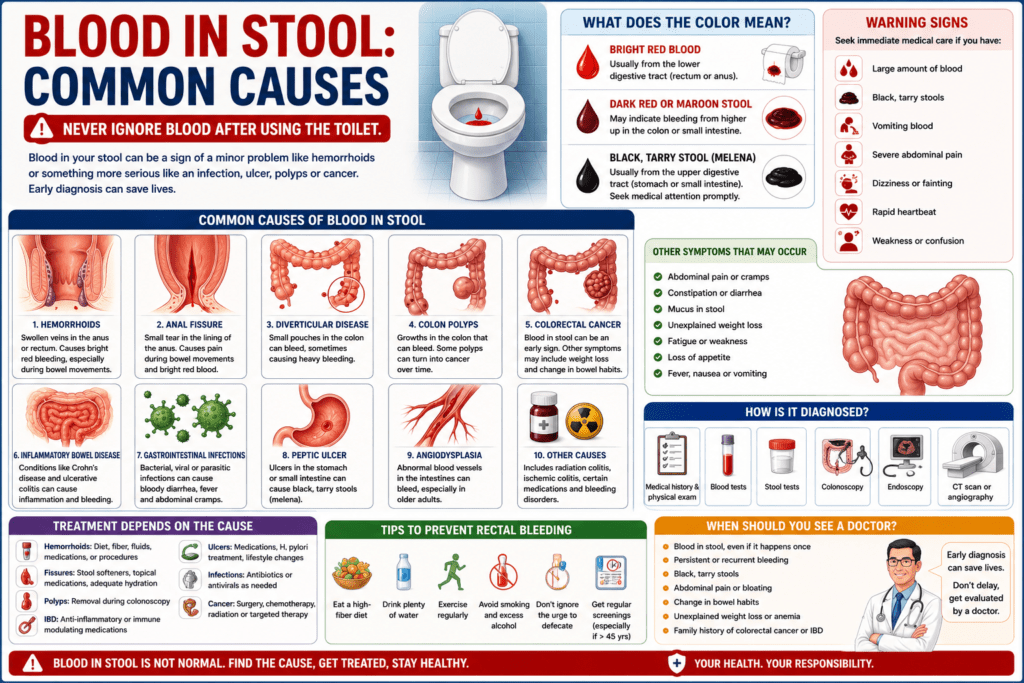
Blood in Stool: Common Causes – Never Ignore Blood After Using the Toilet
Finding blood in your stool or on toilet paper can be frightening. Whether it’s a few drops of bright red blood or dark, tarry stool, seeing blood after a bowel movement should never be ignored. While the cause may be something relatively minor, such as hemorrhoids or an anal fissure, it can also be a sign of a more serious condition like inflammatory bowel disease, bleeding ulcers, or colorectal cancer.
Many people delay seeking medical advice because they feel embarrassed or assume the bleeding will stop on its own. Unfortunately, this can lead to delayed diagnosis and treatment of potentially serious conditions.
The good news is that most causes of rectal bleeding can be identified with proper medical evaluation, and many are highly treatable—especially when detected early.
In this comprehensive guide, we’ll explain what blood in stool means, the possible causes, how it’s diagnosed, treatment options, and when you should seek urgent medical attention.
What Does Blood in Stool Mean?
Blood in stool refers to bleeding anywhere in the digestive tract, from the esophagus to the rectum. The appearance of the blood often provides clues about where the bleeding originates.
Bright Red Blood
Bright red blood usually indicates bleeding from the lower part of the digestive tract, such as the rectum or anus.
It may appear:
- On toilet paper
- In the toilet bowl
- Coating the stool
- Dripping after a bowel movement
Dark Red or Maroon Stool
Dark red or maroon-colored stool may indicate bleeding higher in the colon or small intestine.
Medical evaluation is recommended.
Black, Tarry Stool (Melena)
Black, sticky, foul-smelling stool often indicates bleeding from the upper digestive tract, such as the stomach or duodenum.
Melena requires prompt medical attention.
Common Causes of Blood in Stool
1. Hemorrhoids
Hemorrhoids are swollen veins around the anus or lower rectum and are among the most common causes of bright red rectal bleeding.
Symptoms may include:
- Bright red blood after bowel movements
- Itching
- Pain or discomfort
- Swelling around the anus
Bleeding from hemorrhoids is usually mild but should still be evaluated to rule out other conditions.
2. Anal Fissure
An anal fissure is a small tear in the lining of the anus.
It commonly causes:
- Sharp pain during bowel movements
- Bright red blood on toilet paper
- Burning after passing stool
Constipation is a frequent cause of fissures.
3. Diverticular Disease
Small pouches called diverticula can develop in the wall of the colon.
These may bleed suddenly, sometimes causing a significant amount of blood in the stool.
4. Colon Polyps
Colon polyps are growths on the inner lining of the colon.
Many are harmless, but some can develop into colorectal cancer over time.
Polyps may cause:
- Occult (hidden) bleeding
- Visible blood in stool
- Iron-deficiency anemia
Routine screening and removal can prevent cancer.
5. Colorectal Cancer
Blood in the stool can be one of the earliest signs of colorectal cancer.
Other symptoms may include:
- Change in bowel habits
- Weight loss
- Fatigue
- Persistent abdominal discomfort
- Narrow stools
Early detection significantly improves treatment outcomes.
6. Inflammatory Bowel Disease (IBD)
Conditions such as:
- Ulcerative colitis
- Crohn’s disease
may cause:
- Bloody diarrhea
- Abdominal pain
- Weight loss
- Fatigue
These chronic conditions require specialist care.
7. Gastrointestinal Infections
Certain bacterial, viral, or parasitic infections may inflame the intestines and cause bloody diarrhea.
Symptoms often include:
- Fever
- Abdominal cramps
- Nausea
- Vomiting
8. Peptic Ulcers
Bleeding stomach or duodenal ulcers usually produce black, tarry stools rather than bright red blood.
Ulcers may result from:
- Helicobacter pylori infection
- Long-term use of NSAID pain relievers
- Excess stomach acid
9. Angiodysplasia
This condition involves fragile, abnormal blood vessels in the digestive tract that can bleed intermittently, particularly in older adults.
10. Less Common Causes
Other possible causes include:
- Radiation colitis
- Ischemic colitis
- Meckel’s diverticulum
- Rectal ulcers
- Certain bleeding disorders
Symptoms That May Accompany Blood in Stool
Depending on the underlying cause, you may also experience:
- Abdominal pain
- Constipation
- Diarrhea
- Pain during bowel movements
- Weight loss
- Fatigue
- Fever
- Mucus in stool
- Dizziness
- Weakness
- Anemia
The combination of symptoms helps doctors determine the likely cause.
When Is Blood in Stool an Emergency?
Seek emergency medical care immediately if you experience:
- Large amounts of blood
- Continuous bleeding
- Black, tarry stool
- Vomiting blood
- Severe abdominal pain
- Fainting
- Rapid heartbeat
- Dizziness or confusion
- Signs of shock
These symptoms may indicate significant internal bleeding.
Who Is at Higher Risk?
Certain factors increase the likelihood of serious causes of rectal bleeding.
These include:
- Age over 45 years
- Family history of colorectal cancer
- Previous colon polyps
- Inflammatory bowel disease
- Chronic constipation
- Heavy alcohol use
- Smoking
- Obesity
- Long-term NSAID use
Even younger adults should seek evaluation if bleeding persists or is accompanied by concerning symptoms.
How Is Blood in Stool Diagnosed?
Your doctor will begin by taking a detailed medical history and performing a physical examination.
Further evaluation may include:
Blood Tests
These help detect:
- Anemia
- Infection
- Clotting abnormalities
Stool Tests
Stool samples may be analyzed for:
- Hidden blood
- Infection
- Inflammatory markers
Digital Rectal Examination
A physical examination of the rectum can identify hemorrhoids, fissures, or masses.
Colonoscopy
A colonoscopy is one of the most important tests for evaluating rectal bleeding.
It allows the doctor to:
- Examine the colon
- Remove polyps
- Take biopsies
- Identify the source of bleeding
Upper GI Endoscopy
If black stools suggest upper digestive tract bleeding, an upper endoscopy may be recommended.
CT Scan or Angiography
These imaging studies may help locate bleeding that cannot be identified through endoscopy.
Treatment Depends on the Cause
Treatment varies according to the diagnosis.
Hemorrhoids
Treatment may include:
- High-fiber diet
- Increased water intake
- Sitz baths
- Medications
- Office procedures if necessary
Anal Fissures
Management includes:
- Stool softeners
- Fiber supplements
- Topical medications
- Adequate hydration
Polyps
Polyps are often removed during colonoscopy.
Inflammatory Bowel Disease
Treatment may involve:
- Anti-inflammatory medications
- Immune-modifying drugs
- Biologic therapies
- Nutritional support
Bleeding Ulcers
Management may include:
- Proton pump inhibitors (PPIs)
- Antibiotics for H. pylori infection
- Endoscopic treatment if active bleeding is present
Colorectal Cancer
Treatment depends on the stage and may involve surgery, chemotherapy, radiation therapy, targeted therapy, or immunotherapy.
Can Blood in Stool Be Prevented?
Although not every cause is preventable, healthy habits can reduce your risk.
Eat a High-Fiber Diet
Fiber helps prevent constipation and reduces strain during bowel movements.
Stay Hydrated
Adequate fluid intake keeps stools soft.
Exercise Regularly
Physical activity supports healthy bowel function.
Avoid Smoking and Excess Alcohol
Both increase the risk of several digestive diseases.
Participate in Colorectal Cancer Screening
Routine screening helps detect polyps and cancer before symptoms develop.
Seek Medical Care Promptly
Never ignore persistent rectal bleeding.
Common Myths About Blood in Stool
Myth: Blood is always caused by hemorrhoids.
Fact: Although hemorrhoids are common, blood in stool can also result from polyps, inflammatory bowel disease, ulcers, or colorectal cancer.
Myth: If bleeding stops, there’s nothing to worry about.
Fact: Intermittent bleeding can still indicate an underlying condition that requires evaluation.
Myth: Young adults don’t get colorectal cancer.
Fact: Colorectal cancer is increasingly being diagnosed in younger adults, making persistent symptoms important to investigate.
Frequently Asked Questions
Can constipation cause blood in stool?
Yes. Hard stools can lead to anal fissures or worsen hemorrhoids, resulting in bright red bleeding.
Is bright red blood less serious than black stool?
Bright red blood often comes from the lower digestive tract, while black stool usually suggests upper gastrointestinal bleeding. Both require appropriate medical evaluation.
Should I see a doctor after one episode of blood in stool?
Even a single episode deserves attention, especially if the cause is unclear or accompanied by pain, weight loss, or changes in bowel habits.
Can stress cause blood in stool?
Stress itself does not directly cause rectal bleeding, but it may worsen certain digestive conditions that can contribute to symptoms.
When Should You See a Gastroenterologist?
Consult a gastroenterologist if you experience:
- Blood in your stool
- Recurrent rectal bleeding
- Black or tarry stools
- Persistent abdominal pain
- Unexplained weight loss
- Changes in bowel habits lasting more than a few weeks
- Iron-deficiency anemia
- A family history of colorectal cancer or inflammatory bowel disease
Early evaluation allows timely diagnosis and effective treatment.
Final Thoughts
Blood in your stool is never something to ignore. While hemorrhoids and anal fissures are common and often treatable causes, rectal bleeding can also be the first sign of more serious conditions such as inflammatory bowel disease, bleeding ulcers, colon polyps, or colorectal cancer.
The appearance of the blood—whether bright red, dark red, or black—can provide important clues, but only a proper medical evaluation can determine the exact cause. Diagnostic tests such as blood work, stool analysis, colonoscopy, or endoscopy may be needed to identify the source and guide treatment.
If you notice blood after using the toilet, especially if it recurs or is accompanied by abdominal pain, unexplained weight loss, fatigue, dizziness, or changes in bowel habits, seek medical attention without delay.
Listening to your body and acting early can make a significant difference. Prompt diagnosis not only relieves symptoms but can also detect serious diseases at a stage when they are most treatable, protecting your long-term digestive health.