Morning Acidity: Causes & Solutions – Waking Up with Burning in Your Chest Isn’t Normal
Do you wake up every morning with a burning sensation in your chest, a sour taste in your mouth, or discomfort in your upper abdomen? Many people dismiss these symptoms as a minor inconvenience, but frequent morning acidity is not something you should ignore.
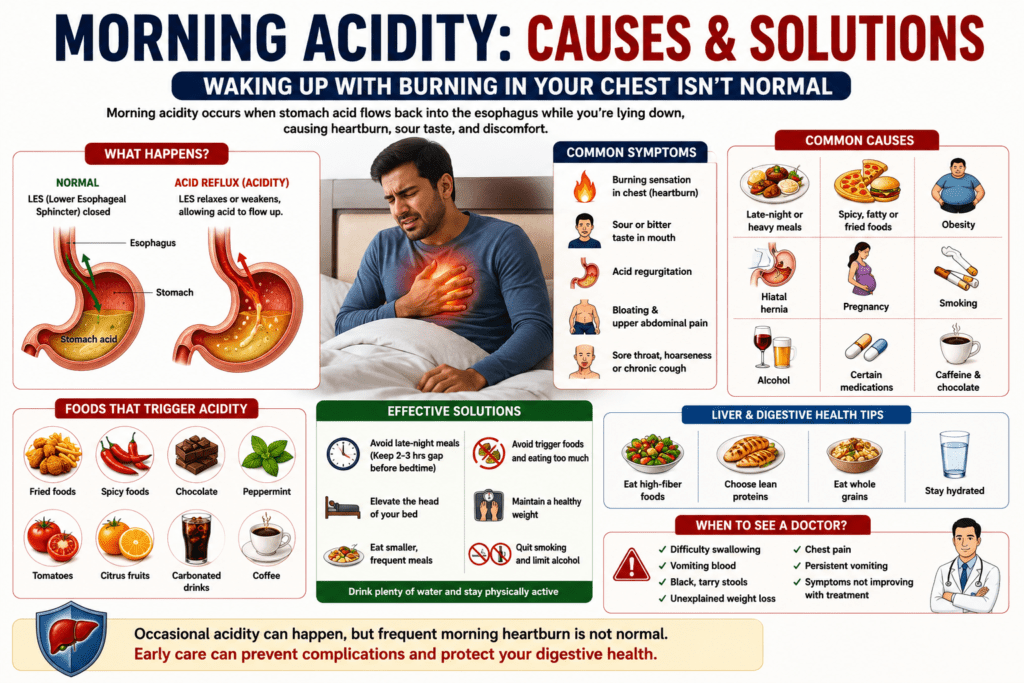
Morning acidity often occurs because stomach acid flows back into the esophagus while you’re lying down. Although occasional heartburn is common, recurring symptoms may indicate Gastroesophageal Reflux Disease (GERD) or another digestive condition that requires medical attention.
Persistent acidity can interfere with sleep, reduce your quality of life, and, if left untreated, may lead to complications such as inflammation of the esophagus, ulcers, narrowing of the esophagus, or even Barrett’s esophagus, a condition associated with an increased risk of esophageal cancer.
The good news is that most cases of morning acidity can be managed effectively through lifestyle changes, dietary modifications, medications, and timely medical care.
In this comprehensive guide, we’ll explain why morning acidity happens, its causes, symptoms, treatment options, preventive measures, and when it’s time to consult a gastroenterologist.
What Is Morning Acidity?
Morning acidity refers to the experience of acid reflux or heartburn shortly after waking up. It occurs when stomach acid moves backward into the esophagus, irritating its lining.
Unlike the stomach, the esophagus does not have a protective lining against acid. As a result, even a small amount of acid reflux can cause discomfort.
Why Does Morning Acidity Happen?
Several factors make acid reflux more likely during the night.
When you lie flat:
- Gravity no longer helps keep stomach contents down.
- Stomach acid can remain in contact with the esophagus for longer.
- Swallowing decreases during sleep, reducing the natural clearance of acid.
- Saliva production decreases, limiting its ability to neutralize acid.
These changes make nighttime and early morning reflux more common.
Common Causes of Morning Acidity
1. Gastroesophageal Reflux Disease (GERD)
GERD is the most common cause of persistent morning acidity.
It develops when the lower esophageal sphincter (LES), a muscular valve between the stomach and esophagus, becomes weak or relaxes inappropriately, allowing stomach acid to flow backward.
2. Late-Night Meals
Eating a heavy meal just before bedtime leaves food in the stomach while you’re lying down, increasing the risk of reflux.
3. Spicy and Fatty Foods
Foods that may trigger acidity include:
- Fried foods
- Spicy curries
- Fast food
- Chocolate
- Peppermint
- Tomatoes
- Citrus fruits in some individuals
These foods may relax the LES or delay stomach emptying.
4. Obesity
Excess abdominal weight increases pressure inside the abdomen, making reflux more likely.
5. Hiatal Hernia
A hiatal hernia occurs when part of the stomach moves upward through the diaphragm, increasing the likelihood of acid reflux.
6. Pregnancy
Hormonal changes and pressure from the growing uterus commonly contribute to heartburn during pregnancy.
7. Smoking
Smoking weakens the LES, reduces saliva production, and irritates the esophagus.
8. Alcohol
Alcohol can relax the LES and increase acid reflux, particularly when consumed in the evening.
9. Certain Medications
Some medicines may worsen reflux, including:
- Certain pain relievers (NSAIDs)
- Calcium channel blockers
- Some asthma medications
- Certain sedatives
Never stop prescribed medications without consulting your doctor.
Symptoms of Morning Acidity
Common symptoms include:
- Burning sensation in the chest (heartburn)
- Sour or bitter taste in the mouth
- Acid regurgitation
- Upper abdominal discomfort
- Frequent burping
- Bloating
- Nausea
- Difficulty swallowing
- Chronic cough
- Hoarseness
- Sore throat, especially in the morning
- Feeling of a lump in the throat
Symptoms may worsen after large meals or when lying down.
Warning Signs That Should Never Be Ignored
Seek prompt medical attention if you experience:
- Difficulty swallowing
- Pain while swallowing
- Vomiting blood
- Black, tarry stools
- Unexplained weight loss
- Persistent vomiting
- Chest pain that may resemble a heart attack
- Symptoms that do not improve with treatment
These symptoms require urgent evaluation.
Possible Complications of Untreated Acid Reflux
Persistent acid exposure may lead to:
Esophagitis
Inflammation of the esophagus.
Esophageal Ulcers
Open sores may develop due to repeated acid injury.
Esophageal Stricture
Scarring can narrow the esophagus, making swallowing difficult.
Barrett’s Esophagus
Long-term reflux may change the lining of the esophagus, increasing the risk of esophageal cancer.
Poor Sleep Quality
Nighttime reflux often disrupts sleep and contributes to daytime fatigue.
How Is Morning Acidity Diagnosed?
Your doctor will evaluate your symptoms and may recommend:
Medical History
A detailed discussion of your eating habits, medications, and symptoms.
Physical Examination
To rule out other possible causes of discomfort.
Upper GI Endoscopy
An endoscopy allows direct visualization of the esophagus and stomach.
It helps identify:
- Inflammation
- Ulcers
- Barrett’s esophagus
- Hiatal hernia
24-Hour pH Monitoring
This specialized test measures acid exposure in the esophagus over a full day.
Esophageal Manometry
This test evaluates the function of the esophagus and LES.
Treatment for Morning Acidity
Treatment depends on the underlying cause and severity.
Lifestyle Changes
Many people experience significant improvement by:
- Avoiding late-night meals
- Eating smaller portions
- Maintaining a healthy weight
- Quitting smoking
- Limiting alcohol
- Exercising regularly
Elevate the Head of Your Bed
Raising the head of the bed by about 6–8 inches can reduce nighttime reflux by using gravity to keep stomach contents down.
Using extra pillows alone is usually less effective because it may only bend the neck rather than elevate the upper body.
Avoid Trigger Foods
Common triggers include:
- Fried foods
- Spicy foods
- Chocolate
- Mint
- Coffee
- Carbonated beverages
- Citrus fruits (for some people)
Keeping a food diary can help identify individual triggers.
Medications
Your doctor may recommend medications such as:
- Antacids for quick symptom relief
- H2 receptor blockers
- Proton pump inhibitors (PPIs)
Take medications only as prescribed.
Surgery
In selected patients with severe GERD that does not respond to medications, anti-reflux surgery may be considered.
Diet Tips to Prevent Morning Acidity
Eat more:
- Oatmeal
- Bananas
- Melons
- Green vegetables
- Whole grains
- Lean proteins
- Low-fat yogurt (if tolerated)
Limit:
- Fried foods
- Excess oil
- Sugary beverages
- Processed foods
- Late-night snacks
Aim to finish dinner at least 2–3 hours before bedtime.
Can Stress Cause Morning Acidity?
Stress does not directly cause acid reflux but may:
- Increase the perception of heartburn
- Lead to unhealthy eating habits
- Affect digestion
- Worsen existing GERD symptoms
Managing stress through relaxation techniques, exercise, and adequate sleep can be helpful.
Can Morning Acidity Be Prevented?
Yes, many cases can be prevented by adopting healthy habits:
- Eat dinner early
- Maintain a healthy weight
- Sleep with the head of the bed elevated
- Avoid tobacco and alcohol
- Limit trigger foods
- Stay physically active
- Follow prescribed treatment if you have GERD
Common Myths About Morning Acidity
Myth: Heartburn every day is normal.
Fact: Frequent heartburn may indicate GERD and should be evaluated.
Myth: Milk always relieves acidity.
Fact: While milk may provide temporary relief for some people, high-fat milk can stimulate additional acid production later.
Myth: Only spicy food causes acidity.
Fact: Fatty foods, chocolate, caffeine, alcohol, obesity, and late-night meals also contribute.
Myth: Acid reflux only affects older adults.
Fact: GERD can affect people of all ages, including young adults.
Frequently Asked Questions
Is morning acidity a sign of GERD?
Frequent morning acidity is commonly associated with GERD, but other digestive conditions may also contribute.
Why is acidity worse in the morning?
Lying flat overnight allows stomach acid to remain in contact with the esophagus for longer, increasing irritation.
Can weight loss improve acidity?
Yes. Losing excess weight often reduces abdominal pressure and improves reflux symptoms.
Is coffee bad for acid reflux?
Coffee may trigger symptoms in some people but not everyone. Individual tolerance varies.
When Should You See a Gastroenterologist?
Consult a gastroenterologist if you have:
- Heartburn more than twice a week
- Difficulty swallowing
- Persistent morning acidity
- Frequent regurgitation
- Chronic cough or hoarseness
- Chest discomfort related to reflux
- Unexplained weight loss
- Symptoms despite medication
Early diagnosis can help prevent long-term complications.
Final Thoughts
Waking up with heartburn, a sour taste in your mouth, or persistent chest burning isn’t something you should consider normal. Morning acidity is often a sign that stomach acid is repeatedly flowing into the esophagus, commonly due to gastroesophageal reflux disease (GERD) or lifestyle factors such as late-night eating, obesity, smoking, or certain dietary habits.
The good news is that most cases can be managed effectively with simple changes, including eating dinner earlier, avoiding trigger foods, maintaining a healthy weight, elevating the head of the bed, and following your doctor’s treatment plan. If symptoms persist or are accompanied by warning signs such as difficulty swallowing, unexplained weight loss, vomiting blood, or black stools, seek medical evaluation promptly.
Your digestive system shouldn’t greet you with pain every morning. Addressing acid reflux early can relieve symptoms, improve your sleep, and protect your esophagus from long-term damage.