Viral Hepatitis: Prevention Guide – Protect Your Liver Before Infection Happens
Your liver is one of the hardest-working organs in your body. It filters toxins, produces bile for digestion, stores nutrients, regulates blood sugar, and supports hundreds of essential functions every day. Despite its remarkable ability to regenerate, the liver is vulnerable to infections—one of the most significant being viral hepatitis.
Viral hepatitis is an inflammation of the liver caused by specific viruses. Millions of people around the world are affected by hepatitis every year, and many don’t realize they are infected until liver damage has already occurred. While some forms of hepatitis cause only short-term illness, others can become chronic and lead to serious complications such as liver cirrhosis, liver failure, or liver cancer.
The encouraging news is that many cases of viral hepatitis are preventable. Vaccination, safe hygiene practices, healthy lifestyle choices, and early medical screening can dramatically reduce the risk of infection and its complications.
In this comprehensive guide, you’ll learn about the different types of viral hepatitis, how they spread, common symptoms, prevention strategies, vaccination, diagnosis, treatment, and when to seek medical care.
What Is Viral Hepatitis?
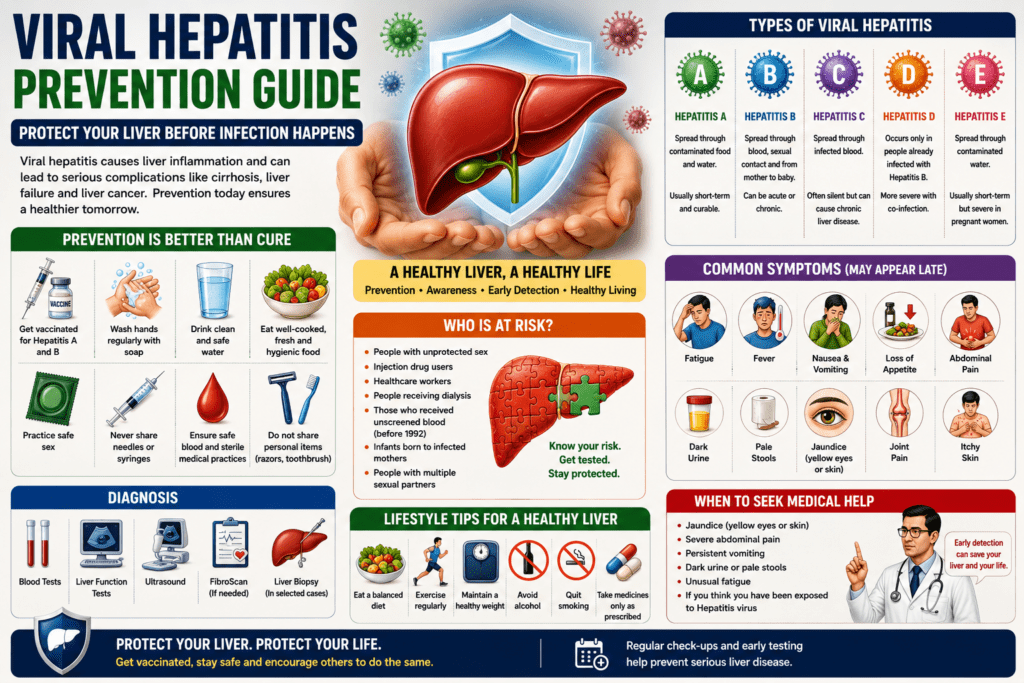
Viral hepatitis is inflammation of the liver caused by viruses. The five major hepatitis viruses are:
- Hepatitis A (HAV)
- Hepatitis B (HBV)
- Hepatitis C (HCV)
- Hepatitis D (HDV)
- Hepatitis E (HEV)
Although they all affect the liver, they differ in how they spread, how severe they become, and how they are treated.
Why Is the Liver So Important?
The liver performs over 500 essential functions, including:
- Filtering harmful substances from the blood
- Producing bile to digest fats
- Storing vitamins and minerals
- Regulating blood sugar
- Producing proteins needed for blood clotting
- Processing medications
- Supporting immunity
When hepatitis causes liver inflammation, these important functions may become impaired.
Types of Viral Hepatitis
Hepatitis A
Hepatitis A is usually a short-term infection that does not become chronic.
How It Spreads
- Contaminated food or water
- Poor hand hygiene
- Close contact with an infected person
- Eating contaminated shellfish
Symptoms
- Fever
- Fatigue
- Nausea
- Vomiting
- Loss of appetite
- Abdominal pain
- Dark urine
- Jaundice
Most people recover completely.
Hepatitis B
Hepatitis B can be either acute or chronic.
It spreads through:
- Infected blood
- Unprotected sexual contact
- Shared needles
- Mother-to-child transmission during birth
Chronic Hepatitis B significantly increases the risk of cirrhosis and liver cancer.
Hepatitis C
Hepatitis C primarily spreads through blood-to-blood contact.
Common sources include:
- Shared needles
- Unsafe medical procedures
- Unscreened blood transfusions in the past
- Rarely through sexual transmission
Many people have no symptoms for years, making regular screening important for high-risk individuals.
Hepatitis D
Hepatitis D occurs only in people already infected with Hepatitis B.
Vaccination against Hepatitis B also protects against Hepatitis D.
Hepatitis E
Hepatitis E usually spreads through contaminated drinking water.
It is more common in areas with poor sanitation.
Pregnant women are at higher risk of severe illness from Hepatitis E.
Common Symptoms of Viral Hepatitis
Early hepatitis may not cause noticeable symptoms.
When symptoms develop, they may include:
- Fatigue
- Fever
- Nausea
- Vomiting
- Loss of appetite
- Abdominal discomfort
- Joint pain
- Dark-colored urine
- Pale stools
- Yellowing of the skin and eyes (jaundice)
- Itchy skin
Some people, especially those with chronic Hepatitis B or C, remain symptom-free for years.
Who Is at Higher Risk?
You may have an increased risk if you:
- Travel to areas with poor sanitation
- Have unprotected sex
- Share needles or syringes
- Work in healthcare
- Live with someone who has hepatitis
- Receive frequent blood products
- Have chronic kidney disease requiring dialysis
- Have HIV infection
- Consume unsafe food or water while traveling
How Viral Hepatitis Spreads
Different viruses spread in different ways.
Food and Water
- Hepatitis A
- Hepatitis E
Blood
- Hepatitis B
- Hepatitis C
- Hepatitis D
Sexual Contact
- Mainly Hepatitis B
- Less commonly Hepatitis C
Mother to Baby
- Hepatitis B
Understanding transmission helps prevent infection.
How to Prevent Viral Hepatitis
1. Get Vaccinated
Vaccination is the most effective protection against:
- Hepatitis A
- Hepatitis B
There is currently no vaccine for Hepatitis C.
2. Practice Good Hand Hygiene
Wash your hands thoroughly:
- Before eating
- After using the restroom
- Before preparing food
Soap and clean water remain one of the best preventive measures.
3. Drink Safe Water
When traveling:
- Drink bottled or properly treated water.
- Avoid ice from unsafe sources.
- Be cautious with street food in areas where sanitation is poor.
4. Eat Safe Food
Choose food that is:
- Freshly cooked
- Served hot
- Properly washed
Avoid raw or undercooked shellfish in high-risk areas.
5. Practice Safe Sex
Using barrier protection and limiting exposure to infected bodily fluids helps reduce the risk of Hepatitis B.
6. Never Share Needles
Avoid sharing:
- Syringes
- Needles
- Tattoo equipment
- Piercing equipment
Ensure sterile equipment is used for all medical and cosmetic procedures.
7. Ensure Safe Blood Transfusions
Modern blood screening has greatly reduced the risk of hepatitis transmission.
Seek medical care from reputable healthcare facilities.
8. Avoid Sharing Personal Items
Do not share:
- Razors
- Toothbrushes
- Nail clippers
These items may carry microscopic amounts of blood.
Can Viral Hepatitis Be Treated?
Treatment depends on the type of hepatitis.
Hepatitis A
Usually resolves with supportive care, including rest, hydration, and good nutrition.
Hepatitis B
Some people recover naturally, while chronic infection may require antiviral medication and long-term monitoring.
Hepatitis C
Modern antiviral medications can cure most cases of Hepatitis C when diagnosed early.
Hepatitis D
Treatment is more challenging and requires specialist care.
Hepatitis E
Most cases resolve on their own with supportive treatment.
Possible Complications
Untreated chronic hepatitis can lead to:
Liver Cirrhosis
Permanent scarring reduces liver function.
Liver Failure
Severe liver damage can become life-threatening.
Liver Cancer
Chronic Hepatitis B and C significantly increase the risk of hepatocellular carcinoma.
Portal Hypertension
Scarring disrupts blood flow through the liver, increasing pressure in the portal vein.
How Is Viral Hepatitis Diagnosed?
Doctors may recommend:
Blood Tests
These help identify:
- Hepatitis virus type
- Liver inflammation
- Liver function
- Viral load (for chronic infections)
Liver Function Tests (LFT)
LFTs assess how well the liver is working.
Ultrasound
Helps evaluate liver size, fatty liver, cirrhosis, or other abnormalities.
FibroScan
A non-invasive test that measures liver stiffness to assess fibrosis or cirrhosis.
Liver Biopsy
Rarely needed today but may be recommended in selected cases.
Healthy Lifestyle Tips for Liver Protection
Protect your liver by:
- Eating a balanced diet
- Maintaining a healthy weight
- Exercising regularly
- Limiting alcohol
- Avoiding smoking
- Taking medications only as prescribed
- Avoiding unnecessary herbal supplements without medical advice
- Managing diabetes and high cholesterol
Common Myths About Viral Hepatitis
Myth: All hepatitis infections are lifelong.
Fact: Hepatitis A and most Hepatitis E infections are short-term and usually resolve completely.
Myth: You can tell if someone has hepatitis.
Fact: Many infected individuals have no visible symptoms.
Myth: Hepatitis only affects people with unhealthy lifestyles.
Fact: Anyone can become infected through contaminated food, water, blood exposure, or childbirth.
Myth: Hepatitis vaccines protect against every type.
Fact: Vaccines are available for Hepatitis A and B but not for Hepatitis C.
Frequently Asked Questions
Can hepatitis spread through casual contact?
No. Hepatitis B and C are not spread by hugging, shaking hands, sharing food, or casual social contact.
Is Hepatitis C curable?
Yes. Modern antiviral medications can cure most people with Hepatitis C when diagnosed and treated appropriately.
Who should get vaccinated?
Children, healthcare workers, travelers to high-risk regions, people with chronic liver disease, and other at-risk groups should discuss vaccination with their healthcare provider.
Can healthy people get hepatitis?
Yes. Viral hepatitis can affect anyone if exposed to the virus.
When Should You See a Gastroenterologist?
Consult a gastroenterologist or liver specialist if you have:
- Persistent fatigue
- Jaundice
- Dark urine
- Abdominal swelling
- Unexplained nausea
- Elevated liver enzymes
- Known exposure to hepatitis
- Chronic Hepatitis B or C
- A family history of liver disease
Early diagnosis improves treatment outcomes and helps prevent long-term liver damage.
Final Thoughts
Viral hepatitis remains a major global health concern, but many infections can be prevented through vaccination, good hygiene, safe food and water practices, responsible healthcare, and regular medical screening. Since some forms of hepatitis cause few or no symptoms in the early stages, awareness and early testing are essential—especially for individuals at higher risk.
Protecting your liver today can prevent serious complications such as cirrhosis, liver failure, and liver cancer in the future. By adopting healthy lifestyle habits, staying informed about vaccination, and seeking prompt medical attention when symptoms arise, you can significantly reduce your risk of viral hepatitis and maintain lifelong liver health.
Your liver works tirelessly every day. Take the steps now to protect it before infection happens.