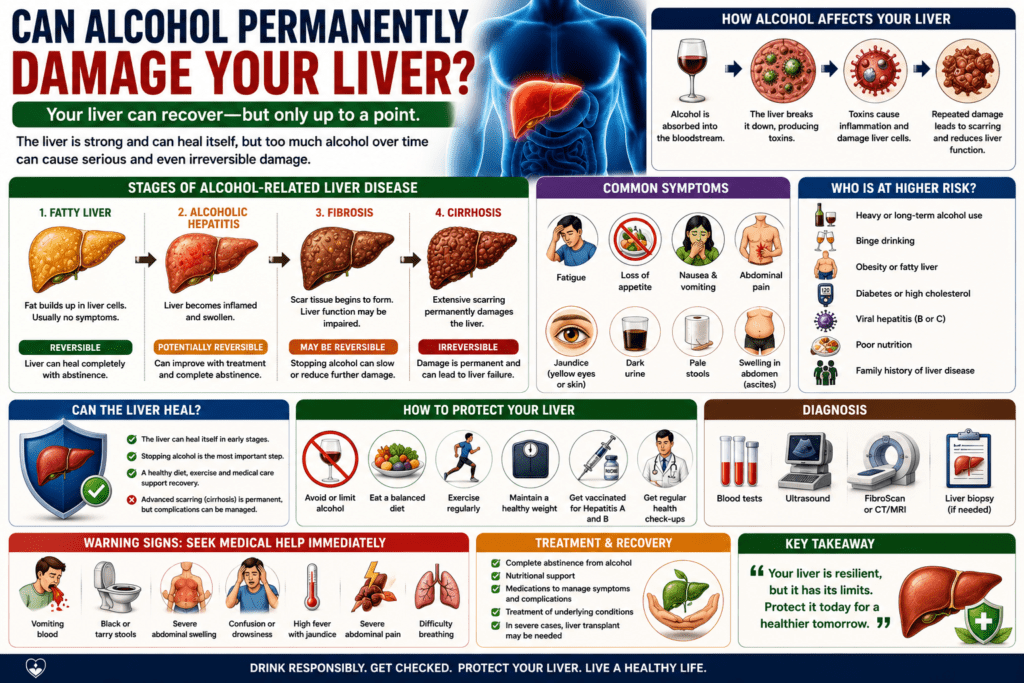
Can Alcohol Permanently Damage Your Liver?
Your liver can recover—but only up to a point.
The liver is one of the most remarkable organs in the human body. It performs more than 500 essential functions, including filtering toxins, metabolizing nutrients, producing bile for digestion, storing vitamins, regulating blood sugar, and processing medications. One of its most impressive abilities is its capacity to repair itself after injury. However, this healing ability has limits.
Excessive alcohol consumption is one of the leading causes of liver disease worldwide. While the liver can often recover from mild alcohol-related damage if drinking stops early, continued heavy alcohol use can cause irreversible scarring, liver failure, and even liver cancer.
Many people assume that only long-term heavy drinkers develop liver disease. In reality, alcohol affects everyone differently. Factors such as genetics, body weight, nutrition, gender, existing liver disease, and drinking patterns all influence the risk of liver damage.
The encouraging news is that early-stage alcohol-related liver disease can often be reversed with complete abstinence from alcohol and healthy lifestyle changes. Recognizing the warning signs and seeking medical care early can make a significant difference.
In this comprehensive guide, you’ll learn how alcohol affects the liver, the stages of alcohol-related liver disease, symptoms, diagnosis, treatment, prevention, and whether liver damage can truly heal.
Why Is the Liver So Important?
The liver is the largest internal organ and serves as the body’s natural detoxification system.
Its essential functions include:
- Filtering toxins from the bloodstream
- Breaking down alcohol and medications
- Producing bile for fat digestion
- Regulating blood sugar
- Storing vitamins and minerals
- Producing proteins needed for blood clotting
- Supporting immune function
- Processing fats, carbohydrates, and proteins
Because the liver is responsible for breaking down alcohol, it bears the greatest burden of alcohol-related damage.
How Does Alcohol Affect the Liver?
When alcohol is consumed, the liver works to break it down into less harmful substances.
During this process, toxic by-products such as acetaldehyde are produced. These substances can:
- Damage liver cells
- Trigger inflammation
- Increase oxidative stress
- Promote fat accumulation
- Cause scar tissue formation
Over time, repeated injury reduces the liver’s ability to repair itself.
Stages of Alcohol-Related Liver Disease
Alcohol-related liver disease usually develops gradually.
1. Fatty Liver (Alcoholic Fatty Liver Disease)
This is the earliest stage.
Fat accumulates inside liver cells, reducing normal liver function.
Symptoms
Most people have no symptoms.
Some may experience:
- Fatigue
- Mild discomfort in the upper right abdomen
- Feeling generally unwell
Can It Be Reversed?
Yes.
Stopping alcohol consumption can often reverse fatty liver within weeks to months.
2. Alcoholic Hepatitis
Continued drinking may cause inflammation and swelling of the liver.
Symptoms include:
- Fever
- Loss of appetite
- Nausea
- Vomiting
- Abdominal pain
- Jaundice
- Fatigue
Alcoholic hepatitis can range from mild to life-threatening.
3. Liver Fibrosis
Repeated inflammation leads to the formation of scar tissue.
At this stage:
- Healthy liver tissue begins to be replaced by fibrosis.
- Liver function may still remain relatively normal.
Stopping alcohol can slow or prevent further progression.
4. Cirrhosis
Cirrhosis is advanced liver scarring.
Scar tissue permanently replaces healthy liver cells, making it difficult for the liver to function.
Unfortunately, cirrhosis is generally irreversible, although treatment can slow progression and prevent complications.
Can Alcohol Permanently Damage the Liver?
The answer is yes, but it depends on the stage of disease.
Fatty Liver
✅ Usually reversible.
Mild Alcoholic Hepatitis
✅ Often improves if alcohol is stopped early.
Fibrosis
⚠ Some improvement may occur, but significant scarring can remain.
Cirrhosis
❌ Permanent damage.
Treatment focuses on preventing further injury rather than reversing existing scars.
Who Is at Higher Risk?
Not everyone develops liver disease at the same rate.
Risk factors include:
- Heavy alcohol consumption
- Drinking daily over many years
- Binge drinking
- Obesity
- Fatty liver disease
- Diabetes
- Viral hepatitis
- Smoking
- Poor nutrition
- Family history of liver disease
Women may develop alcohol-related liver disease with lower alcohol intake than men due to differences in alcohol metabolism.
Symptoms of Alcohol-Related Liver Disease
Early liver disease often causes no symptoms.
As damage progresses, symptoms may include:
- Fatigue
- Weakness
- Loss of appetite
- Nausea
- Weight loss
- Upper right abdominal pain
- Jaundice
- Dark urine
- Pale stools
- Swollen abdomen (ascites)
- Swelling in the legs
- Easy bruising
- Confusion (hepatic encephalopathy)
- Itchy skin
Warning Signs That Need Immediate Medical Attention
Seek urgent medical care if you experience:
- Vomiting blood
- Black, tarry stools
- Severe abdominal swelling
- Confusion or drowsiness
- High fever with jaundice
- Difficulty breathing
- Sudden severe abdominal pain
These may indicate life-threatening complications of advanced liver disease.
Complications of Long-Term Alcohol Use
Untreated alcohol-related liver disease may lead to:
Cirrhosis
Permanent scarring that reduces liver function.
Liver Failure
The liver loses its ability to perform essential functions.
Portal Hypertension
Scar tissue blocks normal blood flow through the liver, increasing pressure in the portal vein.
Ascites
Fluid accumulates inside the abdomen.
Esophageal Varices
Swollen veins in the esophagus may rupture and cause severe bleeding.
Hepatic Encephalopathy
Toxins build up in the bloodstream and affect brain function, leading to confusion and altered consciousness.
Liver Cancer
People with cirrhosis have an increased risk of developing hepatocellular carcinoma.
How Is Alcohol-Related Liver Disease Diagnosed?
Your doctor may recommend:
Medical History
A discussion about alcohol use, symptoms, medications, and other health conditions.
Physical Examination
To look for signs of liver disease such as jaundice, abdominal swelling, or enlarged liver.
Blood Tests
Including:
- Liver Function Tests (LFTs)
- Complete blood count
- Blood clotting tests
- Viral hepatitis screening
Ultrasound
Helps detect:
- Fatty liver
- Cirrhosis
- Liver enlargement
- Ascites
FibroScan
A painless test that measures liver stiffness and estimates fibrosis.
CT Scan or MRI
May be used if advanced liver disease or liver cancer is suspected.
Liver Biopsy
Occasionally recommended to confirm diagnosis or assess the severity of liver damage.
Can the Liver Heal?
One of the liver’s greatest strengths is its ability to regenerate.
However, recovery depends on how much damage has already occurred.
If You Stop Drinking Early
The liver can:
- Reduce inflammation
- Remove excess fat
- Repair damaged liver cells
- Improve liver function
If Cirrhosis Has Developed
Scar tissue cannot be reversed.
However:
- Stopping alcohol slows progression.
- Complications can be managed.
- Quality of life often improves.
Treatment for Alcohol-Related Liver Disease
Treatment focuses on preventing further damage and supporting liver function.
Complete Abstinence from Alcohol
The single most important step.
Stopping alcohol completely offers the best chance for recovery.
Nutritional Support
Many patients are malnourished.
A healthy diet rich in:
- Fruits
- Vegetables
- Whole grains
- Lean proteins
- Healthy fats
helps support liver healing.
Regular Exercise
Exercise helps:
- Reduce fatty liver
- Improve metabolism
- Maintain healthy weight
Aim for at least 150 minutes of moderate activity each week.
Manage Other Medical Conditions
Control:
- Diabetes
- High cholesterol
- Obesity
to reduce additional liver stress.
Medications
Doctors may prescribe medications to treat complications, reduce inflammation, or manage symptoms depending on the stage of disease.
Liver Transplant
For end-stage liver failure, liver transplantation may be considered in carefully selected patients who meet eligibility criteria.
Can Occasional Drinking Damage the Liver?
For many healthy adults, occasional moderate alcohol intake may not cause permanent liver damage.
However, the risk increases with:
- Frequent heavy drinking
- Binge drinking
- Existing liver disease
- Obesity
- Viral hepatitis
If you already have liver disease, your doctor may recommend avoiding alcohol completely.
How to Protect Your Liver
Healthy habits include:
- Avoid excessive alcohol
- Never binge drink
- Maintain a healthy weight
- Exercise regularly
- Eat a balanced diet
- Get vaccinated against Hepatitis A and B if recommended
- Take medications only as prescribed
- Avoid smoking
- Schedule regular health check-ups
Common Myths About Alcohol and Liver Health
Myth: Only alcoholics develop liver disease.
Fact: Anyone who regularly consumes excessive amounts of alcohol may develop liver damage.
Myth: Beer is safer than liquor.
Fact: The total amount of alcohol consumed matters more than the type of drink.
Myth: Liver cleanses can reverse alcohol damage.
Fact: No detox drink or supplement can reverse cirrhosis. The most effective treatment is stopping alcohol and receiving appropriate medical care.
Myth: If I feel fine, my liver is healthy.
Fact: Early liver disease often causes no symptoms.
Frequently Asked Questions
Can fatty liver from alcohol be reversed?
Yes. Early-stage alcoholic fatty liver often improves after stopping alcohol.
How long does the liver take to recover?
Recovery varies depending on the extent of damage. Fatty liver may improve within weeks to months, while advanced scarring cannot be reversed.
Is alcohol-related cirrhosis curable?
No. Cirrhosis is permanent, but treatment can slow progression and reduce complications.
Should I get regular liver tests if I drink alcohol?
People who drink heavily or have other risk factors should discuss liver health screening with their healthcare provider.
When Should You See a Gastroenterologist?
Consult a gastroenterologist if you experience:
- Persistent fatigue
- Yellowing of the skin or eyes
- Abdominal swelling
- Unexplained weight loss
- Ongoing nausea
- Dark urine
- Abnormal liver function tests
- A history of heavy alcohol use
- Symptoms of liver disease
Early diagnosis offers the best opportunity to prevent permanent liver damage.
Final Thoughts
Your liver has an incredible ability to repair itself, but it cannot heal indefinitely. Early alcohol-related liver damage, such as fatty liver and mild inflammation, is often reversible if alcohol consumption stops and healthy lifestyle changes are made. However, continued heavy drinking can lead to fibrosis, cirrhosis, liver failure, and liver cancer—conditions that may be permanent or life-threatening.
The most effective way to protect your liver is to drink responsibly, avoid binge drinking, maintain a healthy lifestyle, and seek medical evaluation if you notice symptoms such as jaundice, persistent fatigue, abdominal swelling, or abnormal liver test results.
Your liver can recover—but only up to a point. The earlier you take action, the greater your chance of preserving your liver health for years to come.