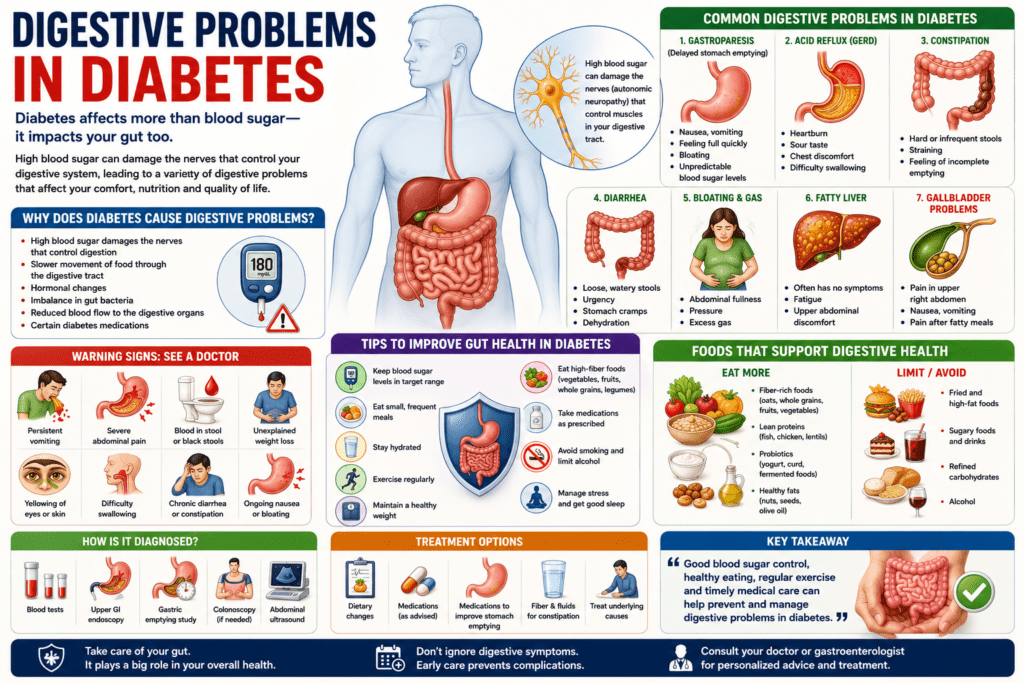
Digestive Problems in Diabetes: Diabetes Affects More Than Blood Sugar—It Impacts Your Gut Too
When most people think about diabetes, they focus on blood sugar levels, insulin, or complications affecting the heart, kidneys, eyes, and nerves. However, one area that is often overlooked is the digestive system. Diabetes can have a significant impact on your gut, leading to symptoms that affect your daily comfort, nutrition, and overall quality of life.
High blood sugar over time can damage the nerves that control the digestive tract, slowing or disrupting the movement of food through the stomach and intestines. As a result, people with diabetes may experience problems such as acid reflux, bloating, constipation, diarrhea, nausea, delayed stomach emptying, and difficulty absorbing nutrients.
The good news is that many diabetes-related digestive problems can be prevented or effectively managed with good blood sugar control, a healthy diet, regular physical activity, and timely medical care.
In this comprehensive guide, you’ll learn how diabetes affects the digestive system, common digestive disorders linked to diabetes, warning signs, treatment options, dietary recommendations, and practical steps to maintain a healthy gut.
How Does Diabetes Affect the Digestive System?
The digestive system depends on healthy nerves and muscles to move food smoothly from the mouth to the stomach, intestines, and colon.
When blood sugar remains high for prolonged periods, it can damage the autonomic nerves that control digestion. This condition is known as diabetic autonomic neuropathy.
As nerve damage progresses, the muscles of the digestive tract may not work efficiently, leading to slower or irregular digestion.
Diabetes may also affect:
- Stomach emptying
- Intestinal movement
- Gallbladder function
- Gut bacteria (microbiome)
- Nutrient absorption
Common Digestive Problems in Diabetes
1. Gastroparesis
Gastroparesis is one of the best-known digestive complications of diabetes.
It occurs when nerve damage slows stomach emptying.
Symptoms
- Nausea
- Vomiting
- Feeling full quickly
- Bloating
- Upper abdominal discomfort
- Loss of appetite
- Unpredictable blood sugar levels
Delayed stomach emptying makes blood sugar management more difficult because food enters the intestines unpredictably.
2. Acid Reflux (GERD)
People with diabetes are more likely to experience gastroesophageal reflux disease (GERD).
Symptoms include:
- Heartburn
- Sour taste in the mouth
- Chest discomfort
- Chronic cough
- Difficulty swallowing
Obesity and delayed stomach emptying increase the risk.
3. Constipation
Constipation is very common in diabetes.
Causes include:
- Nerve damage
- Dehydration
- Reduced physical activity
- Certain medications
- Low-fiber diet
Symptoms include:
- Hard stools
- Infrequent bowel movements
- Straining
- Feeling of incomplete emptying
4. Diarrhea
Some people with long-standing diabetes experience chronic diarrhea.
Possible causes include:
- Nerve damage
- Medication side effects
- Changes in gut bacteria
- Small intestinal bacterial overgrowth (SIBO)
5. Bloating and Gas
Slowed digestion allows food to remain longer in the digestive tract, increasing gas production.
Bloating may worsen after large meals.
6. Fatty Liver Disease
People with type 2 diabetes have a significantly higher risk of developing non-alcoholic fatty liver disease (NAFLD).
Risk factors include:
- Obesity
- Insulin resistance
- High cholesterol
- Metabolic syndrome
Early fatty liver often has no symptoms but may progress if untreated.
7. Gallbladder Disease
Diabetes increases the likelihood of gallstones and gallbladder dysfunction.
Symptoms include:
- Pain in the upper right abdomen
- Nausea
- Vomiting
- Pain after fatty meals
Why Blood Sugar Control Matters
Keeping blood sugar within your target range helps:
- Protect digestive nerves
- Improve stomach emptying
- Reduce constipation
- Lower inflammation
- Improve gut function
- Reduce the risk of fatty liver disease
Good diabetes management benefits the entire digestive system.
Symptoms You Should Never Ignore
Seek medical evaluation if you experience:
- Persistent vomiting
- Severe abdominal pain
- Blood in the stool
- Black stools
- Difficulty swallowing
- Unexplained weight loss
- Persistent constipation or diarrhea
- Jaundice
- Ongoing nausea
These symptoms may indicate a serious digestive condition requiring prompt treatment.
How Are Digestive Problems Diagnosed?
Your doctor may recommend:
Blood Tests
To assess:
- Blood sugar control
- Liver function
- Nutritional status
- Infection
Upper GI Endoscopy
Used to evaluate:
- GERD
- Ulcers
- Difficulty swallowing
- Persistent nausea
Gastric Emptying Study
This specialized test measures how quickly food leaves the stomach and is the standard test for diagnosing gastroparesis.
Colonoscopy
Recommended for:
- Blood in stool
- Chronic constipation
- Persistent diarrhea
- Colorectal cancer screening
Abdominal Ultrasound
Can identify:
- Fatty liver
- Gallstones
- Liver abnormalities
Treatment Options
Treatment depends on the underlying digestive problem.
Improve Blood Sugar Control
This is the foundation of treatment.
Better glucose control often improves digestive symptoms over time.
Healthy Eating
Choose:
- High-fiber foods (as tolerated)
- Whole grains
- Fruits
- Vegetables
- Lean proteins
- Healthy fats
Eat smaller meals throughout the day rather than large portions.
Stay Hydrated
Adequate fluid intake helps prevent constipation and supports digestion.
Exercise Regularly
Physical activity:
- Improves bowel movements
- Supports healthy weight
- Improves insulin sensitivity
- Helps reduce fatty liver
Aim for 150 minutes of moderate exercise per week.
Medications
Your healthcare provider may prescribe medications to:
- Improve stomach emptying
- Reduce acid reflux
- Relieve constipation
- Control diarrhea
- Manage nausea
Take medications only as directed.
Best Foods for Gut Health in Diabetes
Include:
Whole Grains
- Oats
- Brown rice
- Whole wheat
- Millets
Vegetables
- Spinach
- Broccoli
- Carrots
- Beans
- Cucumber
Fruits
- Apples
- Berries
- Guava
- Papaya
- Pears
Lean Proteins
- Fish
- Chicken
- Lentils
- Tofu
Healthy Fats
- Olive oil
- Almonds
- Walnuts
- Flaxseeds
- Chia seeds
Foods to Limit
Reduce intake of:
- Sugary drinks
- Fried foods
- Highly processed snacks
- Refined carbohydrates
- Excess sweets
- Saturated fats
- Alcohol (especially if liver disease is present)
Can Stress Make Digestive Problems Worse?
Yes.
Stress affects the gut-brain axis, which connects the brain and digestive system.
Stress can worsen:
- GERD
- IBS
- Constipation
- Diarrhea
- Bloating
Stress management techniques include:
- Meditation
- Yoga
- Walking
- Deep breathing
- Adequate sleep
Can Digestive Problems Be Prevented?
Many diabetes-related digestive complications can be reduced by:
- Maintaining healthy blood sugar levels
- Following a balanced diet
- Exercising regularly
- Staying hydrated
- Avoiding smoking
- Limiting alcohol
- Taking medications as prescribed
- Scheduling regular health check-ups
Common Myths About Diabetes and Digestion
Myth: Diabetes only affects blood sugar.
Fact: Diabetes can affect the nerves controlling the digestive tract, liver, and gallbladder.
Myth: Constipation is normal with aging.
Fact: Persistent constipation in diabetes may indicate nerve damage and should be evaluated.
Myth: Digestive symptoms always mean food poisoning.
Fact: Long-term diabetes can itself cause nausea, bloating, and delayed digestion.
Myth: Fatty liver only occurs in people who drink alcohol.
Fact: Non-alcoholic fatty liver disease is common in people with type 2 diabetes.
Frequently Asked Questions
Can diabetes cause stomach problems?
Yes. Diabetes can lead to delayed stomach emptying (gastroparesis), acid reflux, nausea, bloating, and abdominal discomfort.
Why do diabetics become constipated?
High blood sugar may damage the nerves that regulate bowel movement, slowing intestinal transit.
Does better blood sugar control improve digestion?
In many cases, yes. Maintaining target blood glucose levels helps protect nerves and improve digestive function.
Is fatty liver common in diabetes?
Yes. People with type 2 diabetes are at a significantly higher risk of developing non-alcoholic fatty liver disease.
When Should You See a Gastroenterologist?
Consult a gastroenterologist if you have:
- Persistent nausea or vomiting
- Severe bloating
- Difficulty swallowing
- Frequent acid reflux
- Blood in your stool
- Chronic constipation or diarrhea
- Unexplained weight loss
- Ongoing abdominal pain
- Abnormal liver function tests
Early evaluation can identify the cause and prevent complications.
Final Thoughts
Diabetes affects much more than blood sugar—it can have a profound impact on your digestive system. From gastroparesis and acid reflux to constipation, diarrhea, fatty liver disease, and gallbladder problems, digestive complications can develop when high blood sugar damages the nerves and organs involved in digestion.
Fortunately, many of these problems can be prevented or managed through consistent blood sugar control, a balanced diet, regular physical activity, adequate hydration, and routine medical care. Paying attention to digestive symptoms and seeking early evaluation when problems arise can improve your quality of life and reduce the risk of long-term complications.
If you’re living with diabetes and experiencing persistent digestive issues, don’t ignore them. Working with your healthcare provider and a gastroenterologist can help you protect both your gut and your overall health for years to come.