When Should You Visit a Gastroenterologist?
Don’t wait until symptoms become emergencies.
Many people experience digestive discomfort from time to time. Occasional heartburn after a spicy meal, mild constipation during travel, or temporary bloating after overeating is usually not a cause for concern. However, when digestive symptoms become persistent, severe, or interfere with your daily life, they may be signaling an underlying condition that requires medical attention.
Unfortunately, many people ignore digestive symptoms, hoping they will disappear on their own. Others rely on over-the-counter medications for months without identifying the real cause. Delaying medical evaluation can allow certain digestive diseases to progress, making treatment more difficult and increasing the risk of complications.
A gastroenterologist is a doctor who specializes in diagnosing and treating diseases of the digestive system, including the esophagus, stomach, liver, pancreas, gallbladder, small intestine, colon, and rectum. Early consultation with a gastroenterologist can help detect problems before they become serious and improve long-term digestive health.
In this comprehensive guide, you’ll learn when it’s time to see a gastroenterologist, common digestive symptoms that should never be ignored, the tests your doctor may recommend, and how early diagnosis can prevent complications.
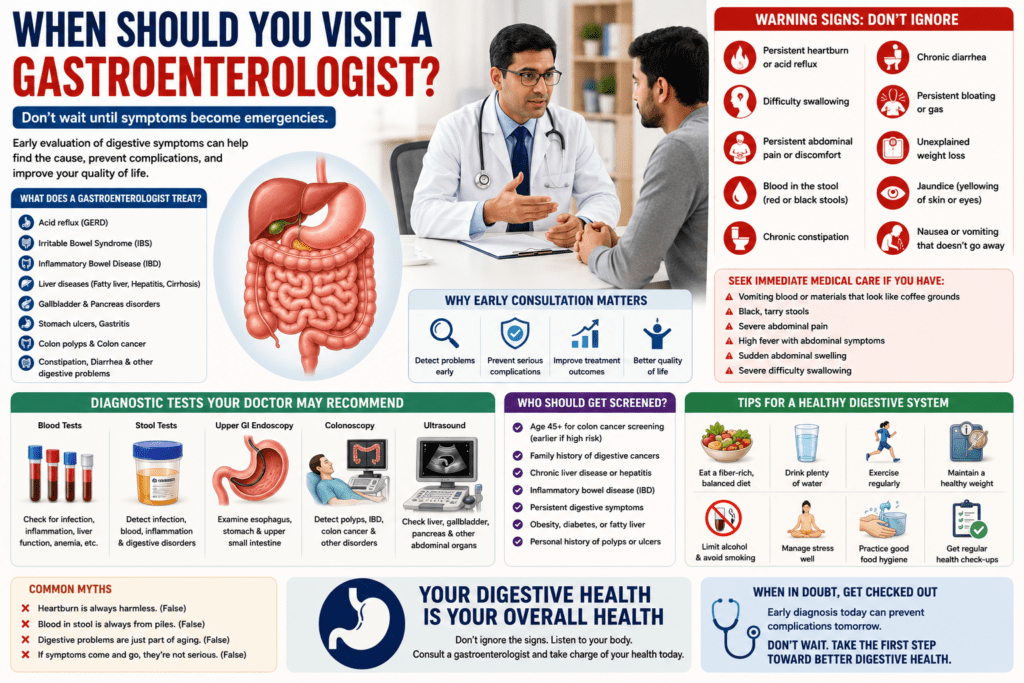
What Does a Gastroenterologist Treat?
A gastroenterologist specializes in disorders affecting the digestive tract and related organs.
Common conditions include:
- Acid reflux (GERD)
- Gastritis
- Peptic ulcers
- Irritable Bowel Syndrome (IBS)
- Inflammatory Bowel Disease (IBD)
- Constipation
- Chronic diarrhea
- Fatty liver disease
- Viral hepatitis
- Gallstones
- Pancreatitis
- Celiac disease
- Colon polyps
- Colorectal cancer
- Liver cirrhosis
- Digestive bleeding
These conditions range from mild and treatable to potentially life-threatening if left untreated.
Why Early Evaluation Matters
Many digestive disorders develop gradually.
Early diagnosis can:
- Prevent disease progression
- Reduce complications
- Improve treatment success
- Relieve symptoms sooner
- Detect cancer at an earlier stage
- Improve quality of life
Waiting until symptoms become severe may delay effective treatment.
Warning Signs You Should Never Ignore
1. Persistent Heartburn or Acid Reflux
Heartburn that occurs more than twice a week may indicate Gastroesophageal Reflux Disease (GERD).
Symptoms include:
- Burning sensation in the chest
- Sour taste in the mouth
- Regurgitation
- Chronic cough
- Hoarseness
Untreated GERD may lead to inflammation, ulcers, or Barrett’s esophagus.
2. Difficulty Swallowing
Difficulty swallowing should never be ignored.
Possible causes include:
- Esophageal narrowing
- Severe reflux
- Esophageal inflammation
- Esophageal cancer
Prompt medical evaluation is essential.
3. Persistent Abdominal Pain
Ongoing abdominal pain may result from:
- Gallstones
- Ulcers
- Pancreatitis
- Liver disease
- IBS
- Inflammatory bowel disease
- Appendicitis
The location, severity, and duration of pain help guide diagnosis.
4. Blood in the Stool
Blood may appear:
- Bright red
- Dark red
- Black and tarry
Possible causes include:
- Hemorrhoids
- Colon polyps
- Ulcers
- Diverticular disease
- Inflammatory bowel disease
- Colorectal cancer
Any unexplained blood in the stool requires medical attention.
5. Chronic Constipation
Constipation lasting several weeks may indicate:
- Slow bowel movement
- IBS
- Colon disorders
- Medication side effects
- Thyroid disorders
Persistent constipation should be evaluated, especially if accompanied by weight loss or blood in the stool.
6. Chronic Diarrhea
Diarrhea lasting more than four weeks may be caused by:
- Infection
- IBS
- Inflammatory bowel disease
- Celiac disease
- Food intolerance
- Microscopic colitis
Medical assessment is important to identify the cause.
7. Persistent Bloating
Occasional bloating is common.
Daily bloating may indicate:
- IBS
- Constipation
- Food intolerance
- Small intestinal bacterial overgrowth (SIBO)
- Ovarian conditions
- Other digestive disorders
8. Unexplained Weight Loss
Losing weight without trying may signal:
- Malabsorption
- Chronic infection
- Inflammatory bowel disease
- Pancreatic disease
- Cancer
Unexplained weight loss always deserves evaluation.
9. Jaundice
Yellowing of the skin or eyes may indicate:
- Hepatitis
- Gallstones
- Liver disease
- Bile duct obstruction
- Pancreatic disease
Jaundice requires urgent medical assessment.
10. Persistent Nausea or Vomiting
Long-lasting nausea or vomiting may be related to:
- Stomach ulcers
- Gastroparesis
- Intestinal obstruction
- Gallbladder disease
- Pancreatitis
Symptoms That Need Immediate Medical Attention
Seek emergency care if you experience:
- Vomiting blood
- Black, tarry stools
- Severe abdominal pain
- High fever with abdominal pain
- Persistent vomiting with dehydration
- Severe difficulty swallowing
- Sudden abdominal swelling
- Confusion with jaundice
These symptoms may indicate a medical emergency.
Common Digestive Conditions Diagnosed by Gastroenterologists
GERD
A chronic condition where stomach acid repeatedly flows back into the esophagus.
Irritable Bowel Syndrome (IBS)
A functional bowel disorder causing abdominal pain, bloating, constipation, diarrhea, or alternating bowel habits.
Inflammatory Bowel Disease (IBD)
Includes:
- Crohn’s disease
- Ulcerative colitis
These conditions cause chronic inflammation of the digestive tract.
Fatty Liver Disease
Fat accumulation in the liver, often linked to obesity, diabetes, and metabolic syndrome.
Gallstones
Small stones that form in the gallbladder and may cause severe abdominal pain.
Pancreatitis
Inflammation of the pancreas requiring prompt medical evaluation.
Viral Hepatitis
Hepatitis A, B, C, D, and E can damage the liver if untreated.
Colon Polyps
Polyps are growths inside the colon that may become cancerous over time.
Routine screening helps detect and remove them early.
What Tests Might a Gastroenterologist Recommend?
Blood Tests
Used to evaluate:
- Liver function
- Pancreatic enzymes
- Infection
- Inflammation
- Anemia
Stool Tests
Can detect:
- Infection
- Blood
- Inflammation
- Digestive disorders
Upper GI Endoscopy
Allows direct visualization of the:
- Esophagus
- Stomach
- Upper small intestine
Helpful for diagnosing GERD, ulcers, gastritis, and swallowing disorders.
Colonoscopy
Recommended for:
- Blood in stool
- Chronic bowel changes
- Colon cancer screening
- Chronic diarrhea
- Persistent constipation
Ultrasound
Can identify:
- Gallstones
- Fatty liver
- Liver disease
- Pancreatic abnormalities
FibroScan
Measures liver stiffness and helps assess liver fibrosis and cirrhosis without surgery.
CT Scan or MRI
Provides detailed imaging of abdominal organs when needed.
Who Should Consider Preventive Screening?
Routine screening is especially important for people who:
- Are 45 years or older for colorectal cancer screening (average risk)
- Have a family history of colorectal cancer
- Have chronic liver disease
- Have inflammatory bowel disease
- Have persistent digestive symptoms
- Have chronic hepatitis
- Have obesity or diabetes with suspected fatty liver disease
Your doctor may recommend earlier screening based on your personal or family medical history.
How to Keep Your Digestive System Healthy
Simple habits can lower your risk of digestive diseases:
- Eat a balanced, fiber-rich diet
- Drink enough water
- Exercise regularly
- Maintain a healthy weight
- Limit alcohol consumption
- Avoid smoking
- Practice good food hygiene
- Manage stress
- Get enough sleep
- Schedule routine health check-ups
Common Myths About Digestive Symptoms
Myth: Heartburn is always harmless.
Fact: Frequent heartburn may indicate GERD and can damage the esophagus over time.
Myth: Blood in the stool is always caused by hemorrhoids.
Fact: Blood may also indicate colon polyps, inflammatory bowel disease, ulcers, or colorectal cancer.
Myth: Digestive problems are just part of aging.
Fact: Persistent symptoms are never a normal part of aging and should be evaluated.
Myth: If symptoms come and go, they don’t need treatment.
Fact: Many chronic digestive diseases fluctuate over time but still require medical care.
Frequently Asked Questions
When should I see a gastroenterologist instead of my primary care doctor?
If you have persistent digestive symptoms, abnormal liver tests, blood in the stool, unexplained weight loss, or recurrent abdominal pain, your primary care doctor may refer you to a gastroenterologist or you may seek specialist evaluation directly where appropriate.
How often should I have a colonoscopy?
For people at average risk, colorectal cancer screening often begins at age 45. The interval depends on your findings and personal risk factors.
Can digestive symptoms be caused by stress?
Yes. Stress can worsen conditions such as IBS, GERD, and functional digestive disorders, but persistent symptoms still deserve medical evaluation.
Is bloating always caused by diet?
No. While diet is a common factor, bloating can also result from constipation, IBS, food intolerances, liver disease, or other gastrointestinal conditions.
When Should You Schedule an Appointment?
Arrange a consultation with a gastroenterologist if you have:
- Heartburn lasting more than a few weeks
- Difficulty swallowing
- Blood in the stool
- Black stools
- Persistent abdominal pain
- Chronic constipation or diarrhea
- Daily bloating
- Unexplained weight loss
- Jaundice
- Abnormal liver function tests
- A family history of digestive cancers
Early evaluation often leads to faster diagnosis and more effective treatment.
Final Thoughts
Digestive symptoms are your body’s way of telling you that something may not be right. While occasional heartburn, bloating, or constipation can happen to anyone, persistent or severe symptoms should never be ignored. Conditions such as GERD, ulcers, fatty liver disease, inflammatory bowel disease, gallstones, pancreatitis, and colorectal cancer are often easier to treat when detected early.
A gastroenterologist has the expertise and specialized tools to diagnose digestive disorders accurately and recommend personalized treatment. Whether you are dealing with ongoing stomach discomfort, changes in bowel habits, blood in the stool, or abnormal liver tests, seeking medical advice promptly can prevent complications and improve your long-term health.
Don’t wait until symptoms become emergencies. Listening to your body and seeking timely care is one of the best investments you can make in your digestive health.