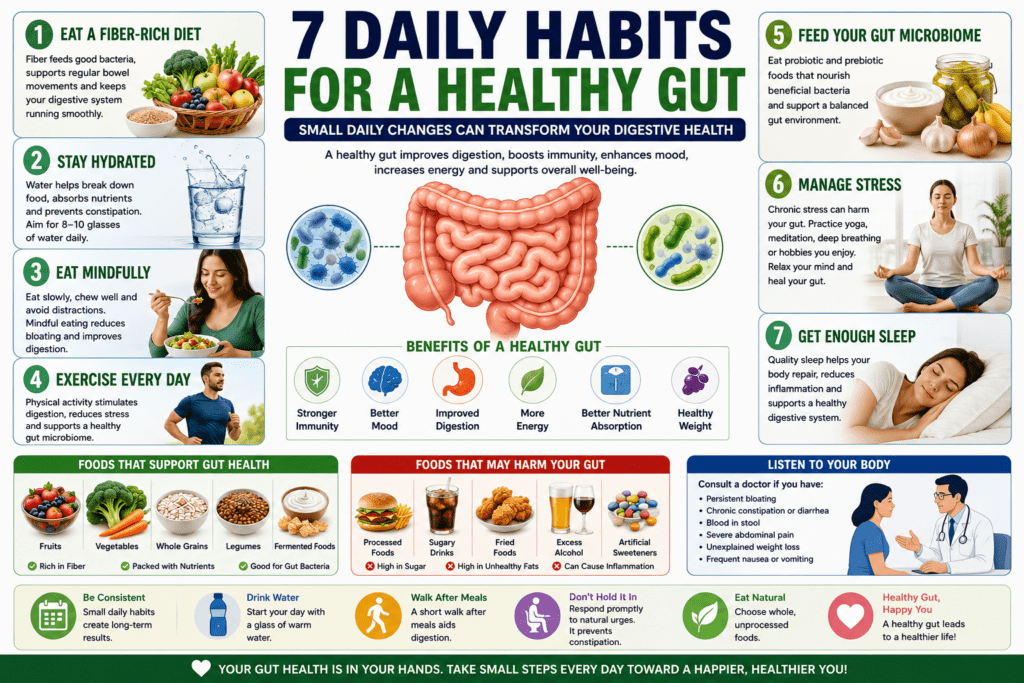
7 Daily Habits for a Healthy Gut
Small daily changes can transform your digestive health.
Your digestive system works around the clock to break down food, absorb nutrients, eliminate waste, and support your immune system. In fact, nearly 70% of your immune cells are located in your gut, making digestive health an essential part of your overall well-being. Yet, many people only pay attention to their gut when they experience symptoms such as bloating, constipation, diarrhea, acidity, or stomach pain.
The good news is that maintaining a healthy gut doesn’t always require drastic diets or expensive supplements. Consistent daily habits can have a powerful impact on your digestive system. Eating nutritious foods, staying hydrated, exercising regularly, managing stress, and getting enough sleep all contribute to a healthier gut and better quality of life.
Whether you’re looking to prevent digestive problems or improve existing symptoms, adopting healthy routines can strengthen your gut microbiome, support regular bowel movements, reduce inflammation, and improve nutrient absorption.
In this guide, we’ll explore seven simple daily habits that can help keep your digestive system healthy and functioning at its best.
Why Gut Health Matters
Your digestive system includes the mouth, esophagus, stomach, small intestine, large intestine, liver, pancreas, and gallbladder. Together, these organs perform essential functions such as:
- Digesting food
- Absorbing nutrients
- Eliminating waste
- Producing vitamins
- Supporting the immune system
- Maintaining a healthy balance of gut bacteria
When your digestive system functions well, you are more likely to experience better energy levels, improved immunity, healthy bowel habits, and overall wellness.
Habit 1: Eat a Fiber-Rich Diet
Fiber is one of the most important nutrients for digestive health. It helps food move smoothly through the digestive tract and nourishes beneficial gut bacteria.
Benefits of Fiber
- Promotes regular bowel movements
- Prevents constipation
- Supports healthy gut bacteria
- Helps control blood sugar
- May reduce cholesterol levels
Fiber-Rich Foods
- Whole grains
- Oats
- Brown rice
- Apples
- Pears
- Berries
- Lentils
- Chickpeas
- Spinach
- Broccoli
- Carrots
- Millets
Increase fiber gradually and drink plenty of water to prevent discomfort.
Habit 2: Stay Hydrated
Water is essential for proper digestion. It helps dissolve nutrients, supports bowel movements, and prevents constipation.
Signs of Dehydration
- Dry mouth
- Dark urine
- Fatigue
- Constipation
- Headaches
Aim to drink adequate fluids throughout the day, adjusting intake based on activity level and climate.
Good hydration sources include:
- Water
- Coconut water
- Herbal teas
- Fresh fruits with high water content
Habit 3: Eat Mindfully
How you eat is just as important as what you eat.
Mindful eating includes:
- Eating slowly
- Chewing food thoroughly
- Avoiding distractions such as phones or television
- Recognizing hunger and fullness cues
Eating too quickly can cause you to swallow excess air, leading to bloating and indigestion.
Habit 4: Exercise Every Day
Regular physical activity stimulates digestion and helps maintain a healthy digestive tract.
Benefits of Exercise
- Improves bowel movements
- Reduces constipation
- Supports healthy weight
- Lowers inflammation
- Improves insulin sensitivity
- Supports gut microbiome diversity
Aim for at least 150 minutes of moderate-intensity exercise per week, such as:
- Walking
- Cycling
- Swimming
- Yoga
- Light strength training
Even a short walk after meals can aid digestion.
Habit 5: Feed Your Gut Microbiome
Your gut contains trillions of beneficial microorganisms that play a vital role in digestion and immunity.
Support your microbiome by eating:
Probiotic Foods
- Yogurt with live cultures
- Kefir
- Fermented vegetables
- Idli
- Dosa (fermented batter)
Prebiotic Foods
- Bananas
- Garlic
- Onions
- Oats
- Asparagus
- Chicory root
These foods nourish beneficial bacteria and promote a balanced gut environment.
Habit 6: Manage Stress
Your gut and brain communicate through the gut-brain axis. Chronic stress can disrupt digestion and worsen conditions such as:
- Irritable Bowel Syndrome (IBS)
- Acid reflux (GERD)
- Bloating
- Constipation
- Diarrhea
Healthy Stress Management
- Meditation
- Deep breathing exercises
- Yoga
- Spending time outdoors
- Reading
- Listening to music
- Talking with family or friends
Taking time to relax each day benefits both mental and digestive health.
Habit 7: Get Enough Sleep
Quality sleep allows your body to repair and regulate many essential functions, including digestion.
Poor sleep has been linked to:
- Acid reflux
- Increased inflammation
- Changes in gut bacteria
- Weight gain
- Poor blood sugar control
Aim for 7–9 hours of sleep each night and maintain a consistent sleep schedule.
Foods That Support Gut Health
A balanced diet is the foundation of digestive wellness.
Choose foods such as:
Fruits
- Apples
- Bananas
- Papaya
- Berries
- Oranges
Vegetables
- Spinach
- Broccoli
- Carrots
- Cucumber
- Pumpkin
Whole Grains
- Oats
- Brown rice
- Whole wheat
- Millets
- Quinoa
Lean Proteins
- Fish
- Chicken
- Eggs
- Lentils
- Beans
Healthy Fats
- Olive oil
- Almonds
- Walnuts
- Chia seeds
- Flaxseeds
Foods That May Harm Gut Health
Limit foods that can contribute to digestive discomfort:
- Highly processed foods
- Sugary drinks
- Excess alcohol
- Fried foods
- Processed meats
- Excessive spicy foods (if they trigger symptoms)
- Artificial sweeteners (for some people)
Moderation is key rather than complete elimination for most individuals.
Common Digestive Symptoms to Watch For
Occasional digestive discomfort is common, but persistent symptoms deserve attention.
Consult a healthcare provider if you experience:
- Frequent bloating
- Persistent heartburn
- Chronic constipation
- Ongoing diarrhea
- Blood in the stool
- Severe abdominal pain
- Difficulty swallowing
- Unexplained weight loss
- Persistent nausea or vomiting
Early evaluation helps identify and treat underlying conditions before complications develop.
The Role of Regular Health Check-Ups
Routine medical visits can detect digestive disorders early.
Your doctor may recommend:
- Blood tests
- Liver function tests
- Stool tests
- Ultrasound
- Endoscopy
- Colonoscopy (when appropriate)
Screening recommendations vary depending on age, symptoms, and personal or family history.
Common Myths About Gut Health
Myth: Everyone should take probiotic supplements.
Fact: Many people can support their gut microbiome through a balanced diet. Supplements may be helpful in some situations but are not necessary for everyone.
Myth: Detox drinks cleanse the gut.
Fact: Your liver and kidneys naturally remove waste products. There is no strong evidence that detox drinks improve digestive health.
Myth: Daily bowel movements are the only sign of a healthy gut.
Fact: Normal bowel frequency varies among individuals. What’s important is a consistent pattern without discomfort or concerning symptoms.
Myth: All bacteria are harmful.
Fact: Beneficial gut bacteria are essential for digestion, immunity, and overall health.
Frequently Asked Questions
How long does it take to improve gut health?
Positive changes may begin within a few weeks of adopting healthier habits, although long-term consistency provides the greatest benefits.
Is yogurt good for gut health?
Yogurt with live cultures can provide beneficial bacteria that support digestive health, provided it is well tolerated.
Does drinking water improve digestion?
Yes. Staying hydrated supports nutrient absorption and healthy bowel movements.
Can exercise reduce bloating?
Regular physical activity helps move gas through the digestive tract and promotes regular bowel function.
When Should You See a Gastroenterologist?
Seek medical advice if you have:
- Persistent digestive symptoms lasting several weeks
- Blood in the stool
- Chronic abdominal pain
- Severe bloating
- Ongoing constipation or diarrhea
- Frequent vomiting
- Difficulty swallowing
- Jaundice
- Unexplained weight loss
A gastroenterologist can evaluate your symptoms and recommend appropriate testing and treatment.
Final Thoughts
A healthy gut is built through consistent daily habits rather than quick fixes. Eating a fiber-rich diet, staying hydrated, exercising regularly, managing stress, sleeping well, practicing mindful eating, and supporting your gut microbiome can significantly improve digestion and overall health.
While occasional digestive discomfort is common, persistent symptoms should never be ignored. Early medical evaluation can help identify underlying conditions and prevent complications.
Remember, small daily changes can transform your digestive health. By making these seven habits part of your everyday routine, you’ll not only support a healthier digestive system but also enhance your energy, immunity, and overall quality of life for years to come.