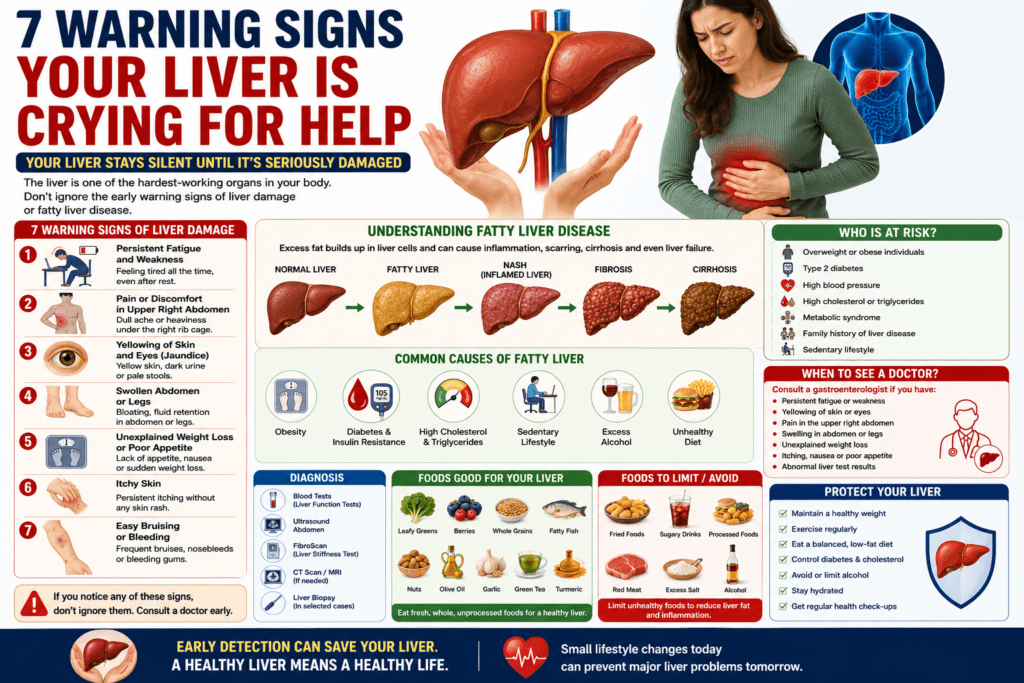
7 Warning Signs Your Liver Is Crying for Help
Your liver stays silent until it’s seriously damaged.
The liver is one of the hardest-working organs in the human body. Every day, it performs hundreds of essential functions—from filtering toxins and processing nutrients to producing bile, storing energy, regulating cholesterol, and supporting your immune system. Despite its remarkable ability to repair itself, the liver often suffers in silence. Unlike many other organs, it may not cause noticeable symptoms until significant damage has already occurred.
One of the most common liver conditions today is non-alcoholic fatty liver disease (NAFLD), now increasingly referred to as metabolic dysfunction-associated steatotic liver disease (MASLD). It affects millions of people worldwide and is closely linked to obesity, type 2 diabetes, high cholesterol, insulin resistance, and sedentary lifestyles. In its early stages, fatty liver disease is often reversible. However, if ignored, it can progress to inflammation, fibrosis (scarring), cirrhosis, liver failure, and even liver cancer.
Recognizing the warning signs early can make all the difference. In this blog, we’ll explore seven important symptoms that may indicate your liver needs attention, along with the causes, diagnosis, treatment options, and practical steps you can take to protect your liver health.
Why Is the Liver So Important?
Your liver is located in the upper right side of your abdomen and performs more than 500 vital functions, including:
- Filtering toxins from the blood
- Producing bile for digestion
- Metabolizing fats, proteins, and carbohydrates
- Storing vitamins and minerals
- Regulating blood sugar
- Producing proteins that help blood clot
- Supporting immune function
- Breaking down medications and alcohol
Because the liver has a remarkable ability to compensate for damage, symptoms often appear only after disease has progressed.
What Is Fatty Liver Disease?
Fatty liver disease occurs when excess fat accumulates inside liver cells. A small amount of fat is normal, but when it exceeds healthy levels, the liver becomes inflamed and may eventually develop permanent scarring.
There are two main types:
1. Non-Alcoholic Fatty Liver Disease (NAFLD/MASLD)
Occurs in people who drink little or no alcohol. Common risk factors include:
- Obesity
- Type 2 diabetes
- High cholesterol
- High triglycerides
- Metabolic syndrome
- Polycystic ovary syndrome (PCOS)
- Sedentary lifestyle
2. Alcohol-Related Liver Disease
Caused by excessive alcohol consumption over time.
Both conditions can progress to fibrosis, cirrhosis, and liver failure if left untreated.
7 Warning Signs Your Liver Is Crying for Help
1. Persistent Fatigue and Weakness
One of the earliest and most common symptoms of liver disease is ongoing fatigue.
You may notice:
- Low energy throughout the day
- Difficulty concentrating
- Feeling tired despite adequate sleep
- Reduced physical stamina
Fatigue occurs because a damaged liver cannot efficiently process nutrients and remove toxins.
2. Pain or Discomfort in the Upper Right Abdomen
The liver sits beneath the right rib cage.
As the liver becomes enlarged or inflamed, you may experience:
- Dull aching pain
- Feeling of pressure
- Fullness after eating
- Tenderness on the right side
Persistent pain should always be evaluated.
3. Yellowing of the Skin and Eyes (Jaundice)
Jaundice is a classic sign of advanced liver disease.
It occurs when bilirubin builds up in the bloodstream.
Symptoms include:
- Yellow skin
- Yellow eyes
- Dark urine
- Pale stools
Jaundice requires immediate medical attention.
4. Swollen Abdomen or Legs
Advanced liver disease can cause fluid accumulation.
This may lead to:
- Abdominal swelling (ascites)
- Swollen ankles
- Leg swelling
- Rapid weight gain from fluid retention
These symptoms suggest significant liver dysfunction.
5. Unexplained Weight Loss or Poor Appetite
Liver disease may affect digestion and metabolism.
Symptoms include:
- Loss of appetite
- Feeling full quickly
- Nausea
- Unintentional weight loss
Persistent weight loss should never be ignored.
6. Itchy Skin
Persistent itching without an obvious skin condition may be related to liver disease.
Itching may result from bile salts accumulating beneath the skin due to impaired bile flow.
The itching is often worse at night and may not improve with moisturizers.
7. Easy Bruising or Bleeding
The liver produces proteins needed for normal blood clotting.
When liver function declines, you may notice:
- Frequent bruises
- Nosebleeds
- Bleeding gums
- Prolonged bleeding after minor cuts
This may indicate reduced production of clotting factors.
Other Symptoms That May Occur
In addition to the seven warning signs, liver disease may also cause:
- Nausea
- Vomiting
- Bloating
- Dark urine
- Pale-colored stools
- Mental confusion (in advanced disease)
- Bad breath with a sweet or musty odor (rare, advanced disease)
Many people with early fatty liver disease have no symptoms at all, which is why regular health check-ups are important if you have risk factors.
Who Is at Risk?
You may have a higher risk of fatty liver disease if you:
- Are overweight or obese
- Have type 2 diabetes
- Have high cholesterol or triglycerides
- Have high blood pressure
- Have PCOS
- Lead a sedentary lifestyle
- Consume excessive alcohol
- Have a family history of liver disease
- Eat a diet high in sugar and processed foods
Even people with a normal body weight can develop fatty liver disease, particularly if they have metabolic risk factors.
How Is Liver Disease Diagnosed?
If liver disease is suspected, your healthcare provider may recommend:
Blood Tests
These include liver function tests (LFTs), which assess liver enzymes and overall liver function.
Abdominal Ultrasound
Often the first imaging test used to detect fatty liver and structural abnormalities.
FibroScan
A non-invasive test that measures liver stiffness and estimates fibrosis.
CT Scan or MRI
Provides detailed images when more information is needed.
Liver Biopsy
Rarely required but may be recommended to confirm the extent of inflammation or scarring in certain cases.
Can Fatty Liver Be Reversed?
In many cases, yes.
Early-stage fatty liver disease can often improve or even resolve with lifestyle changes.
However, once advanced cirrhosis develops, the scarring is generally permanent. Treatment at that stage focuses on slowing progression and managing complications.
How to Protect Your Liver
Maintain a Healthy Weight
Losing even 5–10% of body weight can significantly reduce liver fat and inflammation in many people with fatty liver disease.
Eat a Liver-Friendly Diet
Focus on:
- Vegetables
- Fruits
- Whole grains
- Lean proteins
- Fish
- Nuts
- Seeds
- Healthy fats such as olive oil
Limit:
- Sugary drinks
- Processed foods
- Fried foods
- Excess saturated fats
- Refined carbohydrates
Exercise Regularly
Aim for at least 150 minutes of moderate-intensity exercise each week.
Walking, cycling, swimming, and strength training all support liver health.
Limit or Avoid Alcohol
Alcohol can worsen liver inflammation and accelerate disease progression.
If you already have liver disease, ask your healthcare provider whether complete avoidance is recommended.
Control Diabetes and Cholesterol
Managing blood sugar and cholesterol helps reduce ongoing liver damage and supports overall metabolic health.
Avoid Unnecessary Medications and Supplements
Some medications and herbal supplements can affect the liver. Always follow your healthcare provider’s advice and avoid self-medicating.
Foods That Support Liver Health
Consider including:
- Leafy green vegetables
- Broccoli
- Garlic
- Oats
- Berries
- Citrus fruits
- Fatty fish
- Walnuts
- Coffee (for many adults, moderate consumption may be associated with liver health benefits)
Discuss dietary changes with your healthcare provider if you have advanced liver disease or other medical conditions.
Common Myths About Fatty Liver Disease
Myth: Only people who drink alcohol get fatty liver.
Fact: Non-alcoholic fatty liver disease is very common and is closely linked to obesity and diabetes.
Myth: Fatty liver always causes pain.
Fact: Most people have no symptoms during the early stages.
Myth: Liver cleanses cure fatty liver.
Fact: There is no scientific evidence that detox drinks or liver cleanses reverse fatty liver disease.
Myth: Thin people can’t develop fatty liver.
Fact: Even individuals with a healthy body weight can develop fatty liver, especially if they have metabolic risk factors.
Frequently Asked Questions
Can fatty liver become cirrhosis?
Yes. Untreated fatty liver can progress to inflammation, fibrosis, cirrhosis, and liver failure over time.
Is fatty liver reversible?
Early stages are often reversible with weight loss, exercise, and healthy eating.
Does fatty liver cause symptoms?
Many people have no symptoms. Others may experience fatigue, right upper abdominal discomfort, or abnormal liver tests.
Should I be screened?
People with obesity, type 2 diabetes, metabolic syndrome, or abnormal liver function tests should discuss liver evaluation with their healthcare provider.
When Should You See a Gastroenterologist?
Consult a gastroenterologist or liver specialist if you experience:
- Persistent fatigue
- Yellowing of the eyes or skin
- Pain in the upper right abdomen
- Swollen abdomen or legs
- Unexplained weight loss
- Persistent itching
- Abnormal liver function test results
- A history of fatty liver with worsening symptoms
Early diagnosis provides the best opportunity to prevent irreversible liver damage.
Final Thoughts
Your liver is one of the most resilient organs in your body, but it cannot protect itself forever. Fatty liver disease often develops silently, with few or no symptoms until significant damage has occurred. Paying attention to warning signs such as fatigue, abdominal discomfort, jaundice, swelling, unexplained weight loss, itching, or easy bruising can lead to earlier diagnosis and more effective treatment.
The encouraging news is that early-stage fatty liver disease is often reversible through healthy lifestyle changes, weight management, regular exercise, and proper medical care. Routine health check-ups, liver function tests, and timely consultation with a gastroenterologist can help identify liver disease before it progresses to cirrhosis or liver failure.
Don’t wait for your liver to cry out for help. Taking action today can protect your liver and support your overall health for years to come.