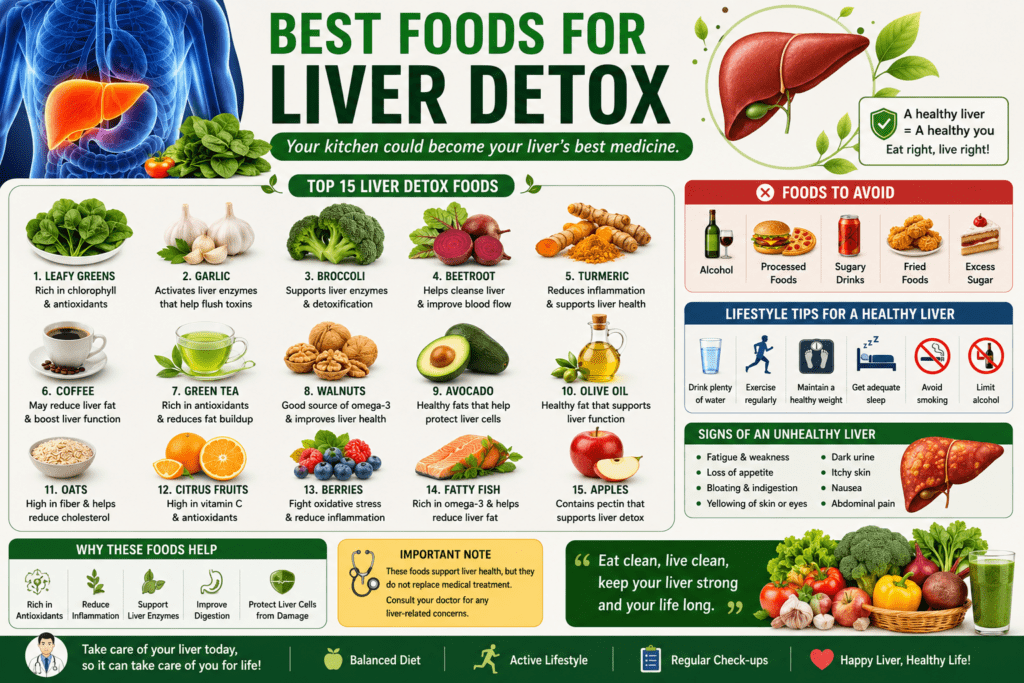
Best Foods for Liver Detox
Your kitchen could become your liver’s best medicine.
The liver is one of the most remarkable organs in the human body. It performs more than 500 essential functions, including filtering toxins from the blood, metabolizing nutrients, producing bile for digestion, regulating blood sugar, storing vitamins and minerals, and helping fight infections. Despite its incredible ability to regenerate, the liver is constantly exposed to unhealthy diets, alcohol, pollution, medications, and metabolic diseases.
Many people search for “liver detox” products or expensive cleansing programs hoping to restore liver health. However, the truth is that your liver already has its own natural detoxification system. What it really needs is proper nutrition, regular exercise, adequate hydration, and healthy lifestyle habits—not extreme detox diets or miracle supplements.
The good news is that your everyday kitchen contains many foods that can naturally support liver function, reduce inflammation, and help protect the liver from damage. These foods provide antioxidants, vitamins, minerals, fiber, and healthy fats that contribute to overall liver health.
In this guide, we’ll explore the best foods for liver health, explain how they work, discuss foods to avoid, and share simple lifestyle tips that can help keep your liver functioning at its best.
What Does the Liver Do?
The liver is located in the upper right side of your abdomen and performs numerous vital functions, including:
- Filtering toxins from the bloodstream
- Producing bile to help digest fats
- Processing carbohydrates, fats, and proteins
- Storing glycogen for energy
- Producing proteins needed for blood clotting
- Regulating cholesterol levels
- Breaking down medications
- Supporting the immune system
- Storing vitamins A, D, E, K, and B12
Because the liver works continuously, it benefits from a balanced diet and healthy lifestyle.
Can Foods Really “Detox” the Liver?
The word “detox” is often used in marketing, but it’s important to understand what it means.
Your liver naturally removes waste products and helps eliminate toxins through the body’s normal processes. No single food or drink can “clean” the liver overnight.
Instead, certain foods support liver health by:
- Reducing inflammation
- Providing antioxidants
- Supporting healthy metabolism
- Helping maintain a healthy weight
- Improving insulin sensitivity
- Reducing fat accumulation in the liver
15 Best Foods for Liver Health
1. Leafy Green Vegetables
Spinach, kale, fenugreek leaves, and other leafy greens are rich in antioxidants, vitamins, and fiber.
Benefits:
- Support healthy digestion
- Help reduce oxidative stress
- Promote overall liver function
2. Garlic
Garlic contains sulfur compounds that help activate liver enzymes involved in the body’s natural detoxification processes.
Benefits:
- Rich in antioxidants
- Supports healthy cholesterol levels
- May reduce inflammation
3. Broccoli and Cruciferous Vegetables
Broccoli, cauliflower, cabbage, and Brussels sprouts contain compounds that support liver enzyme activity.
Benefits:
- High in fiber
- Rich in vitamins C and K
- Supports natural detoxification pathways
4. Beetroot
Beetroot is rich in nitrates and antioxidants.
Benefits:
- Supports healthy blood flow
- Provides antioxidants
- May help reduce oxidative stress
5. Turmeric
Curcumin, the active compound in turmeric, has anti-inflammatory and antioxidant properties.
Benefits:
- Supports healthy inflammatory responses
- May support liver health when included as part of a balanced diet
Consult your healthcare provider before taking concentrated turmeric supplements, especially if you have gallbladder disease or take blood-thinning medications.
6. Coffee
Research suggests that moderate coffee consumption may be associated with a lower risk of certain chronic liver diseases in many adults.
Benefits:
- Rich in antioxidants
- May support liver enzyme health
- May help reduce liver fat in some people
Drink coffee in moderation and avoid excessive sugar or cream.
7. Green Tea
Green tea contains catechins, natural antioxidants.
Benefits:
- Supports overall metabolic health
- May help reduce oxidative stress
Avoid high-dose green tea extracts unless advised by your healthcare provider, as they have been linked to rare cases of liver injury.
8. Walnuts
Walnuts provide healthy omega-3 fats and antioxidants.
Benefits:
- Supports heart and liver health
- Provides healthy fats
- Rich in vitamin E
9. Avocados
Avocados contain healthy monounsaturated fats and fiber.
Benefits:
- Supports healthy cholesterol levels
- Provides antioxidants
- Promotes satiety
10. Olive Oil
Extra virgin olive oil is a healthy source of monounsaturated fat.
Benefits:
- Supports heart health
- May improve metabolic health
- A healthier alternative to saturated fats
Use in moderation as part of a balanced diet.
11. Oats
Oats are rich in soluble fiber.
Benefits:
- Supports healthy cholesterol
- Promotes digestive health
- Helps maintain healthy blood sugar levels
12. Citrus Fruits
Oranges, lemons, and grapefruits are rich in vitamin C and antioxidants.
Benefits:
- Supports immune function
- Provides antioxidants
- Encourages a healthy diet
Note: Grapefruit can interact with certain medications. If you take prescription medicines, ask your healthcare provider before consuming grapefruit regularly.
13. Berries
Blueberries, strawberries, and blackberries contain anthocyanins and other antioxidants.
Benefits:
- Help reduce oxidative stress
- Support overall health
- Rich in fiber
14. Fatty Fish
Salmon, sardines, and mackerel provide omega-3 fatty acids.
Benefits:
- Supports heart health
- May reduce liver fat in people with metabolic disease
- Helps reduce inflammation
15. Apples
Apples contain pectin and fiber.
Benefits:
- Support digestive health
- Promote fullness
- Contribute to a balanced diet
Drinks That Support Liver Health
Healthy beverages include:
- Water
- Black coffee (in moderation)
- Unsweetened green tea
- Herbal teas (when appropriate)
- Fresh vegetable-based drinks without added sugar
Hydration supports the body’s normal metabolic processes.
Foods That May Harm the Liver
Limiting certain foods can help protect liver health.
Reduce intake of:
- Sugary soft drinks
- Processed foods
- Fast food
- Fried foods
- Excess alcohol
- Processed meats
- White bread
- Cakes and pastries
- Excess sweets
- Trans fats
A diet high in these foods may contribute to obesity, fatty liver disease, and metabolic syndrome.
Lifestyle Habits That Support Liver Health
Nutrition is only one part of the picture.
Healthy habits include:
Maintain a Healthy Weight
Excess body weight increases the risk of fatty liver disease.
Exercise Regularly
Aim for at least 150 minutes of moderate-intensity exercise each week.
Walking, cycling, swimming, and strength training all support liver health.
Stay Hydrated
Adequate water intake supports overall body functions and digestive health.
Sleep Well
Aim for 7–9 hours of quality sleep each night.
Poor sleep is associated with metabolic disorders that can affect liver health.
Avoid Smoking
Smoking contributes to oxidative stress and may worsen overall health.
Limit Alcohol
Excessive alcohol consumption is a major cause of liver damage.
If you have liver disease, ask your healthcare provider whether complete avoidance is appropriate.
Common Myths About Liver Detox
Myth: Detox drinks cleanse the liver.
Fact: Your liver naturally detoxifies your body. There is no scientific evidence that commercial detox drinks “flush” the liver.
Myth: Lemon water cures fatty liver.
Fact: Lemon water can help with hydration, but it does not cure fatty liver disease.
Myth: Herbal supplements are always safe.
Fact: Some herbal products can actually damage the liver. Always discuss supplements with your healthcare provider.
Myth: Liver disease only affects people who drink alcohol.
Fact: Non-alcoholic fatty liver disease is common and is strongly linked to obesity, diabetes, and metabolic syndrome.
Frequently Asked Questions
What is the best fruit for liver health?
There is no single “best” fruit. Berries, apples, citrus fruits, and papaya are nutritious options that can be included in a balanced diet.
Can food reverse fatty liver?
In many people with early-stage fatty liver disease, healthy eating combined with weight loss, exercise, and medical management can reduce liver fat.
Is coffee good for the liver?
Moderate coffee intake has been associated with liver health benefits in many studies, though it is not a substitute for healthy lifestyle habits.
Should I buy liver detox supplements?
Most people do not need detox supplements. Some may even be harmful. Always consult your healthcare provider before using supplements.
When Should You See a Gastroenterologist?
Consult a gastroenterologist if you have:
- Persistent fatigue
- Upper right abdominal discomfort
- Yellowing of the skin or eyes
- Fatty liver on ultrasound
- Abnormal liver function tests
- Unexplained weight loss
- Swelling of the abdomen
- A family history of liver disease
Early evaluation can help identify and manage liver disease before complications develop.
Final Thoughts
Your liver is your body’s natural detoxification powerhouse, and the best way to support it isn’t through expensive detox programs—it’s through everyday healthy choices. A balanced diet rich in leafy greens, fruits, whole grains, healthy fats, fish, nuts, and antioxidant-rich foods can help protect your liver and support its normal function.
Equally important are maintaining a healthy weight, staying physically active, limiting alcohol, avoiding smoking, and managing conditions such as diabetes and high cholesterol. Together, these habits can reduce the risk of fatty liver disease and other liver-related conditions.
If you have ongoing symptoms or have been diagnosed with a liver condition, consult a gastroenterologist for personalized advice and treatment. Your kitchen truly can become one of your liver’s greatest allies when paired with evidence-based lifestyle choices and regular medical care.