Alcoholic Liver Disease (ALD): Causes, Symptoms, Stages & Treatment
Alcoholic Liver Disease (ALD) is liver damage caused by long-term excessive alcohol consumption. The liver plays a vital role in filtering toxins, aiding digestion, and storing nutrients. However, regular heavy drinking can gradually damage liver cells, leading to inflammation, scarring, and eventually liver failure.
What is Alcoholic Liver Disease?
Alcoholic Liver Disease refers to a range of liver conditions that develop due to chronic alcohol use. Not everyone who drinks alcohol develops ALD, but the risk increases with:
Drinking large amounts of alcohol daily
Long-term alcohol consumption
Poor nutrition
Genetic factors
Women (who are more sensitive to alcohol-related liver damage)
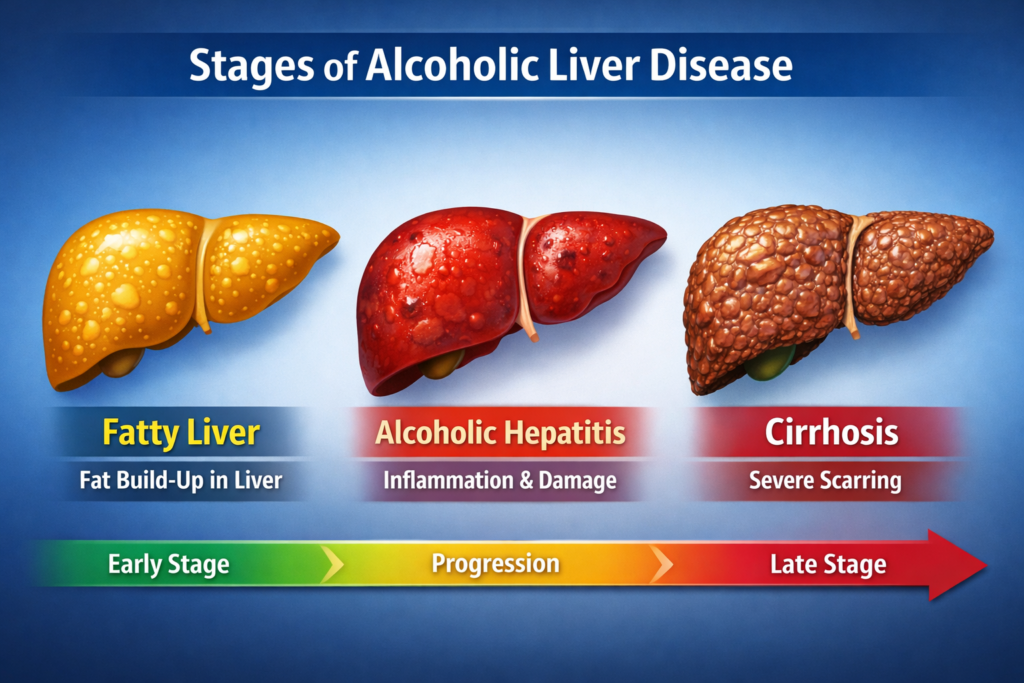
Stages of Alcoholic Liver Disease
ALD typically progresses in three main stages:
1. Alcoholic Fatty Liver (Steatosis)
Earliest and most common stage
Fat accumulates in liver cells
Often no symptoms
Reversible if alcohol use stops
2. Alcoholic Hepatitis
Inflammation of the liver
Can be mild to severe
Symptoms may include jaundice, fever, abdominal pain
May become life-threatening
3. Alcoholic Cirrhosis
Permanent scarring of liver tissue
Advanced stage of liver damage
May lead to liver failure
Damage is irreversible
Symptoms of Alcoholic Liver Disease
Symptoms vary depending on the stage. Early stages may have no signs.
Common symptoms include:
Fatigue
Loss of appetite
Nausea and vomiting
Abdominal pain (right upper side)
Yellowing of skin and eyes (jaundice)
Swelling in legs and abdomen (ascites)
Easy bruising
Confusion (hepatic encephalopathy in advanced stages)
Causes and Risk Factors
The main cause of Alcoholic Liver Disease is excessive alcohol intake. The liver breaks down alcohol, but in the process, harmful substances are produced that damage liver cells.
Risk factors include:
Heavy drinking over many years
Binge drinking
Malnutrition
Obesity
Coexisting viral hepatitis
Family history of liver disease
Diagnosis
Doctors diagnose ALD through:
Medical history and alcohol use assessment
Physical examination
Blood tests (liver function tests)
Ultrasound, CT scan, or MRI
Liver biopsy (in some cases)
Treatment of Alcoholic Liver Disease
1. Complete Alcohol Abstinence
Stopping alcohol is the most important step. In early stages, the liver can heal if drinking stops.
2. Nutritional Support
High-protein diet
Vitamin supplements (especially B vitamins and folate)
3. Medications
Corticosteroids for severe alcoholic hepatitis
Medications to reduce complications
4. Treatment for Complications
Diuretics for fluid buildup
Lactulose for hepatic encephalopathy
Endoscopic treatment for bleeding
5. Liver Transplant
In advanced cirrhosis or liver failure, transplant may be the only option.
Prevention
Limit alcohol intake
Avoid binge drinking
Maintain a healthy diet
Get regular medical check-ups
Seek help for alcohol dependence
When to See a Doctor
Seek immediate medical care if you notice:
Yellowing of skin or eyes
Severe abdominal swelling
Vomiting blood
Black stools
Confusion or drowsiness
Conclusion
Alcoholic Liver Disease is a serious but preventable condition. Early stages can be reversed if alcohol consumption stops. However, continued drinking can lead to permanent liver damage and life-threatening complications. Early diagnosis, lifestyle changes, and medical treatment can significantly improve outcomes.