10 Signs You Need an Endoscopy: Don’t Wait Until the Pain Becomes Unbearable
Digestive problems are common, but not all of them are harmless. While occasional heartburn, indigestion, or stomach discomfort may improve with simple lifestyle changes, persistent or severe symptoms can sometimes point to a more serious condition that requires medical evaluation.
One of the most effective ways to examine the upper digestive tract is through an upper gastrointestinal (GI) endoscopy, also called an upper endoscopy or esophagogastroduodenoscopy (EGD). This procedure allows a gastroenterologist to look directly inside the esophagus, stomach, and the first part of the small intestine using a thin, flexible tube with a camera.
Many people worry about undergoing an endoscopy, but it is a routine, minimally invasive procedure that helps diagnose conditions early and, in some cases, allows treatment during the same procedure.
In this guide, we’ll discuss the top 10 signs you may need an endoscopy, what to expect during the procedure, and why early diagnosis can make a significant difference.
What Is an Endoscopy?
An upper GI endoscopy is a procedure that enables a doctor to examine the lining of your upper digestive tract.
During the procedure, a thin flexible tube called an endoscope is gently passed through the mouth into the:
- Esophagus
- Stomach
- Duodenum (the first part of the small intestine)
The camera at the end of the scope sends high-quality images to a monitor, allowing the doctor to identify inflammation, ulcers, bleeding, tumors, infections, and other abnormalities.
If necessary, small tissue samples (biopsies) can be collected for further analysis.
Why Is an Endoscopy Important?
An endoscopy helps diagnose many digestive conditions that cannot be confirmed through symptoms alone.
It can detect:
- Acid reflux damage (GERD)
- Gastritis
- Peptic ulcers
- Helicobacter pylori (H. pylori) infection
- Barrett’s esophagus
- Celiac disease
- Esophageal narrowing
- Polyps
- Tumors
- Early cancers
- Sources of gastrointestinal bleeding
In many cases, early detection leads to simpler treatment and better outcomes.
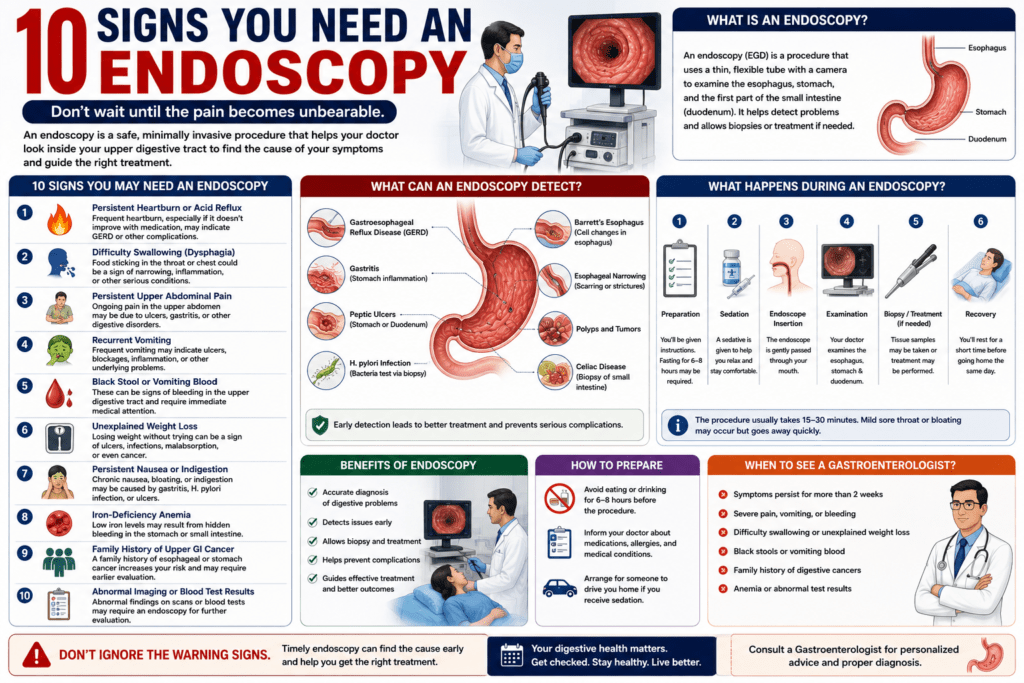
10 Signs You May Need an Endoscopy
1. Persistent Heartburn or Acid Reflux
Occasional heartburn is common.
However, if you experience:
- Heartburn several times each week
- Symptoms lasting for weeks
- Poor response to medication
your doctor may recommend an endoscopy to evaluate for GERD, esophagitis, or Barrett’s esophagus.
2. Difficulty Swallowing (Dysphagia)
Food sticking in the throat or chest is never considered normal.
Possible causes include:
- Esophageal narrowing
- Inflammation
- Tumors
- Motility disorders
An endoscopy helps identify the cause and guide treatment.
3. Persistent Upper Abdominal Pain
Pain that continues despite treatment deserves evaluation.
An endoscopy can identify:
- Gastritis
- Peptic ulcers
- Stomach inflammation
- Other structural abnormalities
4. Recurrent Vomiting
Frequent vomiting may result from:
- Ulcers
- Gastric outlet obstruction
- Inflammation
- Certain digestive disorders
Persistent vomiting requires medical assessment.
5. Black Stool or Vomiting Blood
Black, tarry stool (melena) or vomiting blood may indicate bleeding from the upper digestive tract.
This is a medical emergency.
Endoscopy helps locate the source of bleeding and often allows treatment during the procedure.
6. Unexplained Weight Loss
Losing weight without trying should always be investigated.
Possible digestive causes include:
- Stomach ulcers
- Chronic inflammation
- Cancer
- Malabsorption disorders
Endoscopy can help identify the underlying problem.
7. Persistent Nausea or Indigestion
Occasional indigestion is common.
However, ongoing symptoms lasting several weeks may indicate:
- Gastritis
- H. pylori infection
- Peptic ulcer disease
- Functional dyspepsia
8. Iron-Deficiency Anemia
Some digestive conditions cause slow bleeding that isn’t visible.
Persistent anemia without an obvious cause may require endoscopy to identify hidden bleeding.
9. Family History of Upper GI Cancer
Individuals with a strong family history of stomach or esophageal cancer may require earlier evaluation if symptoms develop.
Endoscopy helps detect abnormalities at an earlier stage.
10. Abnormal Imaging or Blood Test Results
Sometimes ultrasound, CT scans, or blood tests reveal findings that require further investigation.
Endoscopy provides a direct view of the digestive tract and allows biopsy if needed.
Conditions Diagnosed with Endoscopy
An upper endoscopy can diagnose many digestive diseases, including:
Gastroesophageal Reflux Disease (GERD)
Chronic acid reflux can damage the lining of the esophagus.
Gastritis
Inflammation of the stomach lining often causes pain, nausea, and indigestion.
Peptic Ulcers
Endoscopy is one of the best methods for detecting stomach and duodenal ulcers.
H. pylori Infection
Biopsy samples collected during endoscopy can be tested for H. pylori.
Barrett’s Esophagus
This condition develops when chronic acid reflux changes the lining of the esophagus.
Regular monitoring may help detect precancerous changes.
Celiac Disease
Small intestinal biopsies may help diagnose celiac disease.
Polyps and Tumors
Endoscopy helps detect growths that may require removal or biopsy.
Stomach and Esophageal Cancer
Early cancers are often easier to treat than advanced disease.
Endoscopy plays a vital role in early diagnosis.
What Happens During an Endoscopy?
Many patients worry that the procedure will be painful.
In reality, it is usually well tolerated.
The typical process includes:
Before the Procedure
- Avoid eating or drinking for several hours beforehand.
- Inform your doctor about medications and allergies.
- Arrange for someone to drive you home if sedation is used.
During the Procedure
- A sedative is often given to help you relax.
- The throat may be numbed with a local anesthetic spray.
- The endoscope is gently passed through the mouth.
- Air may be introduced to improve visibility.
- Images are displayed on a monitor.
- Biopsies may be taken if necessary.
The procedure usually takes 15–30 minutes.
After the Procedure
You may experience:
- Mild sore throat
- Temporary bloating
- Drowsiness if sedation was used
Most people return home the same day.
Is Endoscopy Safe?
Upper endoscopy is considered a very safe procedure when performed by trained specialists.
Serious complications are uncommon but may include:
- Bleeding
- Infection
- Reaction to sedation
- Perforation (rare)
Your doctor will explain the risks and benefits before the procedure.
How Should You Prepare?
Preparation usually involves:
- Fasting for 6–8 hours
- Discussing medications with your doctor
- Following specific instructions regarding blood thinners or diabetes medications
- Wearing comfortable clothing
- Arranging transportation after sedation
Proper preparation improves the quality and safety of the examination.
Common Myths About Endoscopy
Myth: Endoscopy is painful.
Fact: Most patients feel little or no pain due to sedation and local anesthesia.
Myth: Endoscopy is only for older adults.
Fact: People of any age may require an endoscopy if symptoms suggest a digestive disorder.
Myth: Acid reflux never requires an endoscopy.
Fact: Persistent or severe reflux, especially with difficulty swallowing or bleeding, often warrants further evaluation.
Myth: Biopsies mean cancer.
Fact: Biopsies are commonly taken to diagnose many non-cancerous conditions, including inflammation, infections, and celiac disease.
Frequently Asked Questions
How long does an endoscopy take?
The procedure itself usually lasts 15–30 minutes, although you’ll spend additional time preparing and recovering.
Will I be awake?
Many patients receive sedation and are relaxed or asleep during the procedure. The approach depends on your medical condition and your doctor’s recommendation.
Can I eat after the procedure?
Once the effects of throat numbness and sedation have worn off, your doctor will advise you when it is safe to eat and drink.
Can an endoscopy detect cancer?
Yes. Endoscopy can identify suspicious areas and allow tissue biopsies, helping diagnose cancer at an earlier stage.
When Should You See a Gastroenterologist?
Consult a gastroenterologist if you have:
- Persistent heartburn or acid reflux
- Difficulty swallowing
- Ongoing upper abdominal pain
- Black stools or vomiting blood
- Unexplained weight loss
- Recurrent vomiting
- Chronic nausea or indigestion
- Iron-deficiency anemia
- A family history of upper GI cancers
- Abnormal imaging or laboratory findings affecting the digestive tract
Prompt evaluation can help diagnose serious conditions before they become more difficult to treat.
Final Thoughts
An upper GI endoscopy is one of the most valuable tools for diagnosing digestive diseases. It provides a direct view of the esophagus, stomach, and upper small intestine, allowing doctors to detect ulcers, inflammation, infections, bleeding, and even early cancers.
If you’ve been living with persistent acid reflux, swallowing difficulties, unexplained weight loss, black stools, chronic abdominal pain, or ongoing indigestion, don’t wait for the symptoms to become severe. Early evaluation can lead to faster diagnosis, more effective treatment, and better long-term outcomes.
Remember, an endoscopy is a routine procedure that has helped millions of people receive accurate diagnoses and timely care. If your doctor recommends one, it’s an important step toward understanding your digestive health and protecting your future well-being.