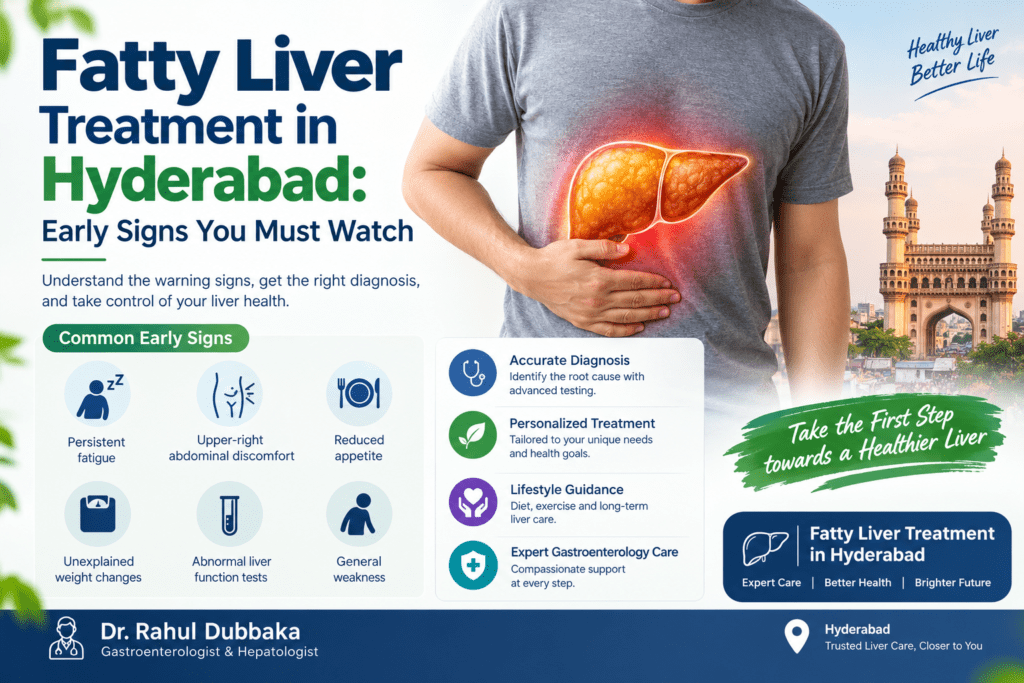
Fatty Liver Treatment in Hyderabad: Early Signs You Must Watch
Fatty liver disease is becoming increasingly common, and many people may not notice symptoms in its early stages. The condition occurs when excess fat builds up in the liver. While mild fatty liver may not immediately cause serious problems, untreated or progressive disease can affect liver health over time.
If you are looking for fatty liver treatment in Hyderabad, understanding the early warning signs, risk factors, diagnosis, and lifestyle changes can help you take timely action. Dr. Rahul Dubbaka provides personalized gastroenterology and liver care based on each patient’s condition.
What Is Fatty Liver Disease?
Fatty liver disease occurs when excess fat accumulates in the liver. It can be associated with obesity, diabetes, high cholesterol, metabolic health problems, alcohol consumption, certain medications, and other factors.
Fatty liver may range from simple fat accumulation to inflammation and liver damage. Some patients have no noticeable symptoms, which makes appropriate medical evaluation important when risk factors are present.
Early Signs of Fatty Liver You Should Watch
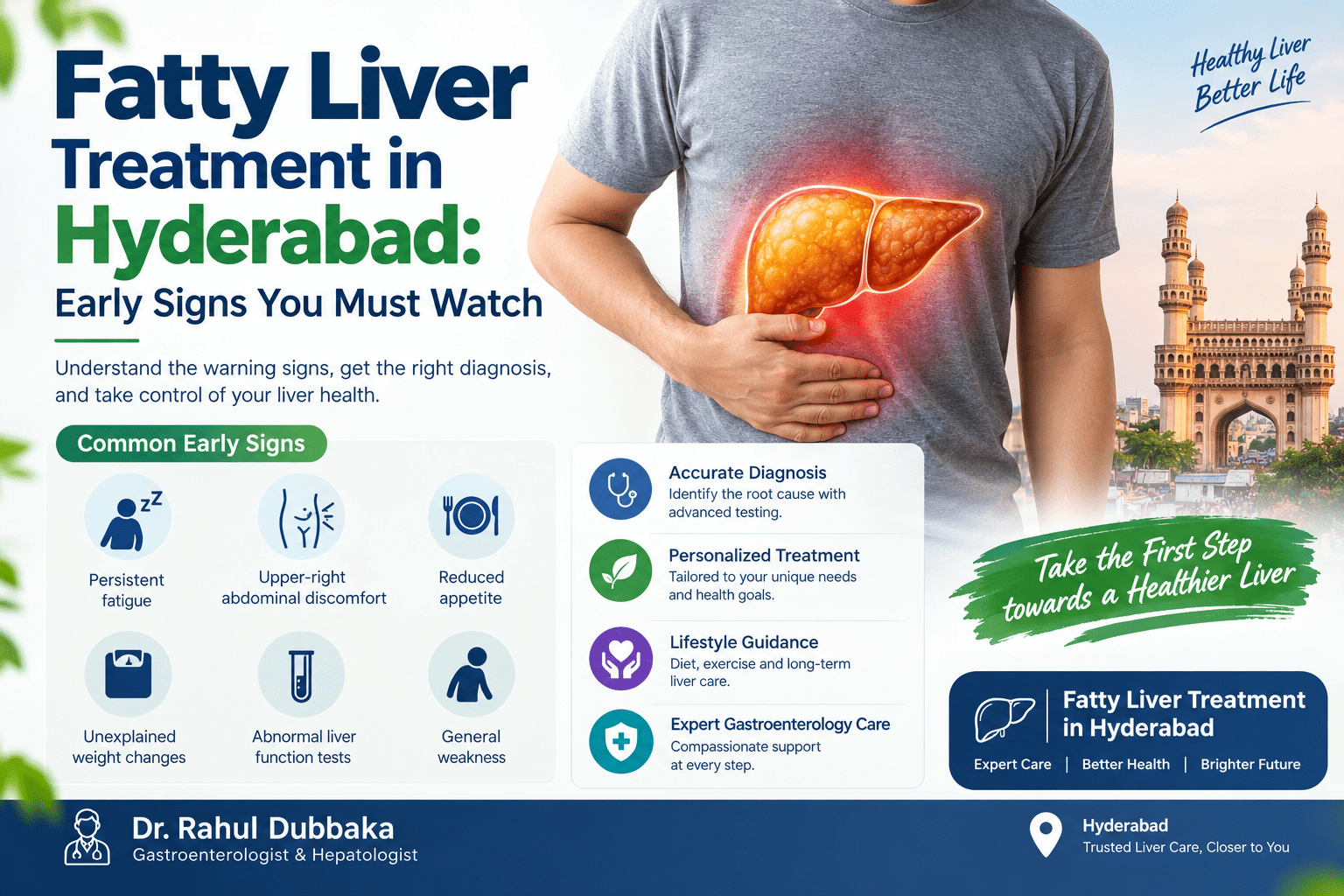
Fatty liver can be difficult to recognize because symptoms may be mild or absent. Possible signs include:
- Persistent tiredness or fatigue
- Discomfort in the upper-right abdomen
- Feeling generally unwell
- Reduced appetite
- Unexplained weakness
- Abnormal liver function test results
- Unexplained changes in weight
These symptoms can occur with many other conditions, so they do not confirm fatty liver on their own. Medical evaluation is important for identifying the underlying cause.
What Causes Fatty Liver?
Several factors can increase the risk of developing fatty liver, including:
1. Excess Body Weight
Being overweight or having obesity can increase fat accumulation in the liver.
2. Diabetes and Insulin Resistance
Problems with blood sugar regulation and insulin resistance are commonly associated with fatty liver.
3. High Cholesterol and Triglycerides
Abnormal blood lipid levels may contribute to fat accumulation in the liver.
4. Unhealthy Diet
Frequent consumption of sugary drinks, refined carbohydrates, processed foods, and high-calorie meals may increase the risk.
5. Alcohol Consumption
Excessive alcohol intake can cause alcohol-related fatty liver disease and other forms of liver damage.
6. Physical Inactivity
A sedentary lifestyle can contribute to weight gain and metabolic problems associated with fatty liver.
How Is Fatty Liver Diagnosed?
If fatty liver is suspected, a gastroenterologist may recommend different investigations depending on your symptoms and risk factors. These may include:
- Liver function tests
- Blood tests
- Abdominal ultrasound
- FibroScan or other liver stiffness assessments
- Additional imaging or tests when clinically appropriate
Diagnosis helps determine the extent of liver involvement and whether further evaluation is required.
Fatty Liver Treatment in Hyderabad
Treatment for fatty liver depends on its underlying cause, severity, and associated health conditions. In many cases, lifestyle modification plays an important role.
Healthy Weight Management
If you are overweight, gradual and sustainable weight loss may help reduce liver fat and improve metabolic health.
Balanced Diet
A liver-friendly diet can include vegetables, fruits, whole grains, legumes, lean proteins, and healthy fats. Limiting sugary foods, refined carbohydrates, fried foods, and highly processed foods can be beneficial.
Regular Physical Activity
Regular exercise can support weight management, improve insulin sensitivity, and contribute to better overall metabolic health.
Control Associated Conditions
Managing diabetes, high cholesterol, high blood pressure, and other metabolic conditions is an important part of comprehensive fatty liver care.
Avoid Excessive Alcohol
People with liver disease should discuss alcohol consumption with their healthcare provider. Avoiding excessive alcohol is important for protecting liver health.
Can Fatty Liver Be Reversed?
In many people, early fatty liver can improve with appropriate lifestyle changes and management of underlying risk factors. The extent of improvement depends on the cause and severity of liver disease.
Regular medical follow-up can help monitor liver health and identify signs of progression when necessary.
Why Early Evaluation Matters
Fatty liver may remain silent for years. In some patients, however, ongoing liver inflammation can contribute to fibrosis and more advanced liver disease.
You should consider discussing liver evaluation with a gastroenterologist if you have persistent digestive or abdominal symptoms, abnormal liver tests, diabetes, obesity, high cholesterol, or other relevant risk factors.
Why Choose Dr. Rahul Dubbaka for Fatty Liver Care?
Dr. Rahul Dubbaka provides personalized gastroenterology and liver care in Hyderabad. His approach focuses on understanding the underlying factors contributing to fatty liver and developing an individualized management plan.
Care may include appropriate diagnostic testing, dietary guidance, lifestyle recommendations, management of associated conditions, and regular follow-up to monitor liver health.
Frequently Asked Questions
What are the first symptoms of fatty liver?
Many people have no symptoms during the early stages. When symptoms occur, they may include fatigue, weakness, reduced appetite, or discomfort in the upper-right abdomen.
Is fatty liver a serious condition?
Fatty liver can range from mild fat accumulation to liver inflammation and fibrosis. Appropriate evaluation and management can help reduce the risk of progression.
What foods should I avoid with fatty liver?
Limiting sugary drinks, sweets, refined carbohydrates, fried foods, highly processed foods, and excessive calories may support better liver health.
Can exercise help reduce fatty liver?
Yes. Regular physical activity can support weight management and metabolic health and may help reduce liver fat.
When should I consult a gastroenterologist?
Consider medical evaluation if you have abnormal liver tests, persistent upper-abdominal discomfort, unexplained fatigue, or risk factors such as diabetes, obesity, or high cholesterol.
Conclusion
Fatty liver can develop without obvious symptoms, making awareness and timely evaluation important. Recognizing potential warning signs and addressing risk factors through a balanced diet, regular physical activity, healthy weight management, and appropriate medical care can support long-term liver health.
If you are searching for fatty liver treatment in Hyderabad, Dr. Rahul Dubbaka offers personalized evaluation and liver care based on your individual health needs.