Acidity vs GERD: Symptoms, Causes and Treatment
Acidity and GERD are common digestive problems that affect people of different age groups. Many people experience a burning sensation in their chest, sour taste in their mouth, stomach discomfort, or food coming back into their throat after eating. These symptoms are often described as acidity.
However, frequent acidity may sometimes be a sign of Gastroesophageal Reflux Disease (GERD), a long-term digestive condition that requires proper medical attention.
Although acidity and GERD are closely related, they are not exactly the same. Occasional acid reflux may happen to anyone, but repeated reflux can irritate the food pipe and affect everyday life.
Understanding the difference between acidity and GERD, their symptoms, causes, diagnosis, and treatment options can help you make better decisions about your digestive health.
At Dr. Rahul Gastro Liver Care, patients can seek medical guidance for digestive problems, including persistent acidity, acid reflux, and other stomach-related conditions.
What Is Acidity?
Acidity is a commonly used term for symptoms caused by acid reflux or indigestion. It usually refers to a burning sensation in the chest or upper abdomen that occurs when stomach contents move back towards the food pipe (oesophagus).
The stomach naturally produces hydrochloric acid to help digest food. The stomach has a protective lining that helps it tolerate this acid. However, the oesophagus does not have the same protection.
When stomach contents move upwards into the oesophagus, they can cause irritation and discomfort.
Occasional acidity may occur after eating a large meal, consuming spicy or oily foods, drinking coffee, or lying down immediately after eating.
For many people, these symptoms are temporary. However, frequent or persistent symptoms should be evaluated by a doctor.
What Is GERD?
GERD stands for Gastroesophageal Reflux Disease. It is a chronic digestive condition in which stomach contents repeatedly flow backwards into the oesophagus, causing troublesome symptoms or complications.
A muscular valve called the lower oesophageal sphincter (LES) is located between the oesophagus and stomach. Normally, this valve opens when food enters the stomach and closes to prevent stomach contents from flowing backwards.
When this valve becomes weak or relaxes inappropriately, acid and other stomach contents can move into the oesophagus.
Repeated exposure to stomach contents can irritate and damage the oesophageal lining.
Common symptoms include frequent heartburn, sour-tasting fluid coming into the mouth, chest discomfort, and difficulty swallowing.
GERD may affect sleep, eating habits and daily activities if it is not properly managed.
Acidity vs GERD: What Is the Difference?
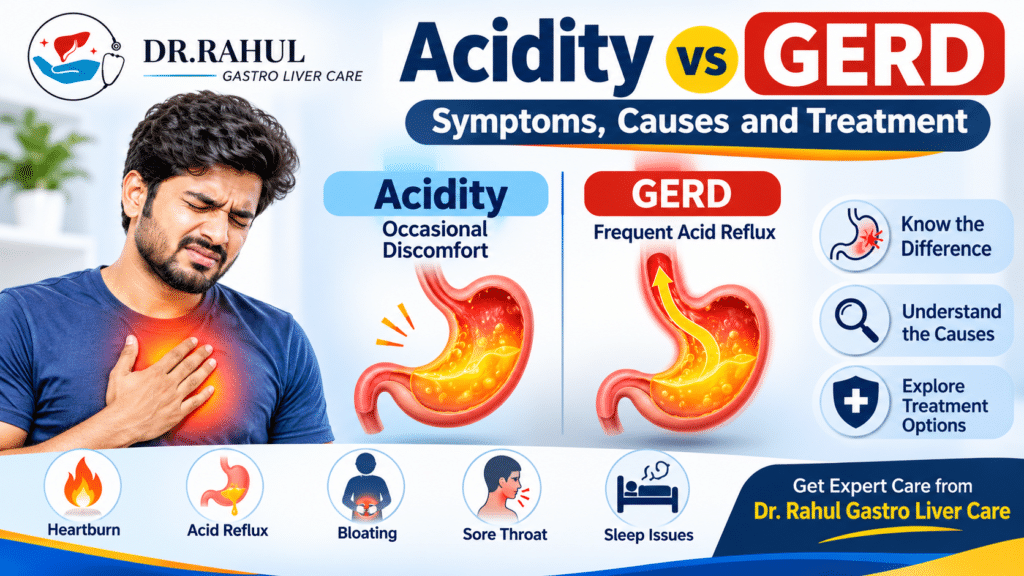
Acidity and GERD are related, but the main difference is how frequently symptoms occur and whether they indicate an ongoing disease.
| Acidity | GERD |
|---|---|
| Usually refers to acid-related discomfort or heartburn | A chronic condition involving repeated reflux |
| May occur occasionally | Symptoms are frequent or troublesome |
| Can happen after certain meals | Can occur after meals, while bending or during sleep |
| Often improves with simple lifestyle changes | May require medical evaluation and treatment |
| Does not necessarily indicate a chronic disease | Can cause inflammation and other complications |
Important: Acidity is a symptom description, not a precise medical diagnosis. Occasional heartburn does not automatically mean someone has GERD.
What Are the Common Symptoms of Acidity?
Acidity symptoms can vary from person to person. Some people experience mild discomfort, while others have more noticeable symptoms.
1. Burning Sensation in the Chest
A burning feeling behind the breastbone is one of the most common symptoms. It may become more noticeable after eating or when lying down.
2. Sour or Bitter Taste in the Mouth
When stomach contents move upwards, some people experience a sour or bitter taste in their mouth.
3. Stomach Discomfort
Some people experience upper abdominal discomfort, bloating or indigestion after meals.
4. Frequent Burping
Burping may occur along with reflux symptoms, particularly after large meals or carbonated beverages.
5. Nausea
Some people experience nausea or an uncomfortable feeling in the upper abdomen.
If these symptoms occur frequently, a medical assessment can help identify whether acid reflux, GERD, or another digestive condition is responsible.
What Are the Symptoms of GERD?
GERD can cause typical digestive symptoms as well as symptoms outside the digestive system.
Common symptoms include:
- Frequent heartburn: A burning sensation in the chest that may occur repeatedly.
- Acid regurgitation: Sour or bitter stomach contents coming back into the throat or mouth.
- Difficulty swallowing: A feeling that food is sticking in the chest or throat.
- Chronic cough: Persistent coughing that may be associated with reflux in some people.
- Hoarseness: Changes in the voice, particularly in the morning.
- Throat irritation: A recurring sensation of irritation or discomfort in the throat.
- Sleep disturbances: Nighttime reflux can interrupt sleep.
- Chest discomfort: Reflux may cause chest discomfort, although heart-related causes must be considered.
Not everyone with GERD experiences all these symptoms. Some people have typical heartburn, while others mainly experience throat or respiratory symptoms.
What Causes Acidity and GERD?
Several factors can contribute to acidity and GERD. Some are related to eating habits, while others involve body weight, digestive function, and medical conditions.
1. Eating Spicy and Oily Foods
Certain foods can trigger or worsen reflux symptoms in some people. These may include spicy curries, deep-fried foods, high-fat meals, and heavily processed snacks.
Food triggers are different for everyone, so identifying individual triggers can be helpful.
2. Eating Large Meals
Eating large portions can increase stomach fullness and make reflux more likely in some individuals.
Eating smaller, balanced meals may help reduce symptoms.
3. Lying Down Immediately After Eating
Lying down soon after a meal can make it easier for stomach contents to move towards the oesophagus.
Allowing at least two to three hours between dinner and bedtime may help reduce night-time symptoms.
4. Obesity and Excess Abdominal Fat
Excess abdominal fat can increase pressure on the stomach and contribute to acid reflux.
Maintaining a healthy weight may help improve GERD symptoms.
5. Weak Lower Oesophageal Sphincter
The lower oesophageal sphincter normally prevents stomach contents from flowing backwards.
If this valve becomes weak or relaxes at inappropriate times, reflux may occur more frequently.
6. Hiatal Hernia
A hiatal hernia occurs when part of the stomach moves upwards through an opening in the diaphragm.
This condition can contribute to GERD in some individuals.
7. Smoking and Alcohol
Smoking can affect the normal protective mechanisms that prevent reflux. Alcohol may also worsen symptoms in some people.
Avoiding smoking and limiting or avoiding alcohol as medically appropriate can support better digestive health.
8. Pregnancy
Hormonal changes and increased pressure on the stomach during pregnancy can contribute to acid reflux.
Pregnant women should consult their healthcare provider before taking medicines for acidity.
How Is Acidity and GERD Diagnosed?
A gastroenterologist can evaluate your symptoms, medical history, and lifestyle habits to determine the possible cause of persistent acidity.
Depending on your condition, the following investigations may be recommended.
1. Medical History and Physical Examination
The doctor may ask about the frequency of heartburn, food habits, medications, sleep disturbances, and other symptoms.
This information often helps determine whether further testing is needed.
2. Upper GI Endoscopy
Upper gastrointestinal endoscopy is a procedure in which a thin, flexible tube with a camera is passed through the mouth to examine the oesophagus, stomach and upper part of the small intestine.
It can help identify:
- Inflammation of the oesophagus.
- Ulcers or erosions.
- Narrowing of the oesophagus.
- Other conditions that may cause similar symptoms.
- Changes associated with long-term reflux.
Endoscopy is particularly useful when warning signs are present or symptoms do not improve with appropriate treatment.
3. 24-Hour Oesophageal pH Monitoring
This test measures how frequently stomach acid enters the oesophagus and how long it remains there.
It can help confirm GERD when the diagnosis is uncertain, or symptoms continue despite treatment.
4. Oesophageal Manometry
This test measures the strength and coordination of muscles in the oesophagus.
It may be recommended when doctors need to evaluate swallowing problems or assess oesophageal function.
Not every patient requires all these tests. The doctor decides which investigations are appropriate.
What Is the Best Treatment for Acidity and GERD?
Treatment depends on how often symptoms occur, their severity, and whether there is any damage to the oesophagus.
Many people improve with lifestyle changes and appropriate medicines.
1. Antacids
Antacids help neutralise stomach acid and can provide temporary relief from occasional heartburn.
They are not a long-term solution for persistent GERD.
2. H2-Receptor Blockers
These medicines reduce the amount of acid produced by the stomach.
They may be recommended for selected patients depending on their symptoms and medical history.
3. Proton Pump Inhibitors (PPIs)
Proton pump inhibitors reduce stomach acid production and are commonly prescribed for GERD.
They can help relieve symptoms and allow an inflamed oesophageal lining to heal.
The correct medicine, dose, and duration should be determined by a healthcare professional. Long-term use should be reviewed periodically rather than continued without medical advice.
4. Lifestyle Changes
Lifestyle changes are an important part of GERD management.
Doctors may recommend gradual weight loss when appropriate, avoiding late-night meals, stopping smoking, and identifying foods that trigger symptoms.
5. Surgical Treatment
In selected patients with objectively confirmed GERD who do not respond adequately to medical management or have other specific indications, anti-reflux procedures may be considered.
Surgery is not necessary for most people with acidity or GERD.
Diet Tips to Reduce Acidity and GERD
Food choices can influence reflux symptoms. A balanced diet and suitable meal timings may help reduce discomfort.
Foods That May Help
Consider including:
- Oats and other whole grains.
- Bananas and other non-triggering fruits.
- Green vegetables.
- Carrots and cucumber.
- Dal and other suitable protein sources.
- Low-fat curd, if tolerated.
- Lean protein such as fish, eggs, or chicken.
These foods are not a guaranteed treatment, but they can form part of a balanced eating pattern.
Foods That May Trigger Symptoms
Some people experience worsening symptoms after consuming:
- Deep-fried foods.
- Very spicy foods.
- Chocolate.
- Coffee and strong tea.
- Carbonated beverages.
- Citrus fruits and tomato-based foods.
- High-fat meals.
- Alcohol.
You do not need to avoid every food on this list. Identify your personal triggers and discuss persistent symptoms with your doctor.
How to Prevent Frequent Acidity and GERD
Following healthy daily habits may help reduce the frequency of reflux symptoms.
- Eat smaller meals instead of very large portions.
- Avoid lying down for two to three hours after eating.
- Maintain a healthy body weight.
- Reduce foods that trigger your symptoms.
- Avoid smoking and discuss alcohol avoidance with your doctor.
- Elevate the head of your bed if you experience night-time reflux.
- Eat dinner at a suitable time before going to sleep.
- Avoid tight clothing around the abdomen if it worsens symptoms.
- Maintain regular physical activity.
- Consult a gastroenterologist if symptoms continue or return frequently.
When Should You Consult a Gastroenterologist?
Occasional acidity may not require extensive medical investigation. However, repeated or persistent symptoms should not be ignored.
Consider consulting a gastroenterologist if you experience:
- Heartburn several times a week.
- Frequent sour fluid coming into your mouth.
- Persistent throat irritation or unexplained cough.
- Difficulty swallowing food.
- Symptoms that disturb your sleep.
- Repeated symptoms despite taking prescribed medicines.
- Unexplained weight loss.
Seek prompt medical attention if you experience painful or difficult swallowing, persistent vomiting, gastrointestinal bleeding or black stools.
Important: Chest pain should never automatically be assumed to be acidity. If you experience new, severe, or unexplained chest pain, especially with breathlessness, sweating, dizziness, or pain spreading to the arm or jaw, seek emergency medical care.
Frequently Asked Questions About Acidity and GERD
1. Is acidity the same as GERD?
No. Acidity is a commonly used term for acid-related symptoms such as heartburn. GERD is a chronic condition involving repeated reflux that causes troublesome symptoms or complications.
2. Can acidity turn into GERD?
Occasional acidity does not necessarily develop into GERD. However, frequent and troublesome acid reflux may indicate GERD and should be evaluated by a doctor.
3. Is GERD a serious condition?
GERD can often be managed with lifestyle changes and appropriate treatment. However, untreated or poorly controlled GERD may cause complications such as oesophagitis, narrowing of the oesophagus, or Barrett’s oesophagus in some patients.
4. Can GERD be cured permanently?
Many people can achieve good long-term symptom control with appropriate treatment and lifestyle changes. Outcomes vary, and some patients need ongoing medical management or specialist procedures.
5. What is the best sleeping position for GERD?
Sleeping on the left side and elevating the head of the bed may help reduce night-time reflux in some people. Avoid eating immediately before bedtime.
6. Can stress cause acidity?
Stress may worsen digestive discomfort and make some people more sensitive to reflux symptoms. However, persistent heartburn should not automatically be attributed to stress.
7. Is milk good for acidity?
Milk may provide temporary relief for some people, but high-fat milk can worsen reflux in others. It is not a reliable treatment for GERD.
8. When is an endoscopy required for GERD?
An endoscopy may be recommended when a patient has difficulty swallowing, bleeding, unexplained weight loss, persistent vomiting or symptoms that do not respond adequately to treatment. The decision depends on the patient’s clinical condition.
Conclusion
Acidity and GERD are common digestive problems, but understanding their differences is important for proper treatment. Occasional acidity may occur after certain foods or large meals, whereas GERD involves repeated reflux that can affect the oesophagus and quality of life.
Recognising the symptoms, identifying personal food triggers, maintaining a healthy weight, and following appropriate treatment can help manage these conditions.
If you experience frequent heartburn, sour taste, chest discomfort, or persistent acid reflux, consult a qualified gastroenterologist for proper evaluation.
Take care of your digestive health with expert guidance from Dr. Rahul Gastro Liver Care. Early medical evaluation can help identify the cause of your symptoms and determine the most appropriate treatment.