Introduction
The liver is one of the most important organs in the human body. It helps digest food, processes nutrients, removes harmful substances from the blood, produces essential proteins and supports metabolism. Maintaining good liver health is essential for overall well-being. However, liver-related conditions such as fatty liver disease, hepatitis, liver infections and cirrhosis can sometimes develop without noticeable symptoms.
A Liver Function Test (LFT) is a group of blood tests used to evaluate liver health, detect possible liver damage and monitor existing liver conditions. Understanding your LFT report can help identify potential problems early and guide appropriate medical treatment.
In this guide, we explain LFT normal ranges, different test components, abnormal results, common causes and when you should consult a gastroenterologist.
What Is a Liver Function Test (LFT)?
A Liver Function Test (LFT), also called a liver panel, is a blood test that measures different enzymes, proteins and substances produced or processed by the liver.
Doctors recommend LFT tests to:
- Evaluate overall liver health.
- Detect liver inflammation or damage.
- Identify possible fatty liver disease.
- Monitor hepatitis and other liver conditions.
- Check the effects of certain medications on the liver.
- Monitor patients undergoing liver treatment.
An LFT report provides useful information about liver health, but it cannot diagnose every liver condition on its own. Doctors interpret the results alongside symptoms, medical history and other investigations.
Liver Function Test Normal Ranges
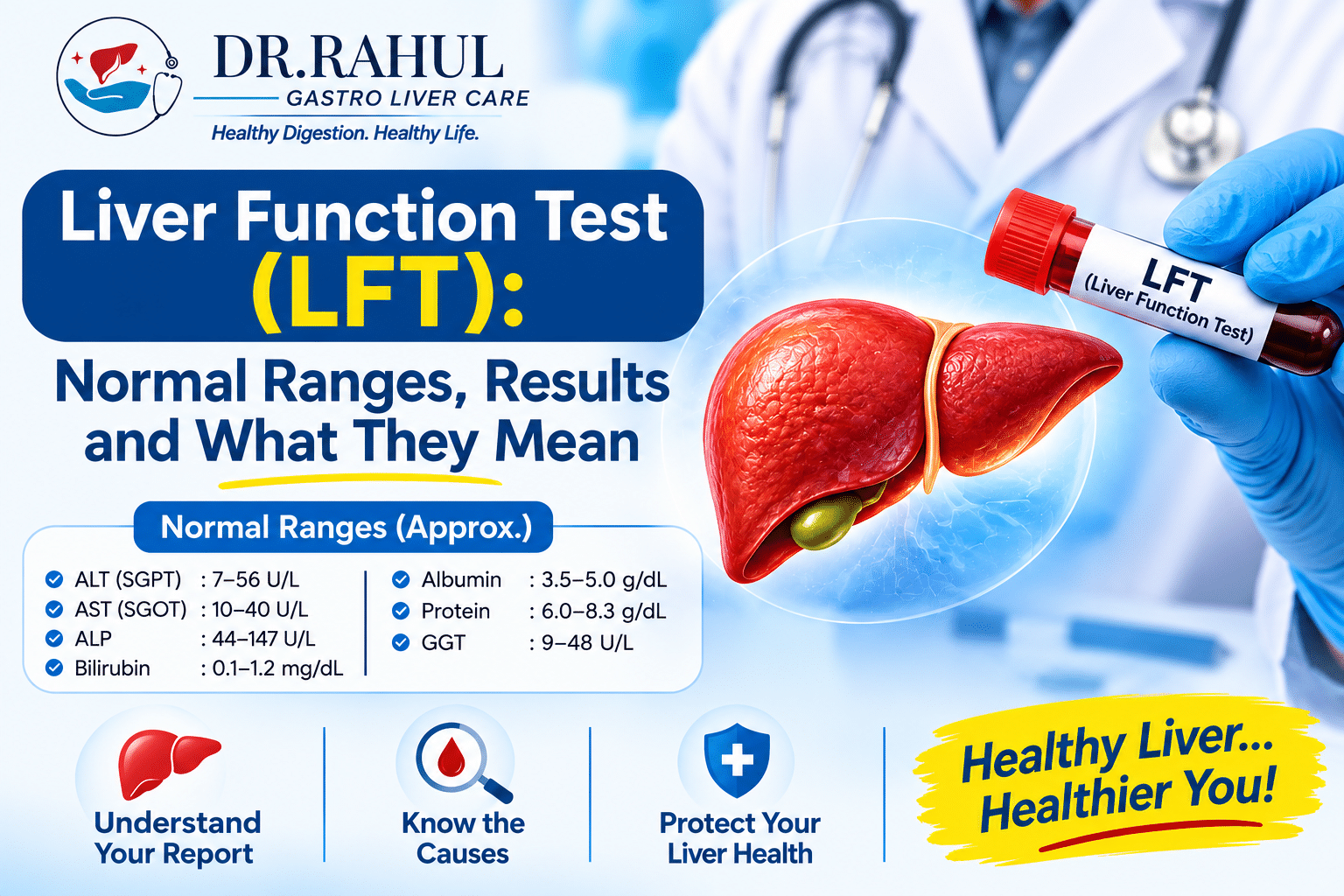
LFT normal ranges may vary depending on the laboratory, testing method, age and sex. The following are approximate reference ranges for adults.
| Test | Approximate normal range |
|---|---|
| ALT (SGPT) | 7–56 U/L |
| AST (SGOT) | 10–40 U/L |
| ALP | 44–147 U/L |
| Total Bilirubin | 0.1–1.2 mg/dL |
| Direct Bilirubin | 0–0.3 mg/dL |
| Albumin | 3.5–5.0 g/dL |
| Total Protein | 6.0–8.3 g/dL |
| GGT | 9–48 U/L |
Note: These values are general examples, not universal diagnostic cut-offs. Always compare your results with the reference ranges printed on your laboratory report and consult your doctor.
Different Components of a Liver Function Test
Understanding individual LFT parameters helps you know what your report indicates.
1. ALT (SGPT)
Alanine Aminotransferase (ALT), also called SGPT, is an enzyme mainly found in liver cells. When liver cells are damaged, ALT can enter the bloodstream and its levels may increase.
High ALT levels may be associated with:
- Fatty liver disease.
- Viral hepatitis.
- Alcohol-related liver injury.
- Certain medications.
- Other liver conditions.
2. AST (SGOT)
Aspartate Aminotransferase (AST), commonly called SGOT, is an enzyme found in the liver, heart and muscles.
Elevated AST levels may indicate liver cell injury, but they can also increase due to muscle damage and other conditions. Doctors usually evaluate AST together with ALT.
3. ALP (Alkaline Phosphatase)
ALP is an enzyme found mainly in the liver, bile ducts and bones. Increased ALP levels may indicate bile duct obstruction or certain liver and bone conditions.
4. Bilirubin
Bilirubin is a yellow substance produced when old red blood cells break down. The liver processes bilirubin and helps remove it from the body.
High bilirubin levels can cause jaundice, resulting in yellowing of the skin and eyes. Possible causes include liver disease, bile duct blockage and increased breakdown of red blood cells.
5. Albumin
Albumin is a protein produced by the liver. It helps maintain fluid balance and transports substances through the bloodstream.
Low albumin levels may be associated with advanced liver disease, poor nutrition, kidney conditions and other health problems.
6. GGT (Gamma-Glutamyl Transferase)
GGT is an enzyme found mainly in the liver and bile ducts. Increased GGT levels may indicate liver or bile duct problems. Alcohol use and certain medications can also increase GGT.
Common Causes of Abnormal Liver Function Test Results
Abnormal LFT results do not always mean serious liver disease. Several temporary and long-term conditions can affect liver enzyme levels.
Some common causes include:
- Fatty Liver Disease: Excess fat accumulation in the liver can cause elevated ALT and AST levels.
- Viral Hepatitis: Hepatitis A, B and C infections can cause liver inflammation and increased liver enzymes.
- Alcohol Consumption: Excessive alcohol intake can damage liver cells and increase AST and GGT levels.
- Medications: Certain medicines and supplements may affect liver function.
- Gallstones: Blockage of bile flow can increase bilirubin and ALP levels.
- Liver Cirrhosis: Long-term liver damage can affect protein production and other liver functions.
- Obesity and Diabetes: Metabolic conditions increase the risk of metabolic dysfunction-associated steatotic liver disease (MASLD), previously known as non-alcoholic fatty liver disease.
What Do High and Low LFT Results Mean?
Understanding whether your LFT results are high or low can help you discuss your liver health with your doctor.
| LFT result | What it may indicate |
|---|---|
| High ALT | Possible liver cell injury |
| High AST | Liver or muscle injury |
| High ALP | Possible bile duct or bone disorder |
| High bilirubin | Jaundice, liver or bile flow problems |
| Low albumin | Reduced production or other health conditions |
| High GGT | Possible liver or bile duct condition |
It is important to remember that one abnormal value does not confirm a specific disease. Some people with liver disease may even have normal liver enzyme levels. Your doctor may recommend additional tests, such as an ultrasound scan, viral hepatitis screening or other investigations.
Symptoms That May Indicate Liver Problems
Many liver conditions do not produce symptoms during their early stages. However, certain warning signs should not be ignored.
Common symptoms include:
- Yellowing of the eyes and skin (jaundice).
- Persistent tiredness and weakness.
- Abdominal pain, especially in the upper right side.
- Unexplained nausea or vomiting.
- Dark-coloured urine.
- Pale or clay-coloured stools.
- Persistent itching.
- Swelling in the abdomen or legs.
Seek urgent medical attention if you experience confusion, vomiting blood, black tarry stools or severe abdominal pain, particularly if you have known liver disease.
How Is a Liver Function Test Performed?
An LFT is a simple blood test performed at a diagnostic laboratory.
The process generally involves:
- A healthcare professional collects a blood sample from a vein in your arm.
- The sample is sent to a laboratory for analysis.
- The laboratory measures liver enzymes, bilirubin and protein levels.
- The results are provided in a report for your doctor to review.
Fasting is not always necessary for an LFT alone. However, your doctor may advise fasting if other blood tests are being performed at the same time. Follow the laboratory’s instructions.
How Can You Maintain Healthy Liver Function?
Healthy lifestyle habits can help protect your liver and reduce the risk of certain liver diseases.
- Maintain a healthy weight: Regular exercise and balanced nutrition can help reduce excess liver fat.
- Eat a balanced diet: Include vegetables, fruits, whole grains and adequate protein.
- Limit alcohol: Avoid excessive alcohol consumption to reduce the risk of liver damage.
- Stay physically active: Aim for regular physical activity according to your health condition.
- Avoid unnecessary medications: Never take medicines or herbal supplements without appropriate medical advice.
- Manage diabetes and cholesterol: Keep blood sugar and cholesterol levels under control.
- Get vaccinated: Hepatitis A and B vaccination can help prevent these infections when appropriate.
These measures support liver health but do not replace medical treatment when a liver condition is present.
When Should You Consult a Gastroenterologist?
You should consult a gastroenterologist if your LFT results are repeatedly abnormal, you experience symptoms of liver disease or you have risk factors such as diabetes, obesity, excessive alcohol consumption or a history of hepatitis.
A gastroenterologist may recommend additional investigations to identify the underlying cause and develop an appropriate treatment plan.
Early evaluation can help detect liver conditions before they progress and improve long-term health outcomes.
Frequently Asked Questions About Liver Function Tests
1. What is the normal range for an LFT test?
Normal LFT values vary between laboratories. Generally, ALT is approximately 7–56 U/L, AST is 10–40 U/L, and total bilirubin is 0.1–1.2 mg/dL. Your laboratory’s reference range should be used when interpreting results.
2. Is an LFT test enough to diagnose fatty liver?
No. An LFT can identify abnormal liver enzymes, but it cannot confirm fatty liver on its own. Doctors may recommend an abdominal ultrasound, additional blood tests or other investigations.
3. Can liver enzymes return to normal?
Yes. Liver enzyme levels may return to normal when the underlying cause is identified and appropriately managed. Improvement depends on the specific condition, its severity and treatment.
4. How often should I get a liver function test?
The frequency depends on your medical history, symptoms, risk factors and existing liver conditions. Your doctor will recommend an appropriate testing schedule.
5. Does a normal LFT report mean my liver is completely healthy?
Not necessarily. Some liver conditions, including fatty liver disease and advanced fibrosis, can exist even when liver enzyme levels are within normal ranges. Further evaluation may be needed depending on your risk factors.
Conclusion
A Liver Function Test is an important investigation for evaluating liver health and identifying possible liver-related problems. Understanding ALT, AST, ALP, bilirubin, albumin and GGT levels can help you become more aware of your liver health.
However, abnormal LFT results should never be ignored or interpreted without medical guidance. Early diagnosis, appropriate treatment and healthy lifestyle changes can help prevent the progression of several liver conditions.
If you have abnormal liver test results or symptoms related to liver disease, consult an experienced gastroenterologist for proper evaluation and treatment.
For expert guidance on liver health, digestive disorders and liver-related conditions, consult Dr. Rahul Dubbaka at Dr. Rahul Gastro & Liver Care.