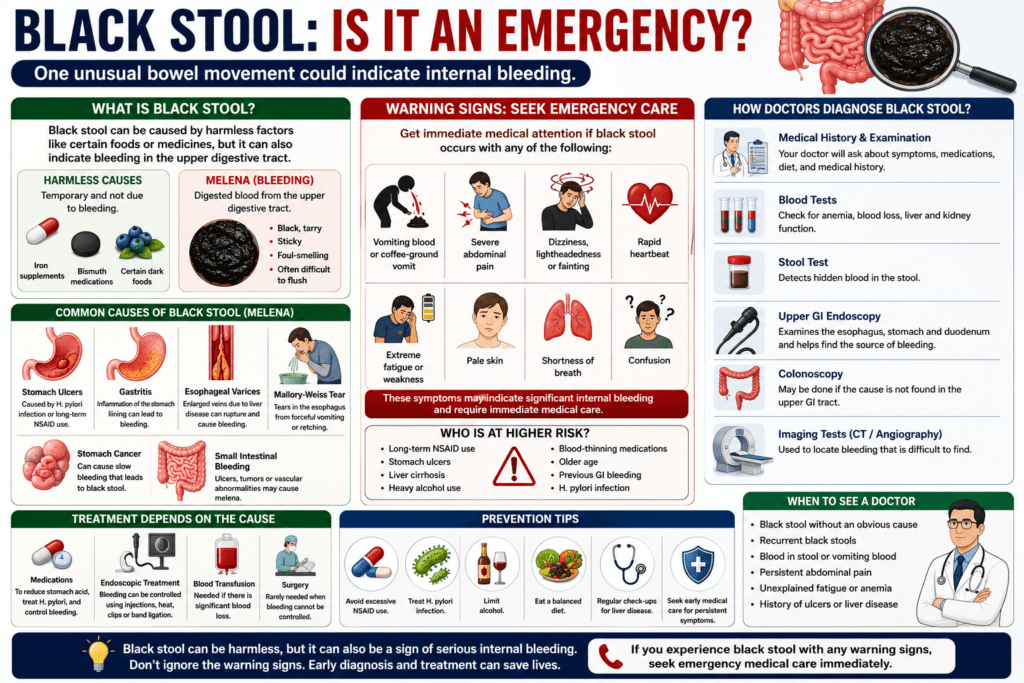
Black Stool: Is It an Emergency? One Unusual Bowel Movement Could Indicate Internal Bleeding
Seeing black stool can be alarming. While it may sometimes result from harmless causes like certain foods or medications, it can also be a warning sign of bleeding somewhere in the upper digestive tract. Because internal bleeding can become serious if left untreated, it’s important to understand what black stool means and when immediate medical attention is necessary.
Many people dismiss a single episode of black stool, assuming it’s something they ate. However, persistent black, sticky, or foul-smelling stools—especially when accompanied by dizziness, weakness, vomiting, or abdominal pain—should never be ignored.
In this guide, we’ll explain what black stool is, its possible causes, how doctors diagnose it, treatment options, and the warning signs that require emergency care.
What Is Black Stool?
Normal stool is usually brown because of bile, a digestive fluid produced by the liver. Black stool occurs when something changes the color of the stool significantly.
There are two broad categories:
Harmless Black Stool
Some foods, supplements, and medications can temporarily turn stool black without causing any health problems.
Black Stool Due to Bleeding (Melena)
When blood from the upper digestive tract is digested as it passes through the intestines, it becomes dark, sticky, and foul-smelling. This type of black stool is called melena and often indicates bleeding from the esophagus, stomach, or upper small intestine.
Melena requires prompt medical evaluation because it may signal a serious underlying condition.
What Does Melena Look Like?
Black stool caused by bleeding typically has these characteristics:
- Jet black or tar-like appearance
- Sticky consistency
- Strong, unpleasant odor
- Often difficult to flush
- May occur with weakness or dizziness
If you notice these features, seek medical care immediately.
Common Causes of Black Stool
1. Stomach Ulcers
Peptic ulcers are one of the most common causes of melena.
They may develop due to:
- Infection with Helicobacter pylori (H. pylori)
- Long-term use of nonsteroidal anti-inflammatory drugs (NSAIDs)
- Excess stomach acid
When an ulcer bleeds, the blood is digested and turns the stool black.
2. Gastritis
Inflammation of the stomach lining can lead to bleeding.
Common causes include:
- H. pylori infection
- Excessive alcohol use
- Long-term NSAID use
- Severe stress
- Autoimmune conditions
3. Esophageal Varices
People with advanced liver disease or cirrhosis may develop enlarged veins in the esophagus.
If these veins rupture, they can cause life-threatening bleeding and black stool.
This is a medical emergency.
4. Mallory-Weiss Tear
Forceful vomiting or retching can cause tears in the lining of the esophagus, leading to bleeding.
5. Stomach Cancer
Although less common, stomach cancer can sometimes cause slow bleeding that leads to black stool.
Persistent symptoms require prompt investigation.
6. Bleeding from the Small Intestine
Conditions affecting the upper small intestine may also cause melena.
Examples include:
- Ulcers
- Tumors
- Vascular abnormalities
Non-Bleeding Causes of Black Stool
Not every episode of black stool indicates bleeding.
Common harmless causes include:
Iron Supplements
Iron tablets frequently darken stool.
This change is expected and usually harmless.
Bismuth-Containing Medications
Products containing bismuth (used for indigestion or diarrhea) may temporarily turn stool black.
Certain Foods
Large amounts of:
- Black licorice
- Blueberries
- Dark-colored foods
may occasionally darken stool.
Symptoms That May Accompany Black Stool
Black stool caused by internal bleeding may occur with:
- Fatigue
- Weakness
- Dizziness
- Lightheadedness
- Fainting
- Abdominal pain
- Vomiting blood
- Coffee-ground vomit
- Pale skin
- Rapid heartbeat
- Shortness of breath
These symptoms suggest significant blood loss and require urgent medical attention.
When Is Black Stool an Emergency?
Seek emergency medical care immediately if black stool occurs with:
- Vomiting blood
- Coffee-ground vomit
- Severe abdominal pain
- Fainting
- Chest pain
- Difficulty breathing
- Rapid heartbeat
- Persistent dizziness
- Confusion
- Large amounts of black stool
These symptoms may indicate severe internal bleeding requiring immediate treatment.
Who Is at Higher Risk?
Certain people have a greater risk of gastrointestinal bleeding.
Risk factors include:
- Long-term NSAID use
- Stomach ulcers
- Liver cirrhosis
- Heavy alcohol consumption
- Blood-thinning medications
- Older age
- Previous gastrointestinal bleeding
- H. pylori infection
How Doctors Diagnose Black Stool
A gastroenterologist may recommend several tests.
Medical History
Your doctor will ask:
- When the black stool started
- Medication use
- Diet
- Previous digestive conditions
- Associated symptoms
Physical Examination
Blood pressure, heart rate, and signs of anemia are assessed.
Blood Tests
Blood tests help evaluate:
- Hemoglobin level
- Anemia
- Blood loss
- Liver function
- Kidney function
Stool Test
A stool test may detect hidden blood.
Upper GI Endoscopy
Upper gastrointestinal endoscopy is the most important test for identifying the source of upper digestive tract bleeding.
It allows the doctor to examine:
- Esophagus
- Stomach
- Duodenum
If active bleeding is found, treatment can often be performed during the procedure.
Colonoscopy
If the cause remains unclear, colonoscopy may be recommended to evaluate the lower digestive tract.
CT Scan or Angiography
Imaging studies may help locate difficult-to-find sources of bleeding.
Treatment Depends on the Cause
Treatment varies depending on the underlying condition.
Medications
Doctors may prescribe:
- Proton pump inhibitors (PPIs)
- Antibiotics for H. pylori infection
- Medications to reduce stomach acid
Endoscopic Treatment
During endoscopy, bleeding may be controlled using:
- Injection therapy
- Heat therapy
- Endoscopic clips
- Band ligation (for varices)
Blood Transfusion
Significant blood loss may require blood transfusion.
Surgery
Rarely, surgery is necessary when bleeding cannot be controlled using less invasive methods.
Can Black Stool Be Prevented?
Not every cause can be prevented, but healthy habits reduce your risk.
Avoid Excessive NSAID Use
Take pain relievers only as directed.
Treat H. pylori Infection
Completing the full course of prescribed treatment helps prevent ulcers.
Limit Alcohol
Excessive alcohol increases the risk of ulcers and liver disease.
Eat a Balanced Diet
A healthy diet supports overall digestive health.
Manage Liver Disease
People with chronic liver disease should attend regular medical follow-up appointments.
Seek Early Medical Care
Persistent stomach pain, acid reflux, or unexplained digestive symptoms should be evaluated promptly.
Frequently Asked Questions
Is one black stool always serious?
Not always. Iron supplements, bismuth-containing medications, or certain foods can cause temporary black stool. However, if the cause is uncertain or symptoms persist, medical evaluation is recommended.
How can I tell if black stool is from bleeding?
Black stool caused by bleeding (melena) is often tarry, sticky, foul-smelling, and may occur with dizziness, weakness, or vomiting blood. Only a medical evaluation can determine the exact cause.
Should I stop taking iron tablets if my stool turns black?
No. Black stool is a common side effect of iron supplements. Continue taking them unless advised otherwise by your healthcare provider.
Can stomach ulcers cause black stool?
Yes. Bleeding stomach or duodenal ulcers are among the most common causes of melena.
Can black stool go away on its own?
If black stool is due to food or medication, it often resolves after the trigger is removed. If it is caused by internal bleeding, the underlying condition must be diagnosed and treated promptly.
When Should You See a Gastroenterologist?
Consult a gastroenterologist if you experience:
- Black stool without an obvious cause
- Recurrent black stools
- Blood in the stool
- Persistent abdominal pain
- Unexplained fatigue or anemia
- Vomiting blood
- Ongoing acid reflux or ulcers
- A history of liver disease with black stool
Prompt evaluation can identify the source of bleeding and prevent serious complications.
Final Thoughts
Black stool should never be ignored, especially if it appears tar-like, has a strong odor, or is accompanied by symptoms such as dizziness, weakness, abdominal pain, or vomiting blood. While certain medications and foods can temporarily darken stool, internal bleeding remains one of the most important causes that must be ruled out.
Early diagnosis through blood tests, endoscopy, and other investigations allows doctors to identify the source of bleeding and begin appropriate treatment before complications develop.
If you notice black stool without a clear explanation, or if it occurs with concerning symptoms, seek medical attention immediately. When it comes to gastrointestinal bleeding, acting quickly can make a significant difference in your recovery and overall health.
Your stool provides important clues about your digestive system. Paying attention to unusual changes could help detect a serious condition before it becomes life-threatening.