Blood in Stool: Common Causes and When to See a Doctor in Hyderabad
Seeing blood in your stool can be alarming, but it does not always mean a serious disease. Common causes include hemorrhoids, anal fissures, infections, inflammatory bowel disease, colon polyps, and other gastrointestinal conditions. However, persistent or unexplained blood in the stool should be medically evaluated because gastrointestinal bleeding can have several causes.
If you are searching for blood in stool treatment in Hyderabad, understanding the possible causes and warning signs can help you know when to consult a gastroenterologist.
What Does Blood in Stool Mean?
Blood in stool can appear in different forms. You may notice:
- Bright-red blood on toilet paper
- Red streaks on the outside of stool
- Blood mixed with stool
- Bloody diarrhea
- Dark or black, tar-like stool
The appearance of blood can provide clues about where bleeding may be occurring, but it cannot determine the cause by itself.
Common Causes of Blood in Stool
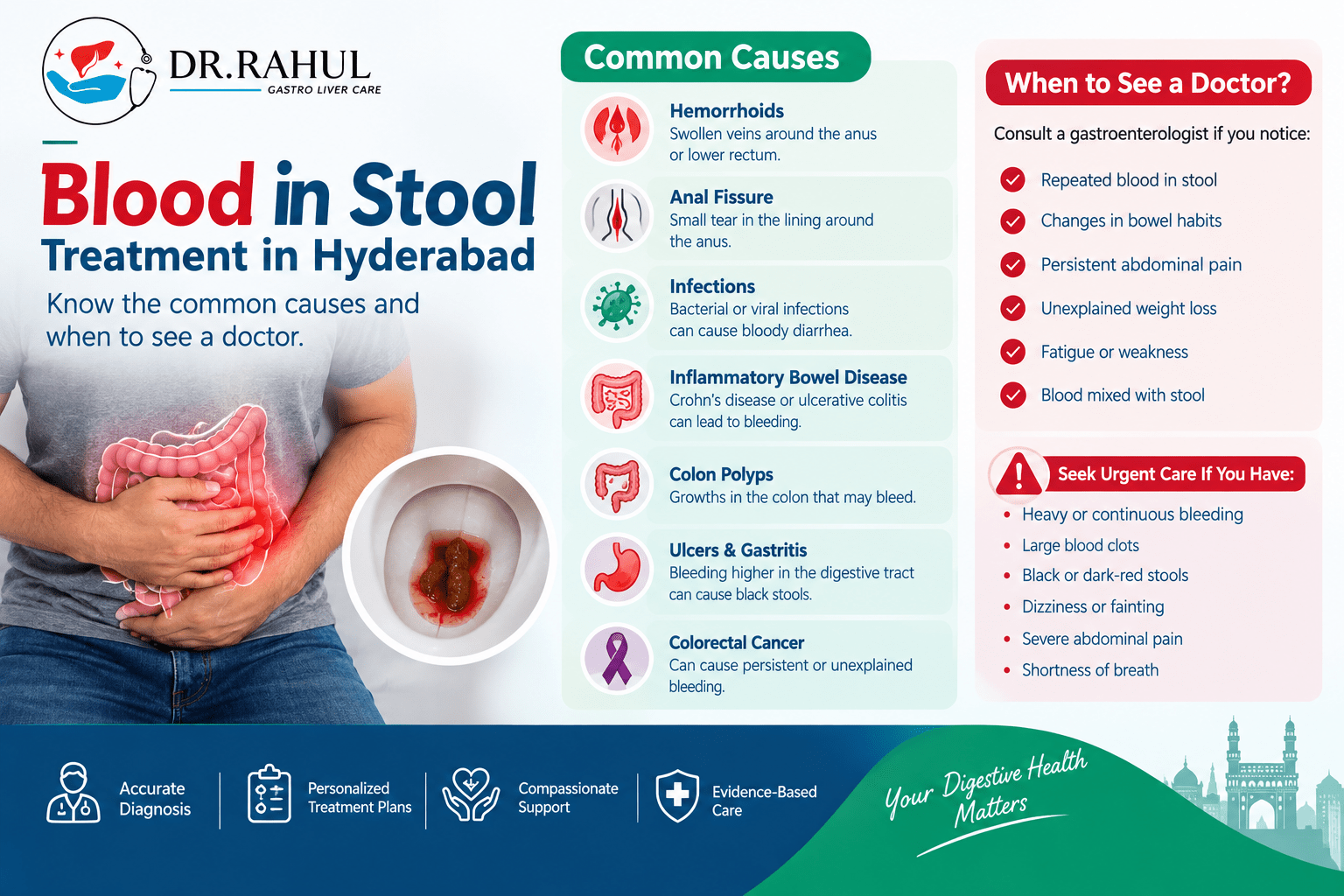
1. Hemorrhoids
Hemorrhoids are swollen veins around the anus or lower rectum and are a common cause of bright-red rectal bleeding. Internal hemorrhoids may cause blood on the stool, toilet paper, or in the toilet bowl, sometimes without significant pain.
Constipation, straining during bowel movements, and prolonged sitting on the toilet can contribute to hemorrhoid symptoms.
2. Anal Fissure
An anal fissure is a small tear in the lining around the anus. It can occur after passing hard stools or during constipation and may cause bright-red bleeding and pain during bowel movements.
3. Gastrointestinal Infection
Certain gastrointestinal infections can cause diarrhea, abdominal cramps, fever, and blood in the stool. Bloody diarrhea should be medically assessed, particularly when accompanied by severe abdominal pain, fever, dehydration, or persistent symptoms.
4. Inflammatory Bowel Disease
Conditions such as Crohn’s disease and ulcerative colitis can cause intestinal inflammation and may lead to blood in the stool. Other symptoms can include diarrhea, abdominal pain, urgency, and changes in bowel habits.
5. Colon Polyps
Some colon polyps can bleed, although many polyps do not cause noticeable symptoms. Blood in the stool or rectal bleeding can sometimes be associated with polyps, which is why unexplained bleeding should be evaluated.
6. Peptic Ulcers and Gastritis
Bleeding higher in the digestive tract can be associated with conditions such as peptic ulcers or gastritis. This type of bleeding can sometimes cause black, tarry stools rather than bright-red blood.
7. Colorectal Cancer
Blood in the stool can sometimes be a symptom of bowel or colorectal cancer, particularly when it occurs with persistent changes in bowel habits, unexplained weight loss, abdominal pain, or unusual tiredness. However, blood in stool has many possible causes and does not automatically mean cancer.
When Should You See a Doctor for Blood in Stool?
You should arrange a medical evaluation if you notice:
- Repeated blood in your stool
- Unexplained rectal bleeding
- Changes in bowel habits
- Persistent diarrhea or constipation
- Unexplained weight loss
- Persistent abdominal pain
- Unusual tiredness or weakness
- Blood mixed with stool
A doctor can assess your symptoms and determine whether further testing is needed.
When Is Blood in Stool an Emergency?
Seek urgent medical attention if you have heavy or continuous bleeding, large blood clots, black or dark-red stool, bloody diarrhea, dizziness, fainting, shortness of breath, severe abdominal pain, or other signs of significant blood loss. Severe gastrointestinal bleeding can be life-threatening.
How Is Blood in Stool Diagnosed?
Diagnosis depends on the suspected cause. A gastroenterologist may review your symptoms, medical history, medications, and family history before performing an examination.
Depending on your symptoms, investigations may include:
- Blood tests
- Stool tests
- Rectal examination
- Colonoscopy
- Upper GI endoscopy
- Imaging tests
- Other gastrointestinal investigations when required
Blood tests can also help identify anemia associated with ongoing blood loss.
Why Is Colonoscopy Sometimes Recommended?
A colonoscopy allows a doctor to examine the lining of the colon and rectum. It may help identify causes such as polyps, inflammation, bleeding sites, or other abnormalities.
When appropriate, doctors can also remove certain polyps or perform treatments during an endoscopic procedure.
Blood in Stool Treatment in Hyderabad
Treatment depends entirely on the underlying cause. Hemorrhoids and anal fissures may require dietary and lifestyle measures or specific treatments. Infections, inflammatory bowel disease, ulcers, polyps, and other conditions require different approaches.
Therefore, there is no single treatment for blood in stool. Identifying the source of bleeding is an important first step toward appropriate management.
Dr. Rahul Dubbaka provides gastroenterology care focused on evaluating digestive symptoms, identifying underlying causes, and developing personalized treatment plans.
How Can You Support Better Bowel Health?
Depending on your individual condition, healthy bowel habits may include:
- Eating adequate dietary fiber
- Drinking sufficient fluids
- Avoiding excessive straining during bowel movements
- Staying physically active
- Managing constipation appropriately
- Avoiding unnecessary self-medication
- Following medical advice for existing digestive conditions
If bleeding continues despite lifestyle changes, seek medical evaluation rather than assuming it is caused by hemorrhoids.
Frequently Asked Questions
Is blood in stool always serious?
No. Hemorrhoids and anal fissures are common causes. However, unexplained or recurring bleeding should be evaluated because other gastrointestinal conditions can also cause bleeding.
What does bright-red blood in stool usually mean?
Bright-red blood can occur with bleeding from the anus or lower digestive tract, including hemorrhoids and anal fissures. Other conditions can also cause it, so the cause should not be assumed without evaluation.
What does black stool indicate?
Black, tar-like stool can indicate bleeding higher in the digestive tract. However, some foods and medicines can also make stools appear dark. Persistent or concerning black stools require medical assessment.
Should I see a gastroenterologist for blood in stool?
Yes, particularly if bleeding is recurrent, unexplained, mixed with stool, or accompanied by bowel changes, abdominal pain, weight loss, or fatigue.
Can blood in stool be a sign of colon cancer?
It can be, but there are many other causes, including hemorrhoids, fissures, polyps, infections, and inflammatory bowel disease. Medical evaluation is important to determine the cause.
Conclusion
Blood in stool should not be ignored, especially when it is persistent or unexplained. Although hemorrhoids and anal fissures are common causes, gastrointestinal infections, inflammatory bowel disease, polyps, ulcers, and colorectal cancer can also cause bleeding.
If you are looking for blood in stool treatment in Hyderabad, consulting a gastroenterologist can help identify the underlying cause and determine the appropriate next steps.