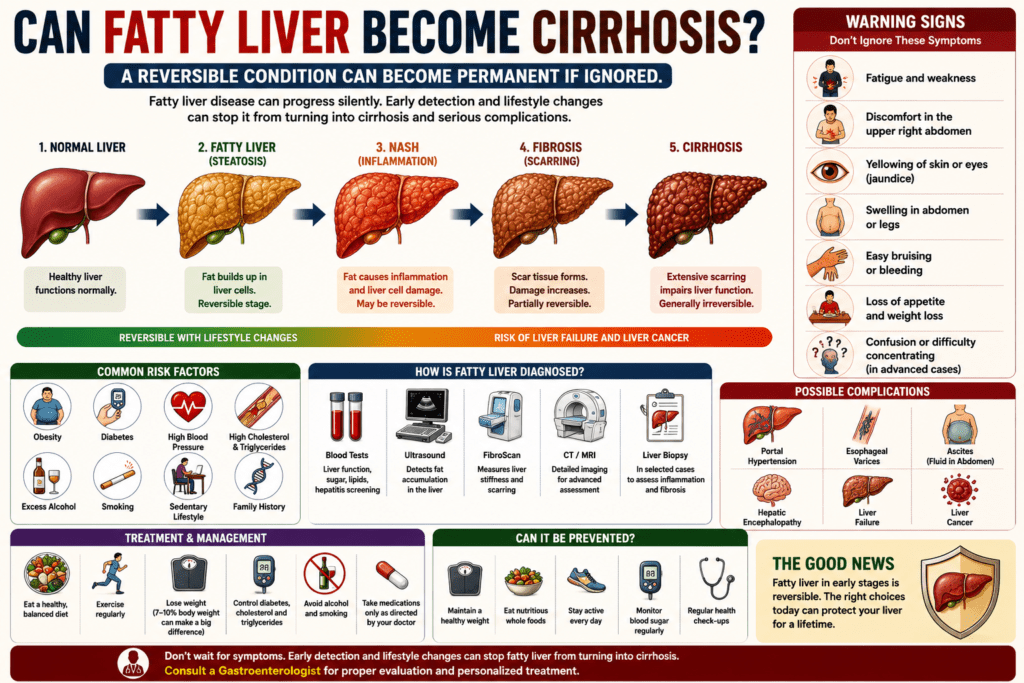
Can Fatty Liver Become Cirrhosis? A Reversible Condition Can Become Permanent If Ignored
Fatty liver disease has become one of the most common liver conditions worldwide, affecting millions of people of all ages. In its early stages, fatty liver often causes no symptoms and is usually discovered during a routine health check-up or ultrasound. Because it is generally silent, many people assume it is harmless.
However, the reality is very different.
If left untreated, fatty liver disease can progress over time to liver inflammation, fibrosis (scarring), cirrhosis, liver failure, and even liver cancer. The encouraging news is that early-stage fatty liver is often reversible, especially with timely lifestyle changes and appropriate medical care.
Understanding how fatty liver progresses and recognizing the warning signs can help protect your liver before permanent damage occurs.
In this comprehensive guide, you’ll learn what fatty liver disease is, how it can progress to cirrhosis, the stages of liver damage, risk factors, symptoms, diagnosis, treatment options, and practical ways to prevent long-term complications.
What Is Fatty Liver Disease?
Fatty liver disease occurs when excess fat accumulates inside liver cells. While a small amount of fat in the liver is normal, too much fat can interfere with liver function and increase the risk of inflammation.
There are two main types:
1. Non-Alcoholic Fatty Liver Disease (NAFLD)
This type occurs in people who drink little or no alcohol. It is commonly associated with:
- Obesity
- Type 2 diabetes
- High cholesterol
- High triglycerides
- Metabolic syndrome
2. Alcohol-Related Fatty Liver Disease
This form develops due to excessive alcohol consumption, which damages liver cells over time.
Both types can progress if the underlying cause is not addressed.
Can Fatty Liver Really Become Cirrhosis?
Yes.
Not everyone with fatty liver will develop cirrhosis, but untreated fatty liver can progress through several stages of liver damage.
The progression often follows this pathway:
Fatty Liver → Liver Inflammation (Steatohepatitis) → Fibrosis → Cirrhosis → Liver Failure or Liver Cancer
The speed of progression varies from person to person and depends on factors such as overall health, genetics, lifestyle, and the presence of other medical conditions.
Understanding the Stages of Fatty Liver Disease
Stage 1: Simple Fatty Liver (Steatosis)
This is the earliest stage.
Characteristics include:
- Fat accumulation in liver cells
- Usually no symptoms
- Little or no inflammation
- Liver function often remains normal
At this stage, lifestyle changes can often reverse the condition completely.
Stage 2: Steatohepatitis
When fat accumulation leads to liver inflammation, the condition becomes more serious.
This stage is known as:
- Non-Alcoholic Steatohepatitis (NASH)
- Alcoholic Steatohepatitis (ASH)
Inflammation damages liver cells and increases the risk of permanent scarring.
Stage 3: Fibrosis
Repeated inflammation causes scar tissue (fibrosis) to develop.
Although the liver can still perform many of its functions, increasing fibrosis gradually reduces its efficiency.
Fibrosis may still be partially reversible if treated early.
Stage 4: Cirrhosis
Cirrhosis develops when extensive scar tissue replaces healthy liver tissue.
At this stage:
- Liver function declines
- Blood flow through the liver becomes impaired
- Complications become more likely
Unlike early fatty liver, cirrhosis is generally considered permanent, although treatment can slow or prevent further damage.
What Is Cirrhosis?
Cirrhosis is advanced scarring of the liver caused by long-term injury.
Healthy liver tissue is gradually replaced by fibrous scar tissue, making it difficult for the liver to perform its essential functions, including:
- Removing toxins from the blood
- Producing proteins
- Storing nutrients
- Producing bile
- Regulating blood clotting
Advanced cirrhosis can lead to liver failure if left untreated.
Who Is Most at Risk?
Certain factors increase the risk of fatty liver progressing to cirrhosis.
These include:
- Obesity
- Type 2 diabetes
- High blood pressure
- High cholesterol
- High triglycerides
- Excess alcohol consumption
- Smoking
- Older age
- Family history of liver disease
- Sedentary lifestyle
- Sleep apnea
Managing these risk factors can significantly reduce disease progression.
Symptoms of Fatty Liver
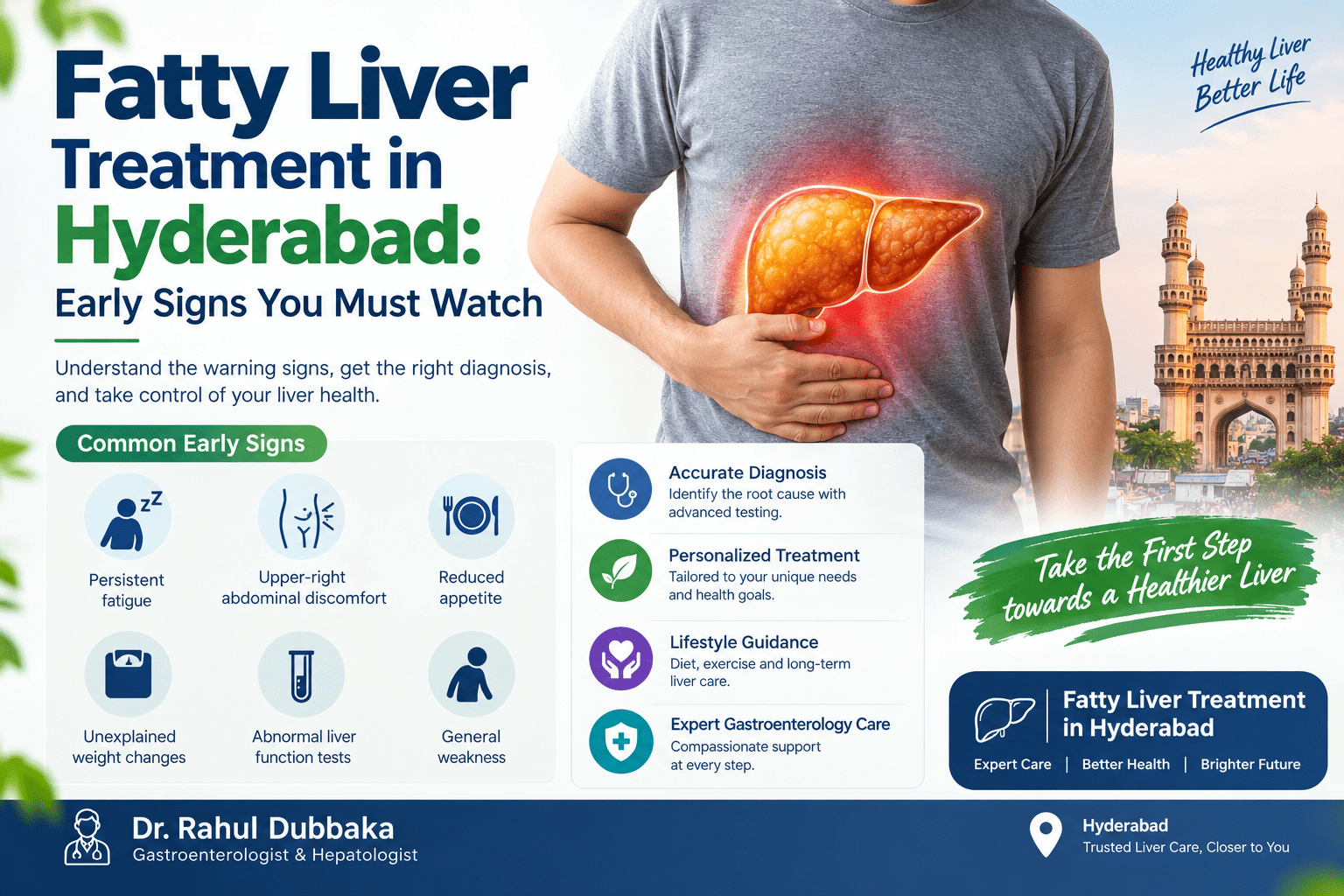
Early fatty liver often causes no symptoms.
When symptoms occur, they may include:
- Fatigue
- Mild discomfort in the upper right abdomen
- Feeling of fullness
- Weakness
Many people are diagnosed during routine ultrasound examinations.
Symptoms That May Suggest Cirrhosis
As liver damage progresses, symptoms become more noticeable.
Warning signs include:
- Yellowing of the skin and eyes (jaundice)
- Swelling of the abdomen (ascites)
- Swelling of the legs
- Easy bruising
- Bleeding easily
- Severe fatigue
- Loss of appetite
- Weight loss
- Itchy skin
- Dark urine
- Confusion or difficulty concentrating (hepatic encephalopathy)
These symptoms require prompt medical evaluation.
Complications of Cirrhosis
Untreated cirrhosis can lead to serious complications, including:
Portal Hypertension
Increased pressure in the liver’s blood vessels.
Esophageal Varices
Enlarged veins in the esophagus that may bleed heavily.
Ascites
Fluid accumulation in the abdomen.
Hepatic Encephalopathy
A buildup of toxins affecting brain function.
Liver Failure
The liver can no longer perform its vital functions.
Liver Cancer
People with cirrhosis have a higher risk of developing hepatocellular carcinoma.
Regular surveillance is essential.
How Is Fatty Liver Diagnosed?
Your doctor may recommend several tests.
Blood Tests
These may include:
- Liver Function Tests (LFTs)
- Blood sugar
- Lipid profile
- Viral hepatitis screening
Ultrasound
Ultrasound is commonly used to detect fatty liver.
FibroScan
FibroScan measures liver stiffness and helps estimate fibrosis without surgery.
CT Scan or MRI
These imaging tests provide additional information when needed.
Liver Biopsy
In selected cases, a biopsy may be performed to determine the degree of inflammation and scarring.
Can Cirrhosis Be Reversed?
This depends on the stage.
Fatty Liver
Usually reversible with:
- Weight loss
- Healthy eating
- Regular exercise
- Diabetes control
- Avoiding alcohol
Fibrosis
Early fibrosis may improve if the underlying cause is treated.
Cirrhosis
Advanced cirrhosis is generally irreversible.
However, treatment can:
- Slow disease progression
- Prevent complications
- Improve quality of life
- Reduce the risk of liver failure
Treatment for Fatty Liver
There is no single medication that cures fatty liver.
Treatment focuses on addressing the underlying causes.
Lose Excess Weight
Losing 7–10% of body weight can significantly reduce liver fat and inflammation for many individuals.
Weight loss should be gradual and supervised when appropriate.
Eat a Liver-Friendly Diet
Choose:
- Fruits
- Vegetables
- Whole grains
- Lean proteins
- Nuts
- Healthy fats
Limit:
- Sugary beverages
- Refined carbohydrates
- Processed foods
- Fried foods
- Excess saturated fat
Exercise Regularly
Aim for at least 150 minutes of moderate exercise each week.
Both aerobic exercise and strength training are beneficial.
Control Diabetes
Good blood sugar management helps reduce liver inflammation.
Lower Cholesterol and Triglycerides
Managing blood lipids reduces stress on the liver.
Avoid alcohol.
Alcohol accelerates liver damage and should be avoided, especially in advanced liver disease.
Take Medications Only as Directed
Avoid unnecessary medications and herbal supplements that may affect liver health.
Can Fatty Liver Be Prevented?
Yes, in many cases.
Healthy habits include:
- Maintaining a healthy weight
- Exercising regularly
- Eating a balanced diet
- Limiting sugar intake
- Avoiding excessive alcohol
- Managing diabetes and cholesterol
- Getting regular health check-ups
Common Myths About Fatty Liver
Myth: Fatty liver only affects people who drink alcohol.
Fact: Non-alcoholic fatty liver disease is now one of the most common liver conditions worldwide.
Myth: Fatty liver always causes symptoms.
Fact: Most people have no symptoms until significant liver damage has occurred.
Myth: Fatty liver is harmless.
Fact: Untreated fatty liver can progress to cirrhosis and liver cancer.
Myth: Liver disease only affects older adults.
Fact: Fatty liver is increasingly being diagnosed in young adults and even adolescents due to obesity and metabolic syndrome.
Frequently Asked Questions
How long does it take for fatty liver to become cirrhosis?
The progression varies widely. Some people never develop cirrhosis, while others may progress over several years, especially if risk factors remain uncontrolled.
Can losing weight improve fatty liver?
Yes. Gradual, sustained weight loss can reduce liver fat and inflammation in many people.
Is cirrhosis always fatal?
No. With early diagnosis, proper treatment, and regular monitoring, many people with cirrhosis live for years while maintaining a good quality of life.
Can exercise help?
Yes. Regular physical activity improves liver health even if significant weight loss does not occur.
When Should You See a Gastroenterologist?
Consult a gastroenterologist if you have:
- Fatty liver diagnosed on ultrasound
- Persistently abnormal liver function tests
- Diabetes with liver abnormalities
- Obesity and metabolic syndrome
- Jaundice
- Swelling of the abdomen or legs
- Unexplained fatigue
- A family history of liver disease
- Concern about progression to fibrosis or cirrhosis
Regular follow-up helps detect disease progression early and allows timely intervention.
Final Thoughts
Fatty liver disease is often silent in its early stages, but that doesn’t mean it should be ignored. While many people can reverse fatty liver through healthy lifestyle changes, untreated disease may gradually progress to liver inflammation, fibrosis, cirrhosis, liver failure, or even liver cancer.
The encouraging news is that early detection makes a significant difference. Routine health check-ups, liver function tests, ultrasound examinations, and FibroScan assessments can identify liver disease before irreversible damage develops. Combined with weight management, a nutritious diet, regular exercise, good diabetes control, and avoiding excessive alcohol, these steps can greatly reduce the risk of progression.
If you’ve been diagnosed with fatty liver or have risk factors such as obesity, diabetes, or high cholesterol, don’t wait for symptoms to appear. Taking action today can protect your liver for years to come. Early treatment offers the best chance to reverse fatty liver and prevent permanent liver damage.