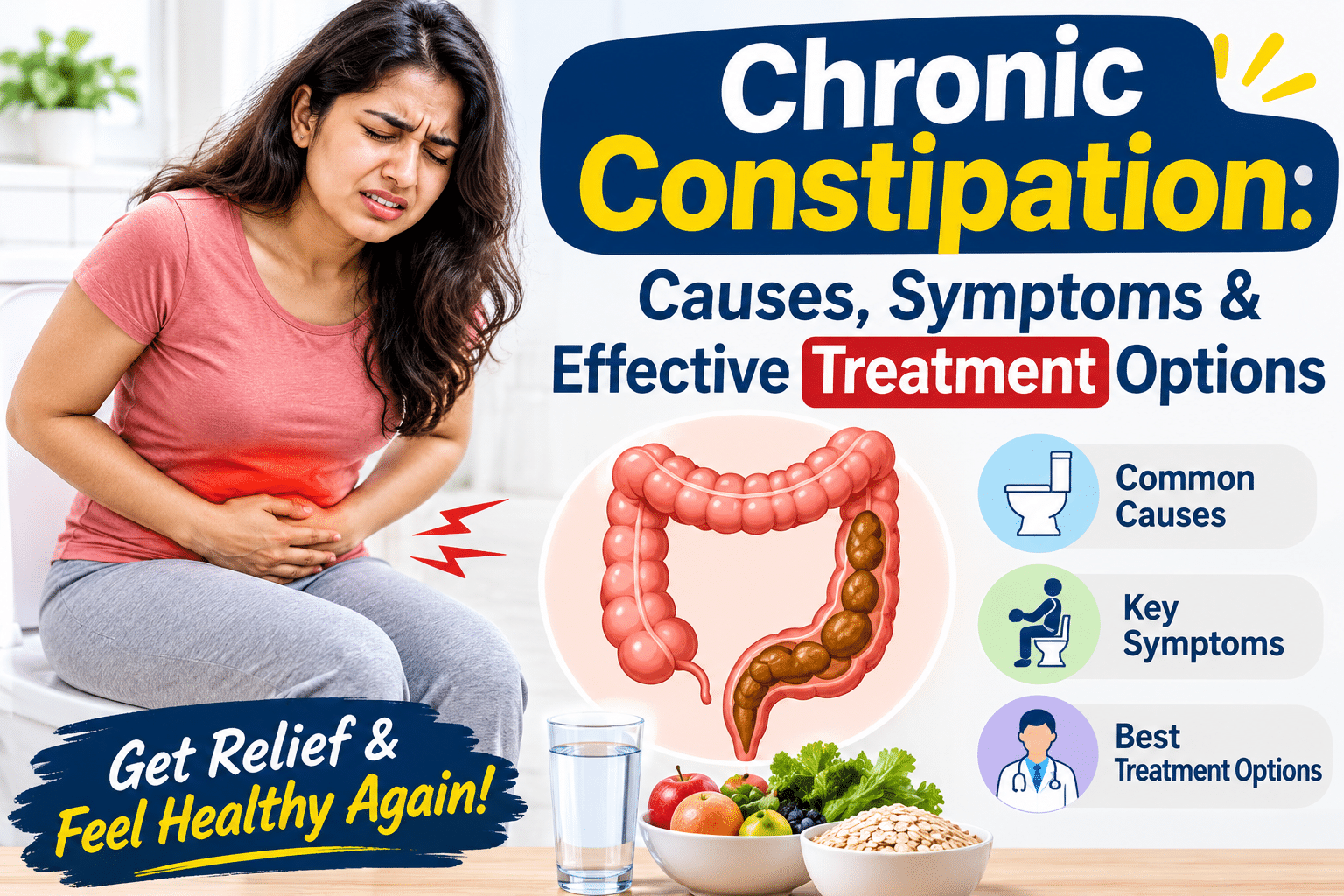
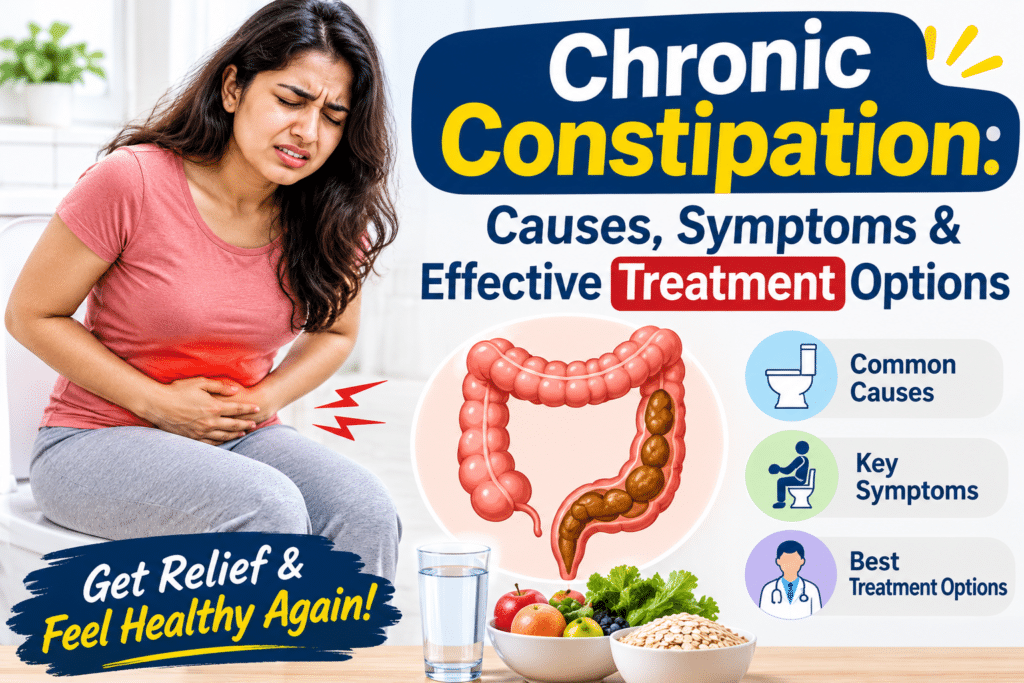
Chronic constipation is a common digestive problem that affects people of all age groups. It is more than just having difficulty passing stools occasionally. When bowel movements become infrequent, stools are hard or dry, or passing stools requires excessive straining for several weeks, it may indicate chronic constipation. If left untreated, it can affect your daily comfort, appetite, and overall quality of life.
Understanding the causes, symptoms, and available treatment options is important for maintaining good digestive health. With the right lifestyle changes, dietary improvements, and medical guidance, chronic constipation can often be effectively managed.
In this guide, we explain everything you need to know about chronic constipation, including when to consult a gastroenterologist.
What Is Chronic Constipation?
Chronic constipation refers to persistent difficulty in passing stools or having fewer bowel movements than usual over an extended period. Generally, having fewer than three bowel movements per week, along with symptoms such as hard stools, straining, or incomplete evacuation, may indicate constipation.
Some people experience constipation occasionally due to dietary changes, dehydration, or travel. However, when symptoms continue for several weeks or months, medical evaluation may be necessary.
Chronic constipation can result from dietary habits, reduced physical activity, medications, hormonal conditions, or underlying digestive disorders.
Common Causes of Chronic Constipation
Identifying the underlying cause is essential for choosing the right treatment. Some of the most common causes include:
1. Insufficient Dietary Fiber
Fiber plays an important role in healthy digestion. It adds bulk to stools and helps them move smoothly through the intestines. A diet low in fruits, vegetables, whole grains, and legumes can increase the risk of constipation.
2. Inadequate Water Intake
Water helps soften stools and supports normal bowel movements. Not drinking enough fluids, particularly during hot weather or physical activity, may contribute to hard and difficult-to-pass stools.
3. Lack of Physical Activity
Regular physical activity helps stimulate intestinal movement. A sedentary lifestyle, prolonged sitting, and limited exercise may slow bowel movements and increase constipation risk.
4. Ignoring the Urge to Pass Stools
Frequently delaying bowel movements can interfere with normal bowel habits. Over time, ignoring the urge to use the toilet may make constipation worse.
5. Certain Medications
Some medicines can cause constipation as a side effect. These include certain painkillers, iron supplements, calcium supplements, antacids containing aluminium, and some medications for blood pressure or depression.
6. Medical Conditions
Certain health conditions can affect bowel movements, including:
- Diabetes
- Hypothyroidism
- Irritable Bowel Syndrome (IBS)
- Neurological disorders
- Pelvic floor dysfunction
- Certain intestinal disorders
A medical assessment can help determine whether an underlying condition is contributing to persistent constipation.
Symptoms of Chronic Constipation
The symptoms may differ from person to person. Common warning signs include:
- Fewer than three bowel movements per week.
- Hard, dry, or lumpy stools.
- Difficulty or excessive straining during bowel movements.
- Feeling that the bowel has not completely emptied.
- Abdominal discomfort or bloating.
- A sensation of blockage in the rectum.
- Needing manual assistance to pass stools in some cases.
If these symptoms continue for several weeks or interfere with daily activities, consult a gastroenterologist for proper evaluation.
Effective Treatment Options for Chronic Constipation
Treatment depends on the underlying cause, severity of symptoms, and overall health of the patient. The following approaches can help manage chronic constipation.
1. Increase Dietary Fiber
Adding fiber-rich foods to your daily diet can improve bowel movements. Good options include:
- Papaya, oranges, apples, and pears.
- Green leafy vegetables.
- Oats and whole grains.
- Beans, lentils, and chickpeas.
- Chia seeds and flaxseeds.
Increase fiber gradually to avoid excessive gas and bloating. Adequate fluid intake is also important when increasing dietary fiber.
2. Drink Enough Water
Maintaining proper hydration can help soften stools and support healthy digestion. Drink water regularly throughout the day. Your individual fluid requirements may vary depending on your health, activity level, and climate.
3. Exercise Regularly
Physical activity supports normal intestinal movement. Walking, cycling, swimming, and other moderate exercises can help improve bowel regularity.
Even a 20–30-minute daily walk may be beneficial for many people.
4. Maintain a Regular Toilet Routine
Try using the toilet at a consistent time every day, particularly after breakfast when bowel activity may naturally increase.
Avoid ignoring the urge to pass stools. Using a small footstool to raise your knees while sitting on the toilet may also make bowel movements easier.
5. Use Medications When Recommended
If lifestyle changes are insufficient, a doctor may recommend suitable constipation medications, such as:
- Fiber supplements.
- Osmotic laxatives.
- Stool softeners in selected cases.
- Other prescription medications for chronic constipation.
Avoid using stimulant laxatives regularly without medical advice. The right medication depends on the cause and type of constipation.
6. Treat Underlying Medical Conditions
If constipation is associated with diabetes, thyroid problems, IBS, or pelvic floor dysfunction, treating the underlying condition is an important part of management.
Some patients may benefit from pelvic floor physiotherapy or biofeedback therapy, particularly when difficulty coordinating bowel movements is identified.
When Should You See a Gastroenterologist?
Occasional constipation may improve with dietary and lifestyle modifications. However, persistent symptoms should not be ignored.
Consult a gastroenterologist if:
- Constipation continues for several weeks.
- You regularly experience abdominal pain or bloating.
- You notice blood in your stool.
- You experience unexplained weight loss.
- Your bowel habits change suddenly or significantly.
- You have a family history of colorectal cancer.
- Home remedies and lifestyle changes do not provide relief.
Severe abdominal pain, vomiting, significant abdominal swelling, or inability to pass stool or gas requires urgent medical assessment.
How Is Chronic Constipation Diagnosed?
A gastroenterologist may begin by reviewing your symptoms, medical history, medications, and dietary habits.
Depending on the findings, diagnostic investigations may include:
- Blood tests to check for conditions such as hypothyroidism or diabetes.
- Stool tests when clinically indicated.
- Colonoscopy to investigate concerning symptoms or suspected intestinal disease.
- Anorectal manometry to assess rectal and anal muscle function.
- Balloon expulsion testing to evaluate evacuation difficulties.
- Colonic transit studies to understand how quickly stool moves through the colon.
Not every patient needs all these tests. Investigations are recommended according to individual symptoms and clinical findings.
Can Chronic Constipation Be Prevented?
Although some causes cannot be completely prevented, healthy daily habits can reduce the risk of constipation.
Follow these simple practices:
- Eat a balanced diet rich in dietary fiber.
- Drink adequate water throughout the day.
- Include regular physical activity in your routine.
- Maintain consistent meal and toilet timings.
- Avoid delaying bowel movements.
- Limit excessive consumption of highly processed, low-fiber foods.
- Seek medical advice if constipation becomes persistent.
Small changes in your daily routine can make a significant difference to your digestive health.
Conclusion
Chronic constipation is a manageable digestive condition, but persistent symptoms should never be ignored. Common causes include insufficient fiber intake, dehydration, physical inactivity, certain medications, and underlying medical conditions.
A combination of dietary improvements, adequate hydration, regular exercise, healthy toilet habits, and appropriate medical treatment can help improve bowel movements and digestive comfort.
If you are experiencing persistent constipation, consulting an experienced gastroenterologist can help identify the underlying cause and guide you toward appropriate treatment.
For professional evaluation and digestive health guidance, consult Dr. Rahul Gastro and Liver, Hyderabad, to understand your symptoms and explore suitable treatment options.
Frequently Asked Questions (FAQs)
1. What is considered chronic constipation?
Chronic constipation refers to persistent difficulty passing stools, usually involving fewer than three bowel movements per week, hard stools, straining, or incomplete evacuation over an extended period.
2. What is the main cause of chronic constipation?
Common causes include insufficient dietary fiber, inadequate water intake, lack of exercise, certain medications, and underlying medical conditions.
3. Which foods help relieve constipation?
Fiber-rich foods such as papaya, apples, pears, oats, vegetables, lentils, and whole grains may help improve bowel movements.
4. Is chronic constipation dangerous?
Chronic constipation is not always dangerous, but persistent symptoms may indicate an underlying medical condition. Severe pain, vomiting, blood in stools, or unexplained weight loss requires medical evaluation.
5. When should I consult a gastroenterologist for constipation?
Consult a gastroenterologist if constipation lasts several weeks, frequently returns, affects daily life, or does not improve with lifestyle changes.
6. Can drinking water cure constipation?
Adequate hydration can help soften stools, particularly when fluid intake is insufficient. However, chronic constipation may require dietary changes, medical evaluation, or additional treatment.