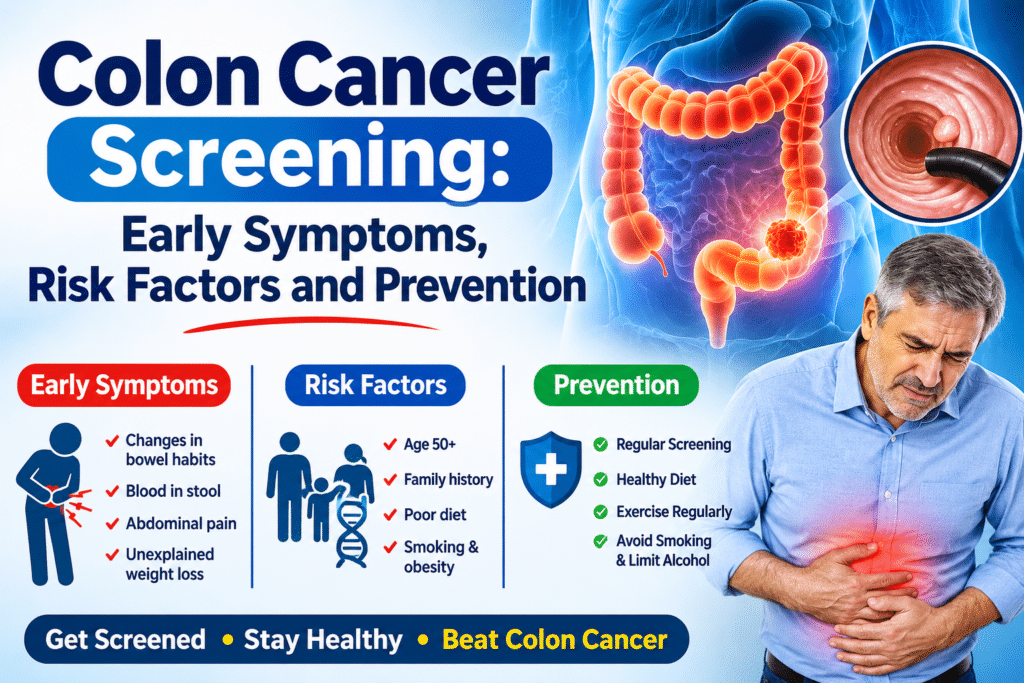
Colon cancer is one of the most important digestive health conditions that people should understand. Also known as colorectal cancer when it affects the colon or rectum, this disease often develops gradually from abnormal growths called polyps. Early detection through regular colon cancer screening can help identify these growths before they become cancerous and improve treatment outcomes.
Many people ignore digestive symptoms such as constipation, abdominal discomfort, changes in bowel habits, or blood in their stool. Although these symptoms can occur due to several conditions, persistent changes should never be overlooked.
Understanding the early symptoms, risk factors, screening methods, and prevention strategies can help protect your digestive health. In this article, we explain everything you need to know about colon cancer screening and when to consult a gastroenterologist.
What Is Colon Cancer?
Colon cancer develops when abnormal cells grow uncontrollably in the large intestine (colon). It usually begins as small growths called polyps on the inner lining of the colon. While most polyps are not cancerous, certain types can gradually develop into cancer over several years.
Colon cancer may not cause noticeable symptoms during its early stages. This is why screening plays an important role in identifying abnormalities before they become more serious.
Regular screening, timely diagnosis, and appropriate medical care can significantly improve the chances of successful treatment.
Early Warning Signs and Symptoms of Colon Cancer
Recognising the early symptoms of colon cancer is important for timely medical evaluation. Some common warning signs include:
1. Changes in Bowel Habits
Persistent constipation, diarrhoea, or alternating between both conditions may indicate an underlying digestive problem. Changes that continue for several weeks should be evaluated by a doctor.
2. Blood in the Stool
Blood in the stool may appear bright red or make stools look dark. Although haemorrhoids and other conditions can also cause rectal bleeding, unexplained bleeding requires medical attention.
3. Persistent Abdominal Pain
Frequent stomach cramps, bloating, gas, or abdominal discomfort may sometimes be associated with colon problems.
4. Unexplained Weight Loss
Losing weight without changing your diet or exercise routine can be a warning sign of an underlying health condition, including cancer.
5. Constant Fatigue and Weakness
Colon cancer can sometimes cause slow, unnoticed blood loss, leading to iron-deficiency anaemia. This may result in tiredness, weakness, and reduced energy levels.
6. Feeling That the Bowel Does Not Empty Completely
A persistent feeling that you still need to pass stool even after using the toilet may require further investigation.
Important: These symptoms do not automatically mean you have colon cancer. However, persistent or unexplained symptoms should be assessed by a qualified medical professional.
Major Risk Factors for Colon Cancer
Although colon cancer can affect anyone, certain factors may increase the likelihood of developing the disease.
- Age: The risk generally increases with age, although younger adults can also develop colorectal cancer.
- Family History: Having a parent, sibling, or child with colorectal cancer or certain polyps can increase your risk.
- Inflammatory Bowel Disease: Long-term ulcerative colitis or Crohn’s disease involving the colon may increase cancer risk.
- Unhealthy Diet: Frequent consumption of processed meat and high amounts of red meat may increase risk.
- Obesity: Being overweight or obese is associated with a higher risk of colorectal cancer.
- Smoking and Alcohol: Tobacco use and excessive alcohol consumption can contribute to increased cancer risk.
- Physical Inactivity: A sedentary lifestyle may increase the risk of developing colorectal cancer.
- Inherited Genetic Conditions: Conditions such as Lynch syndrome and familial adenomatous polyposis (FAP) can significantly increase risk.
People with these risk factors may need an earlier or more frequent screening schedule depending on their medical and family history.
What Is Colon Cancer Screening and Why Is It Important?
Colon cancer screening involves medical tests used to detect colorectal cancer or precancerous growths before symptoms appear.
One of the major benefits of screening is that doctors can identify and remove certain polyps before they develop into cancer.
For people at average risk, several international guidelines recommend beginning regular screening at age 45. However, individuals with a family history, inherited conditions, or inflammatory bowel disease may need screening earlier.
The appropriate starting age and screening interval should be decided with a gastroenterologist based on individual risk factors and medical history.
Common Colon Cancer Screening Tests
Several tests are available to detect colorectal cancer and abnormal growths.
1. Colonoscopy
Colonoscopy is an important procedure used to examine the inside of the colon and rectum. A doctor uses a thin, flexible tube with a camera to identify polyps, inflammation, bleeding, and other abnormalities.
During the procedure, suspicious polyps can often be removed, and tissue samples can be collected for laboratory examination.
Benefits of colonoscopy:
- Examines the entire colon.
- Helps identify abnormal growths and suspicious areas.
- Allows removal of many polyps during the same procedure.
- Helps doctors investigate unexplained rectal bleeding and bowel changes.
2. FIT (Fecal Immunochemical Test)
FIT is a stool-based test that checks for hidden blood in the stool. It is a non-invasive screening option that can be completed at home using a sample collection kit.
An abnormal result generally requires further evaluation with colonoscopy.
3. Stool DNA Testing
This test examines stool for certain abnormal DNA markers and hidden blood that may be associated with colorectal cancer or precancerous growths.
4. CT Colonography
Also called virtual colonoscopy, this imaging test uses CT scanning to produce pictures of the colon and identify suspicious polyps or abnormalities.
If an abnormality is found, a conventional colonoscopy may still be necessary.
Your gastroenterologist can recommend the most appropriate screening method based on your age, symptoms, risk factors, and medical history.
How Can You Reduce the Risk of Colon Cancer?
Although not every case of colon cancer can be prevented, healthy lifestyle choices can help reduce risk.
1. Eat a Fibre-Rich Diet: Include fruits, vegetables, whole grains, beans, and other fibre-rich foods in your daily meals.
2. Limit Processed and Red Meat: Reduce frequent consumption of processed meats such as sausages and bacon, and moderate red meat intake.
3. Exercise Regularly: Aim for consistent physical activity, such as walking, cycling, or swimming.
4. Maintain a Healthy Weight: Managing body weight can support overall metabolic and digestive health.
5. Avoid Smoking: Quitting tobacco can improve overall health and reduce several cancer risks.
6. Limit Alcohol Consumption: Avoiding alcohol or reducing intake can help lower cancer risk.
7. Schedule Recommended Screening: Do not wait for symptoms if you are eligible for screening or have increased risk.
When Should You Consult a Gastroenterologist?
You should consult a gastroenterologist if you experience persistent abdominal pain, unexplained changes in bowel habits, blood in your stool, unexplained weight loss, or ongoing fatigue.
People with a family history of colon cancer, previous polyps, or inflammatory bowel disease should also discuss an appropriate screening schedule with their doctor.
If you are looking for colon cancer screening in Hyderabad, consulting an experienced gastroenterologist can help you understand the available diagnostic options and determine whether colonoscopy or another investigation is appropriate.
Early medical evaluation can help identify the cause of symptoms and prevent delays in diagnosis.
Conclusion
Colon cancer is a serious digestive health condition, but early detection can make a significant difference. Understanding the warning signs, knowing your risk factors, following a healthy lifestyle, and undergoing recommended screening are important steps towards protecting your health.
Colonoscopy and other screening methods can help detect abnormal growths and identify cancer at an earlier stage. Do not ignore persistent digestive symptoms or delay medical consultation because of fear or uncertainty.
For professional guidance regarding digestive health, colonoscopy, and liver-related conditions, consult Dr. Rahul Gastro & Liver in Hyderabad. Timely evaluation and personalised medical advice can help you make informed decisions about your health.
Take the first step towards better digestive health with timely screening and expert medical guidance.