Colon Cancer Symptoms You Should Never Ignore: Early Detection Can Save Lives
Colon cancer is one of the most common cancers worldwide, yet it is also one of the most preventable and treatable when detected early. Unfortunately, many people overlook the early warning signs because they often resemble common digestive problems such as constipation, hemorrhoids, or irritable bowel syndrome (IBS).
Ignoring persistent digestive symptoms can delay diagnosis, allowing the disease to progress. The good news is that regular screening and early medical evaluation can detect colon cancer before symptoms become severe—and in many cases, even before cancer develops.
In this comprehensive guide, we’ll discuss the symptoms of colon cancer that should never be ignored, risk factors, diagnosis, treatment options, and practical ways to reduce your risk.
What Is Colon Cancer?
Colon cancer develops in the large intestine (colon), which is part of the digestive system. It usually begins as small, noncancerous growths called polyps that form on the inner lining of the colon.
While not all polyps become cancerous, some can gradually develop into cancer over several years. Detecting and removing these polyps during routine screening can prevent colon cancer from developing.
Why Early Detection Matters
Colon cancer often develops slowly. In its early stages, it may cause no symptoms at all.
When diagnosed early:
- Treatment is generally more effective.
- The chances of successful recovery are much higher.
- Less extensive treatment may be needed.
- Survival rates are significantly better.
That’s why recognizing symptoms and following recommended screening guidelines is so important.
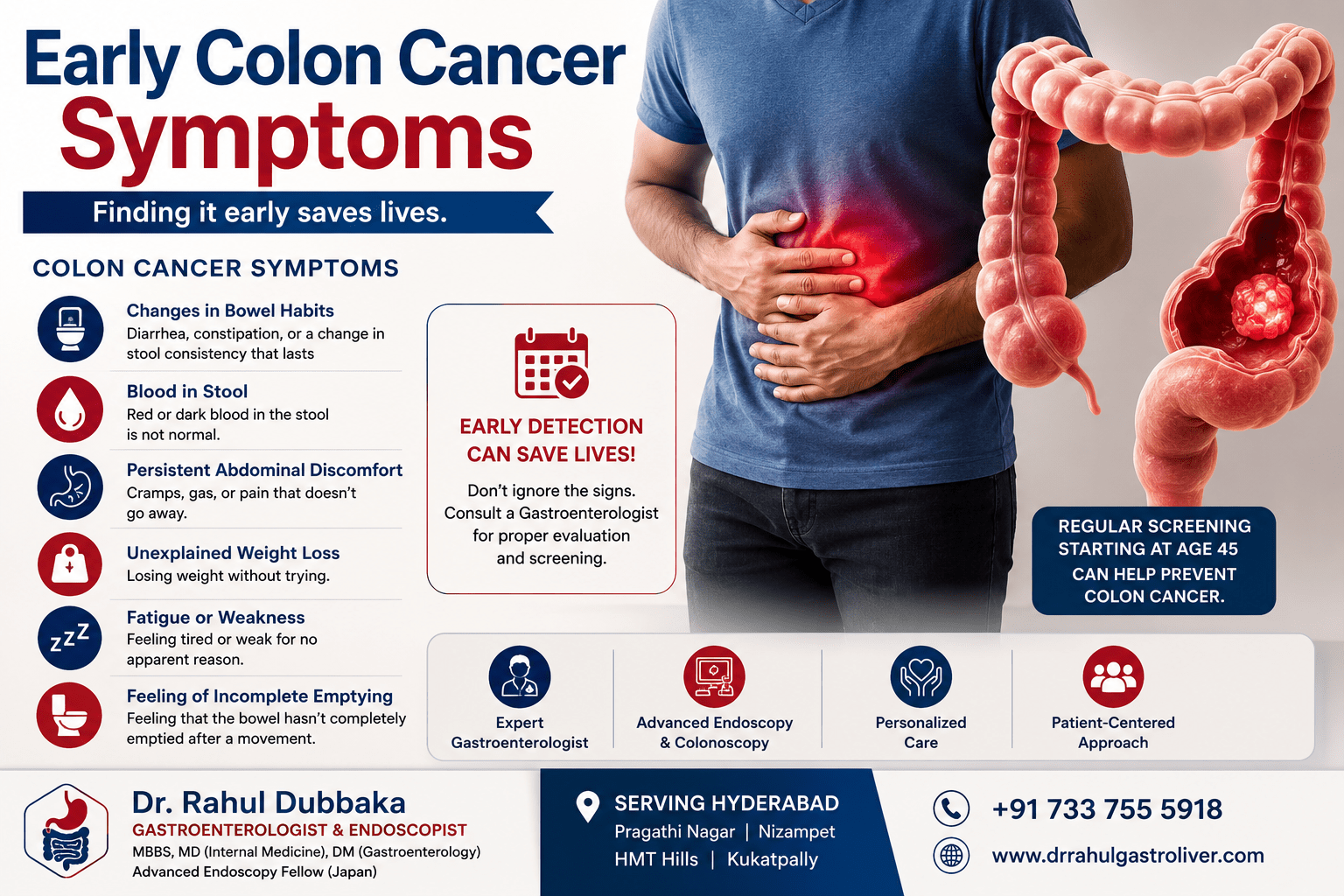
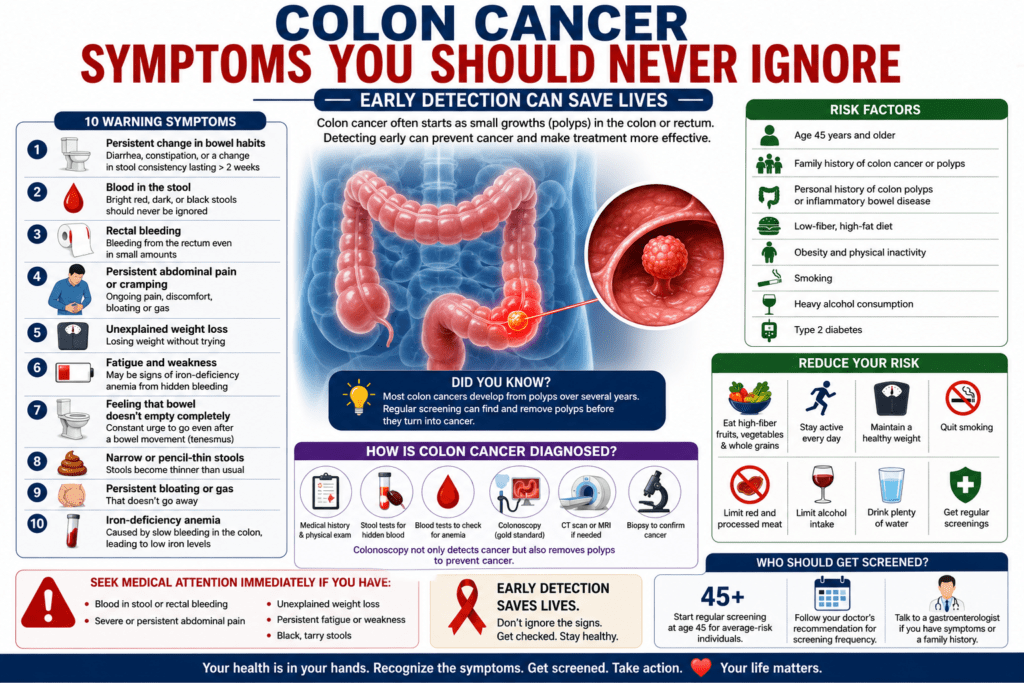
10 Colon Cancer Symptoms You Should Never Ignore
1. Persistent Change in Bowel Habits
A lasting change in your normal bowel routine is one of the most common warning signs.
This may include:
- Frequent diarrhea
- Persistent constipation
- Alternating diarrhea and constipation
- Narrow or pencil-thin stools
- Feeling that the bowel doesn’t empty completely
If these changes continue for more than a few weeks, seek medical evaluation.
2. Blood in the Stool
Blood in the stool should never be ignored.
It may appear as:
- Bright red blood
- Dark maroon blood
- Black, tarry stools
- Blood mixed with stool
While hemorrhoids are a common cause of rectal bleeding, colon cancer is another possibility that must be ruled out.
3. Rectal Bleeding
Even a small amount of bleeding from the rectum deserves medical attention.
Persistent bleeding requires evaluation by a healthcare professional.
4. Persistent Abdominal Pain or Cramping
Colon cancer may cause:
- Abdominal cramps
- Gas pain
- Persistent discomfort
- Bloating
- Pressure in the abdomen
Unlike occasional indigestion, pain that continues or worsens should not be ignored.
5. Unexplained Weight Loss
Losing weight without trying may indicate an underlying medical condition, including colon cancer.
Cancer cells can affect metabolism and reduce appetite, leading to unintended weight loss.
6. Fatigue and Weakness
Chronic blood loss from the colon can lead to iron-deficiency anemia, causing:
- Constant tiredness
- Weakness
- Shortness of breath
- Dizziness
Persistent fatigue deserves medical evaluation, especially if accompanied by other digestive symptoms.
7. Feeling That the Bowel Doesn’t Empty Completely
Some people continue to feel the urge to have a bowel movement even after using the toilet.
This sensation, known as tenesmus, may occur if a tumor partially blocks the rectum or lower colon.
8. Narrow or Pencil-Thin Stools
A tumor can narrow the passage inside the colon, causing stools to become thinner than usual.
Occasional changes may not be concerning, but persistent narrowing should be evaluated.
9. Persistent Bloating or Gas
Although bloating is common with many digestive disorders, ongoing bloating accompanied by pain, weight loss, or changes in bowel habits requires further investigation.
10. Iron-Deficiency Anemia
Some colon cancers bleed slowly over time without visible blood in the stool.
This hidden blood loss can cause anemia, leading to:
- Fatigue
- Pale skin
- Weakness
- Dizziness
Routine blood tests may detect anemia before other symptoms appear.
Who Is at Higher Risk?
Anyone can develop colon cancer, but certain factors increase the risk.
These include:
- Age over 45 years
- Family history of colon cancer
- Personal history of colon polyps
- Inflammatory bowel disease (Crohn’s disease or ulcerative colitis)
- Obesity
- Type 2 diabetes
- Smoking
- Heavy alcohol consumption
- Diet high in processed and red meats
- Physical inactivity
Having risk factors doesn’t mean you will develop colon cancer, but regular screening becomes even more important.
Symptoms That Need Immediate Medical Attention
Seek prompt medical care if you experience:
- Blood in the stool
- Persistent rectal bleeding
- Severe abdominal pain
- Unexplained weight loss
- Persistent constipation or diarrhea
- Ongoing fatigue due to anemia
- Continuous bloating with bowel changes
- Black, tarry stools
Early evaluation can make a life-saving difference.
How Is Colon Cancer Diagnosed?
If your doctor suspects colon cancer, several tests may be recommended.
Medical History and Physical Examination
Your doctor will ask about:
- Symptoms
- Family history
- Medical conditions
- Lifestyle factors
Stool Tests
These may detect hidden (occult) blood in the stool that isn’t visible to the naked eye.
Blood Tests
Blood work can identify:
- Anemia
- Liver function abnormalities
- Overall health status
Colonoscopy
A colonoscopy is considered the gold standard for detecting colon cancer.
During the procedure:
- A flexible camera examines the entire colon.
- Polyps can be removed immediately.
- Suspicious tissue can be biopsied.
This is the most effective method for both diagnosis and prevention.
CT Scan or MRI
Imaging tests help determine whether cancer has spread beyond the colon.
Biopsy
A tissue sample confirms the diagnosis and helps guide treatment.
Treatment Options
Treatment depends on the stage, location, and overall health of the patient.
Surgery
Surgery is the primary treatment for most early-stage colon cancers.
The affected portion of the colon is removed, along with nearby lymph nodes if necessary.
Chemotherapy
Chemotherapy may be recommended:
- After surgery
- Before surgery in some cases
- For advanced disease
Radiation Therapy
Although used more commonly for rectal cancer, radiation may be recommended in selected situations.
Targeted Therapy
Some patients benefit from medications that specifically target cancer cells while minimizing damage to healthy tissue.
Immunotherapy
Certain advanced colon cancers respond well to immunotherapy, which helps the immune system attack cancer cells.
Can Colon Cancer Be Prevented?
While not all cases can be prevented, healthy lifestyle choices can reduce your risk.
Eat a High-Fiber Diet
Include:
- Fruits
- Vegetables
- Whole grains
- Beans
- Lentils
Limit Processed and Red Meat
Reducing processed meat intake may lower colon cancer risk.
Stay Physically Active
Aim for at least 150 minutes of moderate exercise each week.
Maintain a Healthy Weight
Obesity is associated with a higher risk of colon cancer.
Avoid Smoking
Smoking increases the risk of several cancers, including colon cancer.
Limit Alcohol
Heavy alcohol consumption has been linked to increased colon cancer risk.
Get Screened
Routine screening remains the most effective way to detect colon cancer early or prevent it by removing precancerous polyps.
When Should You Get Screened?
For people at average risk, many medical organizations recommend beginning regular colorectal cancer screening at age 45.
You may need earlier screening if you have:
- A strong family history of colorectal cancer
- Certain inherited genetic conditions
- A personal history of inflammatory bowel disease
- Previous colon polyps
Your doctor can recommend the most appropriate screening schedule based on your individual risk.
Frequently Asked Questions
Can young adults develop colon cancer?
Yes. Although colon cancer is more common in older adults, cases in younger individuals have been increasing. Persistent symptoms should always be evaluated regardless of age.
Are hemorrhoids and colon cancer related?
No. Hemorrhoids do not cause colon cancer. However, because both conditions can cause rectal bleeding, medical evaluation is important to determine the cause.
Does colon cancer always cause pain?
No. Early colon cancer may not cause any pain or noticeable symptoms, which is why routine screening is so valuable.
Is colon cancer curable?
When detected early, colon cancer is often highly treatable, and many people achieve long-term remission or cure.
When Should You See a Gastroenterologist?
Consult a gastroenterologist if you experience:
- Blood in your stool
- Persistent changes in bowel habits
- Ongoing abdominal pain
- Unexplained weight loss
- Chronic constipation or diarrhea
- Iron-deficiency anemia
- A family history of colon cancer
- You’re due for routine colorectal cancer screening
Prompt evaluation can lead to early diagnosis and improve treatment outcomes.
Final Thoughts
Colon cancer often develops quietly, and its early symptoms can easily be mistaken for common digestive problems. That’s why it’s important not to ignore persistent changes in bowel habits, rectal bleeding, abdominal pain, unexplained weight loss, or ongoing fatigue.
The most powerful tool against colon cancer is early detection. Routine screening, especially beginning at the recommended age or earlier for those at increased risk, can identify precancerous polyps and detect cancer when it’s most treatable.
If you’re experiencing concerning digestive symptoms or have a family history of colon cancer, don’t delay seeking medical advice. A consultation with a gastroenterologist and timely screening could make a life-saving difference.
Listen to your body. Early action today can protect your health tomorrow.