Colonoscopy: Does It Really Hurt? The Biggest Fear About Colonoscopy Is Usually the Biggest Myth
For many people, the word “colonoscopy” brings feelings of anxiety and fear. Questions like “Will it hurt?”, “Is it embarrassing?”, or “Do I really need one?” often prevent people from scheduling this important screening test.
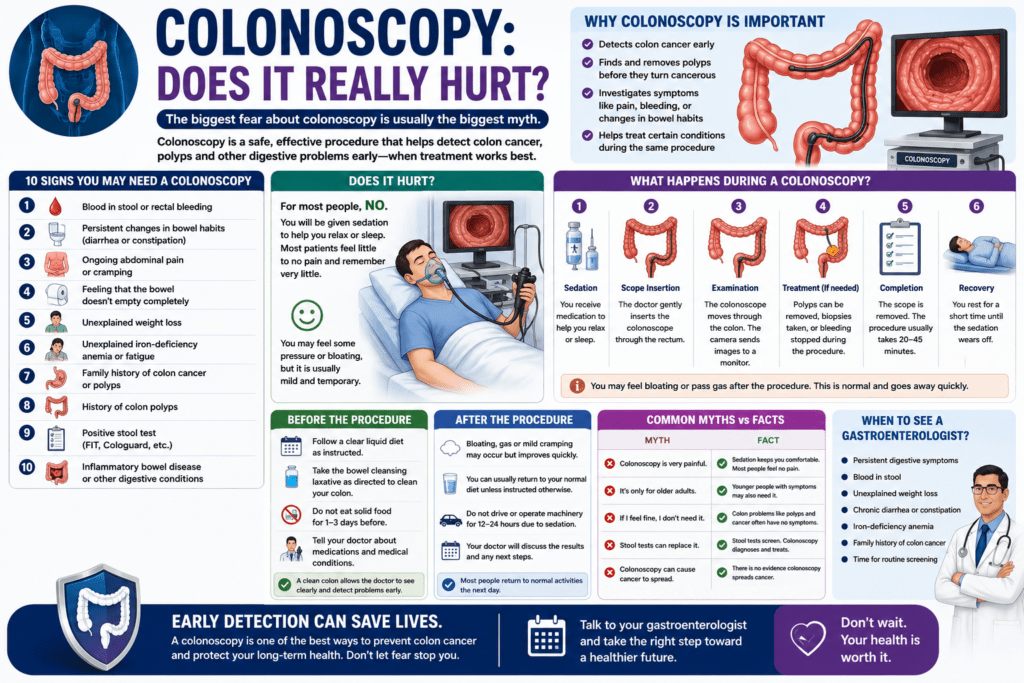
The truth is that the biggest fear about colonoscopy is usually the biggest myth. Thanks to modern sedation techniques and advanced medical technology, most people experience little to no pain during the procedure. In fact, many patients don’t even remember it afterward.
A colonoscopy is one of the most effective tools for detecting colon cancer, polyps, inflammatory bowel disease, and other digestive disorders before they become serious. Early detection can save lives by identifying problems at a stage when treatment is most effective.
In this guide, we’ll explain what a colonoscopy is, whether it hurts, what to expect before, during, and after the procedure, common myths, benefits, and when you should speak to a gastroenterologist.
What Is a Colonoscopy?
A colonoscopy is a diagnostic procedure that allows a gastroenterologist to examine the inside of the large intestine (colon) and rectum using a long, thin, flexible tube called a colonoscope.
The colonoscope has:
- A tiny high-definition camera
- A light source
- Channels for medical instruments
The camera sends real-time images to a monitor, allowing the doctor to detect abnormalities and perform certain treatments during the same procedure.
Why Is a Colonoscopy Performed?
A colonoscopy helps diagnose and prevent several digestive conditions.
Your doctor may recommend one to:
- Screen for colorectal cancer
- Investigate blood in the stool
- Evaluate persistent abdominal pain
- Find the cause of chronic diarrhea or constipation
- Diagnose inflammatory bowel disease (IBD)
- Detect colon polyps
- Investigate unexplained weight loss
- Evaluate iron-deficiency anemia
- Monitor previous colon polyps or colon cancer
Because polyps can often be removed before they become cancerous, colonoscopy is considered one of the most effective cancer prevention tools available.
Does a Colonoscopy Really Hurt?
This is the question almost everyone asks.
The Short Answer
For most people, no.
Modern colonoscopy is usually performed with sedation, making the procedure comfortable and often painless.
Many patients report:
- Feeling sleepy
- Remembering very little
- No significant pain
- Mild pressure or bloating afterward
Some people may experience brief cramping when air or carbon dioxide is introduced into the colon to improve visibility, but this discomfort is generally temporary.
Why Do People Think Colonoscopy Is Painful?
Several myths contribute to unnecessary fear.
These include:
- Stories from decades ago when sedation was less common
- Hearing about bowel preparation, which many people find more inconvenient than the procedure itself
- Anxiety about the unknown
- Misinformation from friends or social media
Today’s colonoscopy techniques are much more comfortable than many people expect.
What Happens Before a Colonoscopy?
Proper preparation is essential for a successful examination.
Medical Review
Your doctor will ask about:
- Current medications
- Allergies
- Medical conditions
- Previous surgeries
- Blood-thinning medications
Bowel Preparation
The colon must be completely clean for the doctor to see the intestinal lining clearly.
Preparation usually includes:
- A clear liquid diet the day before
- A prescribed bowel-cleansing solution
- Avoiding certain foods for several days
Although many people consider bowel preparation the least enjoyable part of the process, it is extremely important for accurate results.
What Happens During the Procedure?
On the day of the colonoscopy:
Sedation
Most patients receive intravenous sedation or anesthesia that helps them relax or sleep comfortably.
The Examination
The doctor gently inserts the colonoscope through the rectum and advances it through the colon.
The camera carefully examines the intestinal lining.
If necessary, the doctor can:
- Remove polyps
- Take biopsies
- Stop minor bleeding
- Remove small abnormal growths
The procedure generally takes 20 to 45 minutes.
What Happens After a Colonoscopy?
Most people recover quickly.
You may experience:
- Mild bloating
- Temporary gas
- Light cramping
- Drowsiness from sedation
These symptoms usually resolve within a few hours.
Because sedation is used, you will need someone to drive you home.
Most patients resume normal activities the following day.
What Conditions Can a Colonoscopy Detect?
A colonoscopy is one of the most comprehensive tests for evaluating the large intestine.
It can identify:
Colon Polyps
Polyps are abnormal tissue growths that may become cancerous over time.
Removing them early significantly reduces the risk of colorectal cancer.
Colorectal Cancer
Early-stage colorectal cancer often causes no symptoms.
Routine colonoscopy helps detect cancer when treatment is most successful.
Inflammatory Bowel Disease
Conditions such as:
- Ulcerative colitis
- Crohn’s disease
can be diagnosed and monitored using colonoscopy.
Diverticular Disease
Small pouches in the colon wall can become inflamed or infected.
Gastrointestinal Bleeding
Colonoscopy helps identify the source of bleeding causing:
- Blood in stool
- Anemia
- Rectal bleeding
Chronic Diarrhea
Biopsies can help diagnose microscopic colitis and other intestinal disorders.
Benefits of Colonoscopy
A colonoscopy offers several important advantages.
It can:
- Detect disease early
- Prevent colorectal cancer by removing polyps
- Identify unexplained digestive symptoms
- Provide tissue biopsies
- Stop certain types of bleeding
- Reduce the need for surgery in some cases
Unlike many imaging tests, colonoscopy allows diagnosis and treatment during the same procedure.
Who Should Have a Colonoscopy?
Your doctor may recommend a colonoscopy if you have:
- Blood in your stool
- Persistent abdominal pain
- Chronic constipation
- Chronic diarrhea
- Iron-deficiency anemia
- Unexplained weight loss
- A family history of colorectal cancer
- Previous colon polyps
- Positive stool screening tests
Routine colorectal cancer screening is also recommended for adults at average risk beginning at the appropriate screening age, or earlier for those with increased risk based on personal or family history.
Are There Any Risks?
Colonoscopy is considered very safe when performed by experienced specialists.
Serious complications are uncommon but may include:
- Bleeding
- Perforation of the colon (rare)
- Reaction to sedation
- Infection (rare)
The benefits of early diagnosis generally far outweigh these risks.
Common Myths About Colonoscopy
Myth 1: Colonoscopy Is Extremely Painful
Fact: Most patients experience little or no pain because sedation keeps them comfortable.
Myth 2: It’s Only for Older Adults
Fact: Younger adults with symptoms or certain risk factors may also need a colonoscopy.
Myth 3: If I Feel Fine, I Don’t Need One
Fact: Colon cancer and polyps often develop without symptoms.
Screening aims to detect disease before symptoms appear.
Myth 4: Colonoscopy Causes Cancer to Spread
Fact: There is no evidence that colonoscopy causes cancer to spread.
Myth 5: Stool Tests Replace Colonoscopy
Fact: Stool tests are useful screening tools, but an abnormal result often requires a colonoscopy for diagnosis and possible treatment.
Tips for an Easier Colonoscopy Experience
To make the process smoother:
- Follow bowel preparation instructions carefully.
- Stay hydrated with approved clear fluids.
- Arrange transportation home.
- Wear comfortable clothing.
- Ask questions if you’re unsure about medications or preparation.
- Don’t delay the procedure because of fear.
Frequently Asked Questions
How long does a colonoscopy take?
The procedure usually lasts 20–45 minutes, although recovery from sedation may take a little longer.
Will I be awake?
Many patients receive sedation and sleep through most or all of the procedure. The type of sedation depends on your health and your doctor’s recommendation.
Can I eat afterward?
Yes. Your doctor will tell you when it is safe to resume eating. Most people return to a normal diet shortly after the procedure unless instructed otherwise.
Can polyps be removed during a colonoscopy?
Yes. One of the major advantages of colonoscopy is that many polyps can be removed immediately, helping prevent colorectal cancer.
When Should You See a Gastroenterologist?
Schedule an appointment with a gastroenterologist if you experience:
- Blood in your stool
- Persistent abdominal pain
- Changes in bowel habits lasting more than a few weeks
- Chronic diarrhea or constipation
- Unexplained weight loss
- Iron-deficiency anemia
- A family history of colorectal cancer or polyps
- Positive stool screening results
- Ongoing digestive symptoms that do not improve
Early evaluation can lead to earlier diagnosis and more effective treatment.
Final Thoughts
Fear should never stand in the way of protecting your health. Although many people worry that a colonoscopy will be painful, modern techniques and sedation have made it a safe and comfortable procedure for most patients. In reality, the bowel preparation is often considered more inconvenient than the examination itself.
More importantly, a colonoscopy is one of the best ways to detect colorectal cancer early, remove precancerous polyps, identify inflammatory bowel disease, and investigate persistent digestive symptoms. Early diagnosis not only improves treatment outcomes but can also prevent serious disease from developing in the first place.
If your doctor recommends a colonoscopy or if you’re experiencing symptoms such as blood in the stool, unexplained weight loss, persistent abdominal pain, or changes in bowel habits, don’t delay seeking medical advice. Taking action today could protect your digestive health for years to come.
A colonoscopy isn’t something to fear—it’s a powerful tool that can save lives through early detection and prevention.