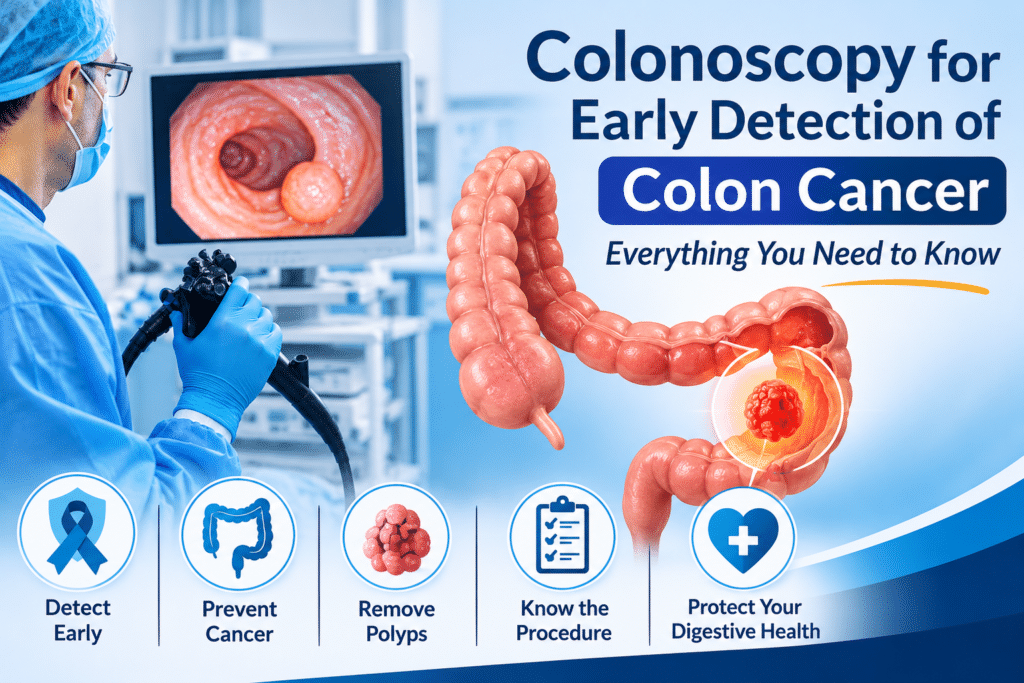
Colon cancer, also known as colorectal cancer, is a serious digestive health condition that affects the colon or rectum. It often develops gradually from small abnormal growths called polyps. Although some polyps are harmless, certain types can become cancerous over time.
The good news is that colonoscopy for early detection of colon cancer can help identify suspicious growths before they develop into advanced disease. It is an important screening and diagnostic procedure that allows gastroenterologists to examine the colon, detect abnormalities and remove certain precancerous polyps.
Understanding the importance of colonoscopy, its benefits, preparation and procedure can help you make informed decisions about your digestive health.
What Is a Colonoscopy?
A colonoscopy is a medical procedure used to examine the inner lining of the large intestine (colon) and rectum. During the examination, a gastroenterologist uses a thin, flexible tube called a colonoscope, which has a small camera and light attached to its tip.
The camera displays images of the colon on a monitor, allowing the doctor to identify abnormalities.
A colonoscopy can help detect:
- Colon polyps and abnormal growths.
- Early signs of colorectal cancer.
- Inflammation and ulcers.
- Unexplained rectal bleeding.
- Changes in the intestinal lining.
- Other digestive tract abnormalities.
One major advantage of colonoscopy is that certain polyps can be removed during the same procedure, helping reduce the risk of developing colorectal cancer.
Why Is Colonoscopy Important for Early Detection of Colon Cancer?
Colon cancer often develops from precancerous polyps over several years. During the early stages, many people do not experience noticeable symptoms.
A colonoscopy helps identify these growths before they become cancerous.
Here are five important benefits:
1. Early Cancer Detection: Colonoscopy allows doctors to examine the colon and identify suspicious growths, including early-stage cancers.
2. Prevention Through Polyp Removal: Removing certain precancerous polyps can reduce the risk of developing colorectal cancer.
3. Accurate Diagnosis: If an abnormal area is discovered, the doctor can collect a small tissue sample called a biopsy for laboratory testing.
4. Investigation of Digestive Problems: Colonoscopy helps investigate persistent abdominal pain, rectal bleeding, unexplained diarrhoea and changes in bowel habits.
5. Better Treatment Planning: Early diagnosis allows doctors to determine appropriate treatment options and recommend further medical care.
Who Should Get a Colonoscopy?
Colonoscopy screening is particularly important for people who have an increased risk of colorectal cancer.
Several international guidelines recommend that adults at average risk begin colorectal cancer screening at age 45. However, screening recommendations may differ depending on individual risk factors and local medical guidance.
You may need earlier or more frequent screening if you have:
- A family history of colon or rectal cancer.
- A personal history of colorectal polyps.
- Inflammatory bowel disease, including ulcerative colitis or Crohn’s disease involving the colon.
- Certain inherited genetic conditions.
- Previous colorectal cancer.
- Persistent unexplained changes in bowel habits.
If you experience concerning digestive symptoms, consult a gastroenterologist instead of waiting until you reach the recommended screening age.
Common Warning Signs of Colon Cancer
Colon cancer may not cause noticeable symptoms during its early stages. However, certain warning signs should never be ignored.
Common symptoms include:
- Blood in the stool or rectal bleeding.
- Persistent constipation or diarrhoea.
- Changes in normal bowel movement patterns.
- Frequent abdominal pain, cramps or discomfort.
- Unexplained weight loss.
- Persistent fatigue or weakness.
- Iron-deficiency anaemia.
- A feeling that the bowel does not empty completely.
These symptoms do not necessarily indicate cancer. Conditions such as piles, infections and inflammatory bowel disorders can cause similar problems. However, proper medical evaluation is important to identify the underlying cause.
How to Prepare for a Colonoscopy
Proper preparation is essential because the colon must be clean for the doctor to examine its lining clearly.
Your gastroenterologist will provide specific instructions before the procedure.
1. Follow a Low-Fibre Diet
You may need to avoid whole grains, nuts, seeds, raw vegetables and other high-fibre foods for a specified period.
2. Consume Clear Liquids
Your doctor may recommend clear liquids such as water, clear soup and other permitted beverages before the procedure.
3. Take Prescribed Bowel Preparation Medication
A bowel-cleansing solution or laxative is usually prescribed to empty the colon. Follow the recommended dosage and timing carefully.
4. Discuss Your Current Medications
Inform your doctor about all medications, particularly blood thinners, diabetes medicines and iron supplements. Never stop prescribed medication without medical advice.
5. Arrange Transportation
If sedation is used, arrange for someone to accompany you home. Avoid driving until the effects of sedation have worn off and your medical team confirms it is safe.
What Happens During a Colonoscopy Procedure?
A colonoscopy is generally performed in a hospital or specialised endoscopy centre.
The procedure typically involves these steps:
- Initial Assessment: The medical team reviews your medical history, medications and vital signs.
- Sedation: Medication may be provided to help you relax and remain comfortable.
- Insertion of the Colonoscope: The doctor gently inserts the flexible camera-equipped tube through the rectum.
- Examination: The camera displays images of the colon lining, allowing the doctor to identify abnormalities.
- Polyp Removal or Biopsy: If necessary, polyps are removed or tissue samples are collected for laboratory examination.
- Recovery: You are monitored until the effects of sedation wear off.
The procedure commonly takes around 30–45 minutes, although the duration varies depending on the findings and treatment required.
Is Colonoscopy Painful or Safe?
Many patients worry about discomfort during a colonoscopy. However, the procedure is generally well tolerated, and sedation or pain-relief options may be available.
Some people experience temporary bloating, gas or mild abdominal cramps after the procedure.
Colonoscopy is generally safe when performed by trained medical professionals. However, possible complications include:
- Bleeding, particularly after polyp removal.
- A small risk of bowel perforation.
- Reactions to sedative medications.
- Infection, although uncommon.
Seek urgent medical attention if you experience severe abdominal pain, heavy rectal bleeding, fever or other concerning symptoms after the procedure.
What Happens If Polyps Are Found During Colonoscopy?
Finding polyps does not automatically mean you have cancer. Many colon polyps are harmless, although certain types can become cancerous over time.
If polyps are discovered, the gastroenterologist may remove them using specialised instruments during the procedure.
The removed tissue is sent to a laboratory for histopathological examination.
The results help determine whether the polyp is benign, precancerous or cancerous and whether additional treatment is necessary.
Your next colonoscopy schedule depends on the number, size and type of polyps, the quality of bowel preparation and your personal medical history.
How Often Should You Get a Colonoscopy?
The recommended frequency depends on your age, family history, previous colonoscopy findings and overall health.
For average-risk adults, several international guidelines recommend beginning colorectal cancer screening at age 45. Following a normal, high-quality colonoscopy, a repeat examination is commonly recommended after 10 years under these guidelines.
However, individuals with a family history of colorectal cancer, previous polyps or inflammatory bowel disease may require earlier or more frequent examinations.
Your gastroenterologist can recommend an appropriate screening schedule based on your individual risk.
Can Colon Cancer Be Prevented?
Although not every case of colon cancer can be prevented, certain lifestyle changes may help reduce your risk.
- Eat a balanced diet rich in fruits, vegetables and whole grains.
- Include adequate dietary fibre in your meals.
- Exercise regularly and maintain a healthy body weight.
- Avoid smoking and limit alcohol consumption.
- Reduce excessive consumption of processed and red meat.
- Manage existing health conditions with appropriate medical care.
- Follow recommended colorectal cancer screening schedules.
A healthy lifestyle supports digestive health but does not replace recommended cancer screening.
Frequently Asked Questions (FAQs)
1. At what age should I get a colonoscopy?
Several international guidelines recommend beginning colorectal cancer screening at age 45 for average-risk adults. People with additional risk factors may need screening earlier.
2. Can colonoscopy detect colon cancer at an early stage?
Yes. Colonoscopy allows doctors to identify suspicious growths, examine abnormal tissue and collect biopsies to help diagnose colorectal cancer.
3. How long does a colonoscopy take?
The procedure commonly takes around 30–45 minutes, depending on the findings and whether polyps need to be removed.
4. Is colonoscopy necessary if I have no symptoms?
Yes. Screening can be important even when you feel healthy because precancerous polyps and early colorectal cancer may not cause noticeable symptoms.
5. What foods should I avoid before a colonoscopy?
Your doctor may recommend avoiding nuts, seeds, whole grains and high-fibre foods before the procedure. Follow the specific preparation instructions provided by your medical team.
6. Can colon cancer be detected through a blood test?
Blood tests may identify abnormalities such as anaemia, but they cannot replace recommended colorectal cancer screening. Colonoscopy and other approved screening tests are used to detect colorectal cancer.
7. What happens after a colonoscopy?
You will be monitored during recovery. Your doctor will explain the findings and whether a biopsy, additional investigation or treatment is required.
Conclusion
Colonoscopy plays an important role in the early detection and prevention of colorectal cancer. It allows gastroenterologists to identify suspicious growths, remove precancerous polyps and investigate digestive symptoms before serious complications develop.
Do not ignore warning signs such as rectal bleeding, persistent abdominal pain, unexplained weight loss or changes in bowel habits. Early medical evaluation can make a significant difference in diagnosis and treatment.
If you are concerned about your digestive health or need guidance regarding colorectal cancer screening, consult an experienced gastroenterologist.
Dr. Rahul Gastro and Liver Care provides specialised gastroenterology and liver care. Consult Dr. Rahul Dubbaka for professional guidance on digestive health, colonoscopy and appropriate screening options.
SEO Details
SEO Title: Colonoscopy for Early Detection of Colon Cancer: Complete Guide
Meta Description: Learn how colonoscopy helps detect colon cancer early, identify polyps, understand symptoms, preparation, procedure, benefits and screening recommendations.
Focus Keyword: Colonoscopy for Early Detection of Colon Cancer
Secondary Keywords:
- Colonoscopy for colon cancer screening
- Early detection of colon cancer
- Colonoscopy procedure
- Colon cancer symptoms
- Colorectal cancer screening
- Colonoscopy in Hyderabad
- Gastroenterologist in Hyderabad
Suggested URL Slug: colonoscopy-for-early-detection-of-colon-cancer
Image Alt Text: Colonoscopy procedure for early detection of colon cancer and removal of colon polyps.
Suggested Categories: Gastroenterology, Colon Health, Digestive Health
Suggested Tags: Colonoscopy, Colon Cancer, Colorectal Cancer, Colon Cancer Screening, Digestive Health, Gastroenterologist Hyderabad
Medical disclaimer: This article is intended for educational purposes and should be reviewed by a qualified gastroenterologist before publication. Screening recommendations vary by country and individual risk. The age of 45 is based on several international guidelines and is not a universal screening recommendation for everyone in India.