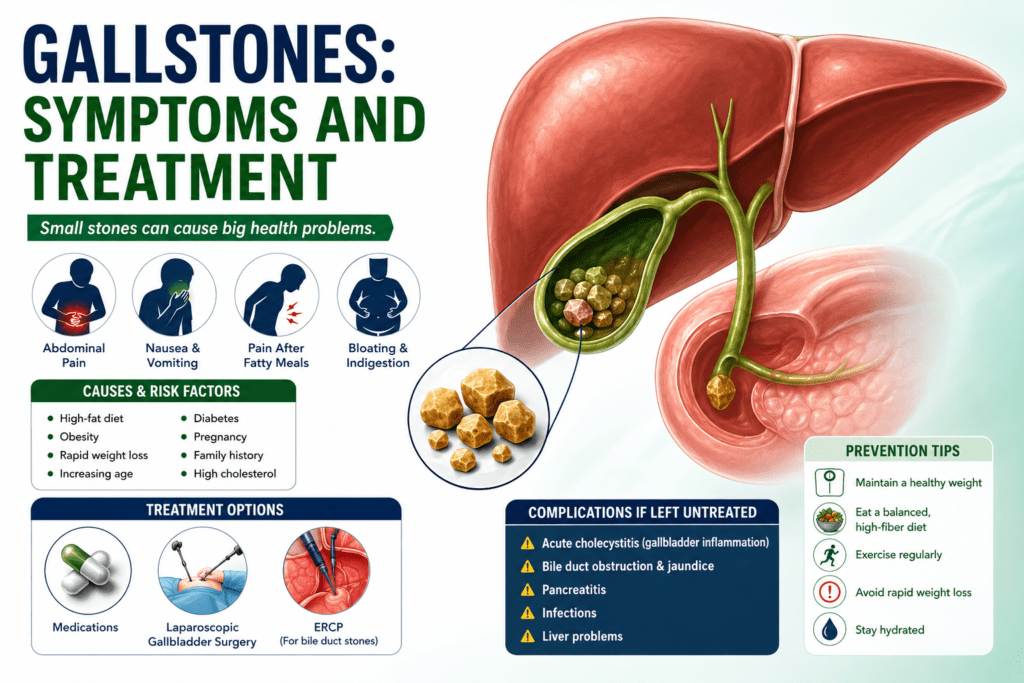
Gallstones: Symptoms and Treatment – Small Stones Can Cause Big Health Problems
Gallstones are one of the most common digestive disorders, affecting millions of people worldwide. While many people have gallstones without realizing it, others may experience sudden, severe pain that can interfere with daily life and lead to serious complications if left untreated.
These small, hardened deposits form inside the gallbladder and can range in size from a grain of sand to as large as a golf ball. Although some gallstones remain harmless, others can block the flow of bile, causing inflammation, infection, or damage to nearby organs such as the pancreas.
The good news is that gallstones can often be diagnosed with simple imaging tests, and effective treatments are available. In many cases, timely medical care can prevent complications and provide lasting relief.
In this comprehensive guide, you’ll learn what gallstones are, why they develop, their symptoms, diagnosis, treatment options, prevention strategies, and when you should see a gastroenterologist.
What Are Gallstones?
Gallstones are solid particles that develop inside the gallbladder, a small pear-shaped organ located beneath the liver.
The gallbladder stores bile, a digestive fluid produced by the liver that helps break down fats. When the balance of substances in bile changes, solid crystals can form and gradually develop into gallstones.
A person may have:
- One large gallstone
- Multiple small gallstones
- Hundreds of tiny stones
Some remain in the gallbladder, while others may move into the bile ducts and cause blockages.
Types of Gallstones
There are two main types:
1. Cholesterol Gallstones
These are the most common type.
They form when bile contains too much cholesterol and not enough substances to keep it dissolved.
2. Pigment Gallstones
These are smaller, darker stones made primarily of bilirubin.
They are more common in people with:
- Chronic liver disease
- Certain blood disorders
- Biliary infections
What Causes Gallstones?
Gallstones develop when the composition of bile becomes unbalanced.
Common causes include:
- Excess cholesterol in bile
- High bilirubin levels
- Poor gallbladder emptying
- Obesity
- Rapid weight loss
- Diabetes
- Pregnancy
- Certain medications
- Increasing age
- Family history
Not everyone with these risk factors will develop gallstones, but they increase the likelihood.
Who Is at Risk?
Gallstones are more common in:
- Women
- Adults over 40
- People with obesity
- Individuals with diabetes
- Those with a family history of gallstones
- Pregnant women
- People who lose weight rapidly
- Individuals with high cholesterol
- Those following very low-calorie diets
Maintaining a healthy lifestyle may help reduce risk.
Symptoms of Gallstones
Many people have silent gallstones, meaning they cause no symptoms and are discovered incidentally during imaging for another reason.
When symptoms occur, they may include:
- Sudden pain in the upper right abdomen
- Pain in the center of the upper abdomen
- Pain after eating fatty meals
- Pain that radiates to the right shoulder or back
- Nausea
- Vomiting
- Indigestion
- Bloating
- Burping
Pain episodes, known as biliary colic, often last from 30 minutes to several hours.
Warning Signs That Require Immediate Medical Attention
Seek urgent medical care if you develop:
- Severe abdominal pain lasting several hours
- Fever with chills
- Yellowing of the skin or eyes (jaundice)
- Dark urine
- Pale-colored stools
- Persistent vomiting
- Confusion or weakness
These symptoms may indicate complications that require prompt treatment.
Complications of Gallstones
Untreated gallstones can lead to serious problems.
Acute Cholecystitis
A blocked gallbladder can become inflamed, causing:
- Severe pain
- Fever
- Tenderness
- Infection
Choledocholithiasis
Gallstones may enter and block the common bile duct.
This can cause:
- Jaundice
- Infection
- Liver problems
Cholangitis
A bile duct infection can become life-threatening if not treated quickly.
Symptoms include:
- Fever
- Jaundice
- Severe abdominal pain
Pancreatitis
If a gallstone blocks the pancreatic duct, it can trigger acute pancreatitis.
Symptoms include:
- Severe upper abdominal pain
- Vomiting
- Fever
- Hospitalization
How Are Gallstones Diagnosed?
Your doctor will review your symptoms and medical history before recommending appropriate tests.
Physical Examination
The abdomen is examined for tenderness, especially in the upper right side.
Ultrasound
An abdominal ultrasound is the preferred first-line test for detecting gallstones.
It is:
- Safe
- Painless
- Highly accurate
Blood Tests
Blood tests may evaluate:
- Liver function
- Bilirubin levels
- Signs of infection
- Pancreatic enzymes
MRI (MRCP)
Magnetic Resonance Cholangiopancreatography (MRCP) provides detailed images of the bile ducts and helps detect stones outside the gallbladder.
CT Scan
A CT scan may identify complications such as inflammation or pancreatitis.
Endoscopic Ultrasound (EUS)
An endoscopic ultrasound combines endoscopy and ultrasound to identify small bile duct stones that may not be visible on standard imaging.
ERCP
Endoscopic Retrograde Cholangiopancreatography (ERCP) is both a diagnostic and therapeutic procedure used to remove stones from the bile ducts when necessary.
Treatment for Gallstones
Treatment depends on whether the gallstones are causing symptoms.
Silent Gallstones
If gallstones are not causing symptoms, treatment is often unnecessary.
Your doctor may recommend observation and regular follow-up.
Medications
Certain medications can dissolve cholesterol gallstones, but they:
- Work slowly
- Are suitable only for selected patients
- Do not prevent future stones
Because recurrence is common, medication is used less often than surgery.
Laparoscopic Gallbladder Surgery
The most common treatment for symptomatic gallstones is laparoscopic cholecystectomy.
During this minimally invasive procedure:
- Small incisions are made
- The gallbladder is removed
- Recovery is generally quicker than with open surgery
Most people return to normal activities within a few weeks.
ERCP
If gallstones are lodged in the bile ducts, ERCP can remove them before or in conjunction with gallbladder surgery.
Can You Live Without a Gallbladder?
Yes.
The liver continues to produce bile after the gallbladder is removed. Instead of being stored, bile flows directly into the small intestine.
Most people digest food normally after recovery, although some may experience temporary loose stools or difficulty tolerating very fatty meals.
Diet Tips for Gallstones
Diet cannot dissolve existing gallstones, but healthy eating can reduce symptoms and lower the risk of future problems.
Choose:
- Fresh fruits
- Vegetables
- Whole grains
- Lean proteins
- Healthy fats in moderation
Limit:
- Fried foods
- High-fat meals
- Processed foods
- Sugary snacks
- Excess refined carbohydrates
Eating smaller, regular meals may also help.
Can Gallstones Be Prevented?
While prevention isn’t always possible, certain lifestyle habits can lower your risk.
Maintain a Healthy Weight
Obesity increases the likelihood of gallstone formation.
Avoid Rapid Weight Loss
Crash diets and very low-calorie diets can increase gallstone risk.
Aim for gradual, sustainable weight loss if needed.
Exercise Regularly
Regular physical activity supports healthy digestion and weight management.
Aim for at least 150 minutes of moderate exercise each week.
Eat a Balanced Diet
A diet rich in fiber and low in excessive saturated fat supports gallbladder health.
Manage Diabetes
Good blood sugar control may help reduce the risk of gallstones.
Common Myths About Gallstones
Myth: Every gallstone requires surgery.
Fact: Silent gallstones that do not cause symptoms often do not require treatment.
Myth: Gallstones always cause pain.
Fact: Many people never experience symptoms and discover gallstones during routine imaging.
Myth: Gallstones can always be dissolved naturally.
Fact: There is no scientifically proven natural remedy that reliably dissolves gallstones.
Myth: Removing the gallbladder causes serious digestive problems.
Fact: Most people recover well and live normal, healthy lives without a gallbladder.
Frequently Asked Questions
Can gallstones go away on their own?
Most gallstones do not disappear without treatment. Small stones may occasionally pass into the intestine, but larger stones usually remain.
Can gallstones cause back pain?
Yes. Gallstone pain often radiates to the right shoulder or upper back.
Can I eat normally after gallbladder surgery?
Most people return to a regular diet after recovery, though limiting very fatty foods initially may reduce digestive discomfort.
Is surgery always necessary?
Not always. Surgery is generally recommended when gallstones cause symptoms or complications.
When Should You See a Gastroenterologist?
Consult a gastroenterologist if you experience:
- Recurrent pain in the upper right abdomen
- Pain after fatty meals
- Nausea or vomiting associated with abdominal pain
- Jaundice
- Fever with abdominal pain
- Gallstones detected on imaging with ongoing symptoms
- Unexplained digestive discomfort that persists
Early evaluation helps prevent complications and allows timely treatment.
Final Thoughts
Gallstones are a common digestive condition, and while many remain silent, they can sometimes cause severe pain and potentially serious complications. Symptoms such as upper abdominal pain after meals, nausea, vomiting, jaundice, or fever should never be ignored, as they may indicate a blocked bile duct, gallbladder inflammation, or pancreatitis.
Fortunately, gallstones can usually be diagnosed with simple imaging tests like an ultrasound, and effective treatments are available. For people with symptomatic gallstones, laparoscopic gallbladder removal is a safe and commonly performed procedure that provides long-term relief. In cases where stones block the bile ducts, procedures such as ERCP can help restore normal bile flow.
Adopting healthy lifestyle habits—including maintaining a healthy weight, eating a balanced diet, exercising regularly, and avoiding rapid weight loss—may help lower the risk of developing gallstones.
Small gallstones can lead to big health problems if ignored. Recognizing the symptoms early and consulting a gastroenterologist can prevent complications, relieve discomfort, and protect your long-term digestive health.