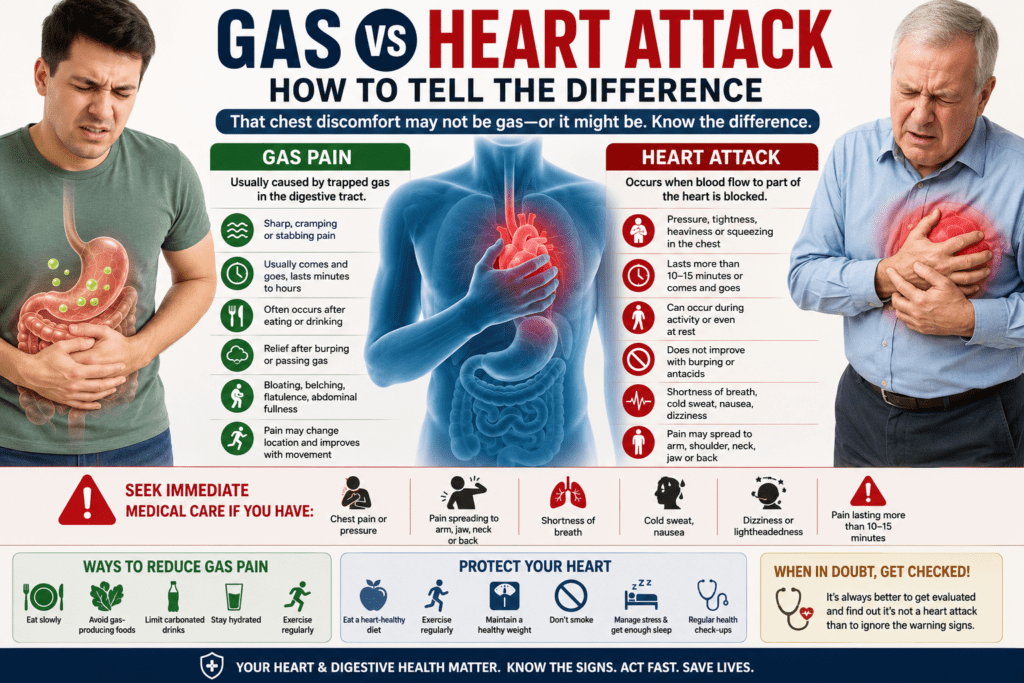
Gas vs Heart Attack: How to Tell the Difference
A sudden pain or discomfort in your chest can be alarming. Many people immediately wonder, “Is this just gas, or could it be a heart attack?” Because the symptoms of gas pain and a heart attack can sometimes overlap, it’s easy to become confused—or worse, ignore a potentially life-threatening emergency.
While trapped gas or indigestion can cause significant discomfort in the chest and upper abdomen, heart attack symptoms require immediate medical attention. Knowing the differences can help you make the right decision at the right time.
In this comprehensive guide, we’ll explain how gas pain differs from a heart attack, the symptoms to watch for, risk factors, and when you should seek emergency care.
Why Can Gas Feel Like a Heart Attack?
The stomach, esophagus, diaphragm, and heart are located close to one another in the chest and upper abdomen. Because they share nearby nerves, pain from the digestive system can sometimes be mistaken for heart-related pain.
Similarly, some heart attacks don’t cause the classic crushing chest pain. Instead, they may present with symptoms such as indigestion, nausea, or upper abdominal discomfort.
This overlap is why chest pain should never be dismissed without proper evaluation.
What Causes Gas Pain?
Gas pain occurs when air becomes trapped in the digestive tract.
Common causes include:
- Swallowing excess air while eating or drinking
- Eating too quickly
- Carbonated beverages
- Gas-producing foods such as beans, cabbage, onions, broccoli, and lentils
- Food intolerances (such as lactose intolerance)
- Constipation
- Acid reflux
- Irritable Bowel Syndrome (IBS)
Gas usually moves through the digestive tract and is eventually released by belching or passing gas.
Common Symptoms of Gas Pain
Gas pain often causes:
- Sharp or cramp-like pain
- Bloating
- Feeling of fullness
- Frequent burping
- Passing gas
- Upper abdominal discomfort
- Pain that shifts from one area to another
- Relief after burping or passing gas
Gas pain may become worse after eating large meals or certain foods.
What Is a Heart Attack?
A heart attack (myocardial infarction) occurs when blood flow to part of the heart muscle is blocked, usually by a blood clot in a coronary artery.
Without prompt treatment, heart muscle begins to die, making a heart attack a medical emergency.
Early recognition and immediate treatment greatly improve survival and reduce long-term heart damage.
Common Symptoms of a Heart Attack
Heart attack symptoms can vary from person to person.
Common warning signs include:
- Pressure, tightness, squeezing, or heaviness in the chest
- Pain lasting more than a few minutes or recurring
- Pain spreading to the left arm, both arms, shoulder, neck, jaw, or back
- Shortness of breath
- Cold sweat
- Nausea or vomiting
- Dizziness or lightheadedness
- Extreme fatigue
- Feeling of impending doom
Women, older adults, and people with diabetes may experience more subtle symptoms, such as fatigue, nausea, indigestion, or back pain.
Gas Pain vs Heart Attack: Key Differences
| Feature | Gas Pain | Heart Attack |
|---|---|---|
| Pain location | Upper abdomen or lower chest | Center or left side of chest |
| Type of pain | Sharp, cramping, or stabbing | Pressure, squeezing, heaviness, tightness |
| Duration | Usually short-lived or changes with movement | Often lasts more than 10–15 minutes or comes and goes |
| Trigger | Eating, swallowing air, certain foods | Physical activity or even at rest |
| Relief | Burping, passing gas, changing position | Usually does not improve with burping or antacids |
| Associated symptoms | Bloating, belching, abdominal fullness | Sweating, shortness of breath, nausea, dizziness, pain radiating to arm or jaw |
Can Acid Reflux Feel Like a Heart Attack?
Yes.
Acid reflux (GERD) can cause:
- Burning chest pain
- Sour taste in the mouth
- Pain after meals
- Pain when lying down
- Difficulty swallowing
Because GERD pain occurs in the chest, it can sometimes mimic heart-related discomfort.
However, never assume chest pain is due to reflux without medical evaluation, especially if symptoms are new or severe.
Warning Signs That Require Immediate Emergency Care
Call emergency medical services immediately if chest discomfort is accompanied by:
- Pressure or heaviness in the chest
- Pain spreading to the arm, jaw, neck, or back
- Difficulty breathing
- Cold sweat
- Sudden weakness
- Fainting
- Persistent chest pain lasting more than 10–15 minutes
- Nausea with chest pain
- Severe dizziness
It is always safer to rule out a heart attack than to assume the pain is caused by gas.
Risk Factors for Heart Attack
Your risk is higher if you have:
- High blood pressure
- Diabetes
- High cholesterol
- Smoking
- Obesity
- Family history of heart disease
- Physical inactivity
- Chronic stress
- Older age
- Previous heart disease
People with multiple risk factors should be especially cautious when experiencing chest pain.
Risk Factors for Gas and Digestive Discomfort
Gas pain is more common in people who:
- Eat too quickly
- Consume large meals
- Drink carbonated beverages
- Eat gas-producing foods
- Have IBS
- Have constipation
- Have food intolerances
- Experience acid reflux
Although uncomfortable, digestive gas is usually not life-threatening.
How Doctors Tell the Difference
Because symptoms can overlap, healthcare providers use several tests to identify the cause.
Medical History
Your doctor will ask:
- Where is the pain?
- When did it start?
- What makes it better or worse?
- Does the pain radiate?
- Are there associated symptoms?
Physical Examination
A thorough examination helps identify possible digestive or cardiac causes.
Electrocardiogram (ECG)
An ECG records the heart’s electrical activity and can detect signs of a heart attack.
Blood Tests
Cardiac enzymes (such as troponin) help determine whether heart muscle damage has occurred.
Chest X-ray
Used to evaluate the lungs and heart.
Echocardiogram
An ultrasound of the heart that assesses heart function and blood flow.
Stress Test or Coronary Angiography
These may be recommended if coronary artery disease is suspected.
Digestive Tests
If heart disease is ruled out, your doctor may recommend:
- Upper GI endoscopy
- Ultrasound
- Tests for acid reflux
- Evaluation for gallbladder disease or ulcers
What Should You Do If You’re Unsure?
If you’re experiencing chest pain and cannot confidently identify the cause, treat it as a medical emergency.
Do not drive yourself if you suspect a heart attack. Call your local emergency services immediately.
Even if the discomfort later turns out to be gas, seeking prompt evaluation is the safest choice.
Preventing Gas Pain
Simple lifestyle changes can reduce digestive discomfort:
- Eat slowly
- Avoid overeating
- Limit carbonated drinks
- Reduce gas-producing foods if they trigger symptoms
- Stay hydrated
- Exercise regularly
- Treat constipation promptly
- Manage stress
- Avoid lying down immediately after meals
Reducing Your Risk of Heart Disease
Heart health starts with healthy daily habits.
- Eat a balanced diet rich in fruits, vegetables, whole grains, and lean proteins
- Exercise for at least 150 minutes each week
- Maintain a healthy weight
- Avoid smoking and tobacco
- Limit alcohol intake
- Manage diabetes, blood pressure, and cholesterol
- Get adequate sleep
- Schedule regular health check-ups
Frequently Asked Questions
Can gas cause chest pain?
Yes. Trapped gas can cause discomfort in the chest or upper abdomen that may feel surprisingly intense.
Can a heart attack feel like indigestion?
Yes. Some people experience heart attacks as indigestion, nausea, or upper abdominal discomfort rather than classic chest pain.
Does burping mean it’s only gas?
Not necessarily. While gas pain often improves with burping, a heart attack can also occur alongside belching. Never rely on this symptom alone.
How long does gas pain usually last?
Gas pain often improves within minutes to a few hours, especially after passing gas or having a bowel movement. Persistent chest pain should always be evaluated.
Should I take antacids for chest pain?
If you’re unsure of the cause, do not rely on antacids. Persistent or severe chest pain should be assessed urgently to rule out a heart attack.
When to See a Gastroenterologist
If cardiac causes have been ruled out but you continue to experience:
- Frequent gas
- Persistent bloating
- Acid reflux
- Upper abdominal pain
- Difficulty swallowing
- Indigestion after meals
- Chronic constipation or diarrhea
A gastroenterologist can evaluate for digestive disorders such as GERD, gastritis, peptic ulcers, IBS, food intolerances, or gallbladder disease.
Final Thoughts
Chest discomfort should never be taken lightly. While trapped gas and indigestion are common causes of chest or upper abdominal pain, heart attacks can present with similar symptoms—sometimes without the classic crushing chest pain.
If your pain is severe, persistent, accompanied by shortness of breath, sweating, nausea, dizziness, or pain spreading to the arm, jaw, neck, or back, seek emergency medical care immediately.
When the cause turns out to be digestive, a gastroenterologist can help diagnose and treat the underlying condition. Whether the source is your heart or your digestive system, early evaluation is the safest approach.
Remember: It’s always better to be evaluated for chest pain and find out it’s gas than to ignore a heart attack. Your health—and potentially your life—depends on acting quickly.