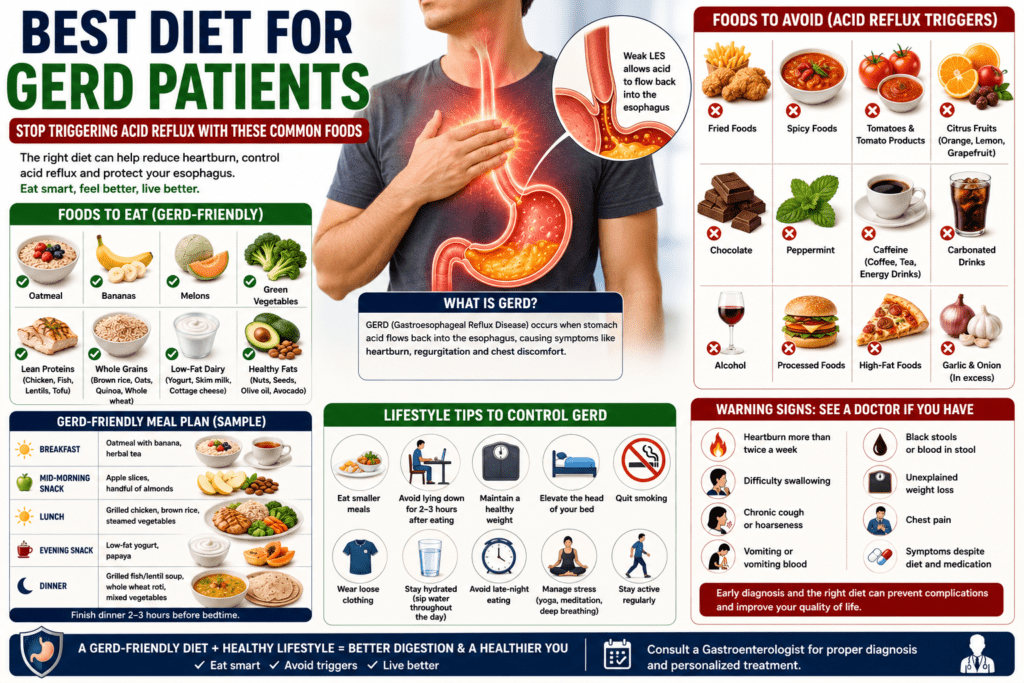
Best Diet for GERD Patients: Stop Triggering Acid Reflux with These Common Foods
If you frequently experience heartburn, acid reflux, chest burning, or a sour taste in your mouth after meals, your diet could be the reason. Millions of people suffer from Gastroesophageal Reflux Disease (GERD), a chronic digestive condition in which stomach acid repeatedly flows back into the esophagus.
While medications can provide relief, your daily eating habits play an equally important role in controlling GERD. Certain foods relax the lower esophageal sphincter (LES)—the valve that prevents stomach acid from flowing upward—while others increase stomach acid production or delay stomach emptying, making reflux worse.
The good news is that a GERD-friendly diet can significantly reduce symptoms, improve digestion, and lower the risk of complications. By choosing the right foods and avoiding common triggers, many people experience fewer episodes of heartburn and enjoy a better quality of life.
In this comprehensive guide, we’ll explore the best diet for GERD patients, foods to avoid, healthy meal ideas, lifestyle changes, and when to seek medical advice.
What Is GERD?
GERD (Gastroesophageal Reflux Disease) is a condition where stomach acid repeatedly flows backward into the esophagus.
Normally, the lower esophageal sphincter (LES) acts like a valve that keeps stomach contents where they belong. When this valve weakens or relaxes inappropriately, acid escapes into the esophagus, causing irritation and inflammation.
Occasional acid reflux is common, but symptoms occurring more than twice a week may indicate GERD.
Common Symptoms of GERD
GERD symptoms vary from person to person but commonly include:
- Burning sensation in the chest (heartburn)
- Sour or bitter taste in the mouth
- Acid regurgitation
- Frequent burping
- Bloating
- Upper abdominal discomfort
- Difficulty swallowing
- Chronic cough
- Hoarseness
- Sore throat, especially in the morning
- Feeling of a lump in the throat
Symptoms often worsen after large meals or when lying down.
Why Diet Matters in GERD
Food directly affects the digestive system. Some foods increase stomach acid, while others relax the LES or slow stomach emptying, increasing the likelihood of reflux.
A balanced GERD-friendly diet can:
- Reduce acid reflux episodes
- Protect the esophagus
- Improve digestion
- Support healthy body weight
- Reduce dependence on medications (under medical supervision)
Best Foods for GERD Patients
1. Oatmeal
Oatmeal is rich in soluble fiber, helping absorb stomach acid and promoting healthy digestion.
Benefits include:
- Keeps you full longer
- Supports bowel health
- May reduce reflux episodes
2. Bananas
Bananas are naturally low in acid and gentle on the stomach.
They may help soothe the digestive tract and are well tolerated by many GERD patients.
3. Melons
Watermelon, cantaloupe, and muskmelon are low-acid fruits that are less likely to trigger heartburn.
4. Green Vegetables
Vegetables such as:
- Spinach
- Broccoli
- Green beans
- Cucumber
- Lettuce
- Asparagus
are naturally low in fat and acid, making them excellent choices.
5. Lean Proteins
Healthy protein sources include:
- Skinless chicken
- Turkey
- Fish
- Lentils
- Tofu
- Egg whites
Avoid frying these foods.
6. Whole Grains
Choose:
- Brown rice
- Oats
- Whole wheat bread
- Millets
- Quinoa
Whole grains provide fiber that supports healthy digestion.
7. Healthy Fats
Consume healthy fats in moderation, such as:
- Almonds
- Walnuts
- Flaxseeds
- Chia seeds
- Olive oil
- Avocados (if tolerated)
8. Low-Fat Dairy
If dairy doesn’t trigger your symptoms, choose:
- Low-fat yogurt
- Skim milk
- Low-fat cottage cheese
Some individuals may be sensitive to dairy, so monitor your symptoms.
Foods That Can Trigger GERD
Everyone’s triggers differ, but common problem foods include:
Fried Foods
High-fat meals delay stomach emptying and relax the LES.
Examples:
- French fries
- Fried chicken
- Pakoras
- Samosas
Spicy Foods
Hot peppers, chili powder, and spicy curries may worsen heartburn in some individuals.
Tomatoes and Tomato Products
Tomatoes are naturally acidic.
Foods such as:
- Tomato sauce
- Ketchup
- Pizza sauce
may trigger symptoms.
Citrus Fruits
These include:
- Oranges
- Lemons
- Grapefruit
Their acidity can worsen reflux in some people.
Chocolate
Chocolate contains compounds that may relax the LES.
Peppermint
Peppermint can relax the LES, increasing acid reflux.
Coffee and Caffeine
Coffee, strong tea, and energy drinks may trigger symptoms in susceptible individuals.
Try limiting intake or switching to decaffeinated options if symptoms persist.
Carbonated Drinks
Soft drinks increase stomach pressure, making reflux more likely.
Alcohol
Alcohol may weaken the LES and irritate the esophagus.
Limiting or avoiding alcohol often improves GERD symptoms.
Processed and Fast Foods
Foods high in saturated fat, salt, and refined carbohydrates can worsen reflux and contribute to weight gain.
Healthy Meal Plan for GERD
Breakfast
- Oatmeal with banana slices
- Whole-grain toast
- Herbal tea
Mid-Morning Snack
- Apple slices
- Handful of almonds
Lunch
- Grilled chicken
- Brown rice
- Steamed vegetables
Evening Snack
- Low-fat yogurt
- Papaya
Dinner
- Grilled fish or lentil soup
- Whole wheat roti
- Mixed vegetables
Finish dinner at least 2–3 hours before bedtime.
Lifestyle Tips to Control GERD
Diet alone may not be enough. These habits can make a big difference:
Eat Smaller Meals
Large meals increase pressure inside the stomach and make reflux more likely.
Eat smaller portions more frequently instead.
Avoid Lying Down After Meals
Remain upright for at least 2–3 hours after eating.
Maintain a Healthy Weight
Excess abdominal fat increases pressure on the stomach and contributes to acid reflux.
Even modest weight loss can improve symptoms.
Elevate the Head of Your Bed
Raising the head of your bed by 6–8 inches helps prevent acid from flowing back into the esophagus during sleep.
Stop Smoking
Smoking weakens the LES and reduces saliva production, both of which increase reflux.
Wear Loose Clothing
Tight clothing around the waist increases abdominal pressure.
Stay Hydrated
Drink water throughout the day, but avoid drinking large amounts during meals.
Foods That May Help Reduce Acid Reflux Naturally
Some foods may help soothe GERD symptoms, including:
- Oatmeal
- Ginger (in moderation)
- Bananas
- Melons
- Green vegetables
- Aloe vera juice (only if recommended by your doctor)
- Chamomile tea (if tolerated)
Remember that individual responses vary.
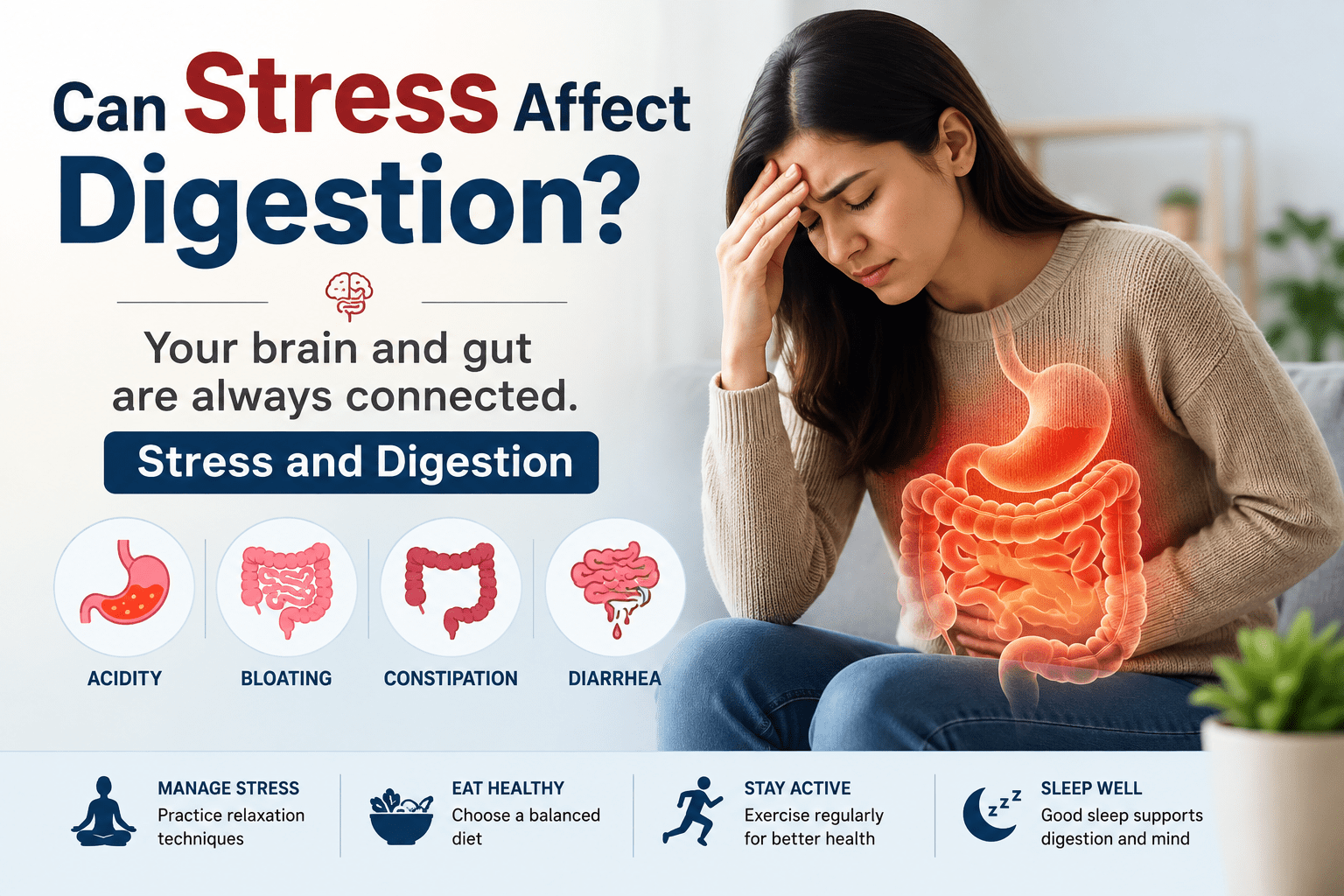
Can Stress Make GERD Worse?
Yes.
Although stress doesn’t directly cause GERD, it can:
- Increase awareness of symptoms
- Affect digestion
- Encourage unhealthy eating habits
- Disrupt sleep
Managing stress through yoga, meditation, exercise, and relaxation techniques may help reduce symptom severity.
Complications of Untreated GERD
Ignoring persistent acid reflux may lead to:
- Esophagitis
- Esophageal ulcers
- Narrowing of the esophagus (stricture)
- Barrett’s esophagus
- Increased risk of esophageal cancer
Early treatment reduces these risks.
When Should You See a Gastroenterologist?
Consult a gastroenterologist if you experience:
- Heartburn more than twice a week
- Difficulty swallowing
- Persistent chest discomfort
- Chronic cough
- Hoarseness
- Vomiting blood
- Black stools
- Unexplained weight loss
- Symptoms despite lifestyle changes or medication
Your doctor may recommend an upper GI endoscopy or other tests to evaluate your condition.
Common Myths About GERD Diet
Myth: Milk always relieves acid reflux.
Fact: High-fat milk may worsen symptoms in some people.
Myth: Spicy food is the only trigger.
Fact: Fatty foods, caffeine, chocolate, citrus fruits, alcohol, and large meals can also trigger GERD.
Myth: Skipping meals helps.
Fact: Skipping meals may increase stomach acid and worsen symptoms.
Myth: Everyone has the same food triggers.
Fact: GERD triggers vary between individuals. Keeping a food diary can help identify personal triggers.
Frequently Asked Questions
Can GERD be cured with diet alone?
Diet and lifestyle changes significantly improve symptoms for many people, but some individuals may also require medication or other treatments.
Is rice good for GERD?
Yes. Brown rice and other whole grains are generally good choices because they are high in fiber and easy to digest.
Are eggs safe for GERD?
Egg whites are usually well tolerated. Some people may find high-fat egg preparations more likely to trigger symptoms.
Can I drink coffee?
Coffee may trigger reflux in some individuals. If it worsens your symptoms, consider limiting caffeine or switching to decaffeinated options.
Final Thoughts
Managing GERD isn’t just about taking medication—it’s about making long-term lifestyle changes that support a healthier digestive system. Choosing fiber-rich foods, lean proteins, whole grains, fruits, and vegetables while limiting fried foods, spicy dishes, caffeine, alcohol, and highly processed meals can significantly reduce acid reflux episodes.
Simple habits like eating smaller meals, avoiding late-night eating, maintaining a healthy weight, staying upright after meals, and elevating the head of your bed can further improve symptoms and protect your esophagus from long-term damage.
If you experience frequent heartburn, persistent acid reflux, difficulty swallowing, or symptoms that don’t improve despite dietary changes, consult a gastroenterologist. Early diagnosis and a personalized treatment plan can help you control GERD, prevent complications, and enjoy a healthier, more comfortable life.