
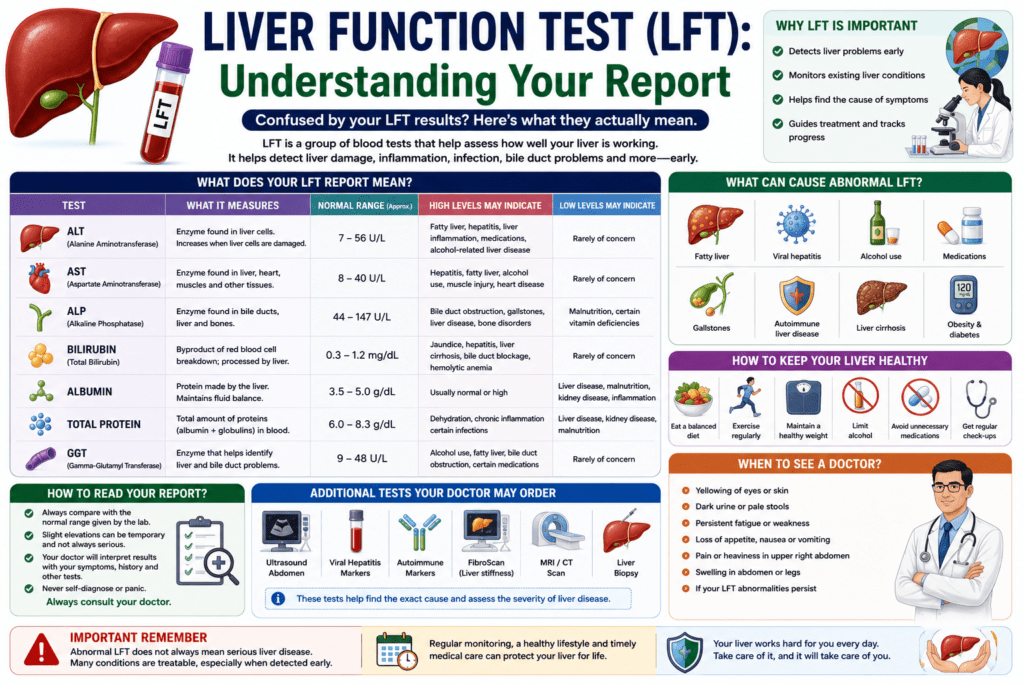
Liver Function Test (LFT): Understanding Your Report – Confused by Your LFT Results? Here’s What They Actually Mean
If you’ve recently had a blood test and your doctor mentioned that your Liver Function Test (LFT) results are abnormal, you’re probably wondering what that means. Does it mean you have liver disease? Should you be worried? What do terms like ALT, AST, ALP, bilirubin, and albumin actually indicate?
The good news is that an abnormal Liver Function Test does not always mean serious liver disease. Many factors—including medications, infections, fatty liver, alcohol use, and even strenuous exercise—can temporarily affect your results. However, LFTs are valuable because they can detect liver problems early, often before symptoms appear.
Understanding your LFT report can help you have informed discussions with your doctor and take timely steps to protect your liver health.
In this comprehensive guide, we’ll explain each component of a Liver Function Test, what abnormal values may indicate, common causes, additional tests that may be needed, and when to consult a gastroenterologist.
What Is a Liver Function Test (LFT)?
A Liver Function Test (LFT) is a group of blood tests that evaluate different aspects of liver health.
These tests help doctors assess:
- Liver cell injury
- Bile flow
- Liver’s ability to produce proteins
- Overall liver function
- Presence of inflammation or infection
LFTs are commonly ordered during routine health check-ups or when someone has symptoms of liver disease.
Why Might Your Doctor Recommend an LFT?
Your doctor may order an LFT if you have:
- Persistent fatigue
- Yellowing of the eyes or skin (jaundice)
- Dark urine
- Pale stools
- Upper right abdominal pain
- Loss of appetite
- Nausea or vomiting
- Itchy skin
- Swelling in the abdomen
- A history of fatty liver or hepatitis
- Heavy alcohol use
- Diabetes or obesity
- Abnormal findings on an ultrasound
Even people without symptoms may have an LFT as part of a routine health screening.
What Does an LFT Measure?
A standard Liver Function Test usually includes several important markers.
1. Alanine Aminotransferase (ALT)
ALT is an enzyme found mainly in liver cells.
When liver cells are damaged, ALT leaks into the bloodstream.
High ALT May Suggest:
- Fatty liver disease
- Viral hepatitis
- Alcohol-related liver disease
- Medication-related liver injury
- Autoimmune liver disease
Mild elevations are common and do not always indicate severe disease.
2. Aspartate Aminotransferase (AST)
AST is another enzyme present in the liver, heart, muscles, and other tissues.
Because AST is found in several organs, elevated AST alone does not always indicate liver disease.
High AST May Occur With:
- Hepatitis
- Fatty liver
- Alcohol-related liver disease
- Muscle injury
- Heart conditions
Doctors often interpret AST together with ALT for a clearer picture.
3. Alkaline Phosphatase (ALP)
ALP is found in the liver, bile ducts, and bones.
High ALP may indicate problems with bile flow.
Elevated ALP May Be Seen In:
- Gallstones
- Bile duct obstruction
- Liver tumors
- Bone disorders
- Pregnancy (physiological increase)
Further evaluation helps determine the source of elevation.
4. Bilirubin
Bilirubin is a yellow pigment produced when red blood cells break down.
The liver processes bilirubin and removes it through bile.
High Bilirubin Can Cause:
- Yellow eyes
- Yellow skin (jaundice)
- Dark urine
- Pale stools
Possible causes include:
- Hepatitis
- Gallstones
- Bile duct obstruction
- Hemolytic anemia
- Liver cirrhosis
5. Albumin
Albumin is a protein made by the liver.
It helps maintain fluid balance and transports hormones, vitamins, and medications.
Low Albumin May Suggest:
- Chronic liver disease
- Kidney disease
- Malnutrition
- Severe infections
Low albumin usually reflects long-term rather than sudden liver problems.
6. Total Protein
This measures the combined amount of albumin and globulins in the blood.
Abnormal levels may indicate:
- Liver disease
- Kidney disease
- Nutritional disorders
- Certain immune disorders
7. Gamma-Glutamyl Transferase (GGT)
GGT is another enzyme that helps identify liver and bile duct disorders.
High GGT may be associated with:
- Alcohol-related liver disease
- Fatty liver
- Bile duct obstruction
- Certain medications
GGT is often interpreted alongside ALP.
What Causes Abnormal LFT Results?
Several conditions can affect liver test results.
Fatty Liver Disease
One of the most common causes worldwide.
Closely associated with:
- Obesity
- Diabetes
- High cholesterol
- Sedentary lifestyle
Viral Hepatitis
Hepatitis A, B, C, and other viral infections can inflame the liver.
Alcohol-Related Liver Disease
Heavy alcohol use damages liver cells and often raises AST and GGT levels.
Medication-Induced Liver Injury
Certain medications and herbal supplements may temporarily increase liver enzymes.
Always inform your doctor about everything you are taking.
Gallstones
Blocked bile ducts may raise ALP and bilirubin levels.
Autoimmune Liver Disease
The immune system may mistakenly attack liver cells, causing inflammation.
Liver Cirrhosis
Advanced liver scarring can alter several components of the LFT, particularly albumin and bilirubin.
Liver Cancer
Although LFTs alone cannot diagnose liver cancer, abnormalities may prompt further evaluation.
Does an Abnormal LFT Mean You Have Liver Failure?
No.
This is one of the most common misconceptions.
Mildly abnormal liver enzymes are common and may result from temporary or reversible conditions.
Your doctor will interpret your results alongside:
- Symptoms
- Medical history
- Physical examination
- Ultrasound findings
- Additional blood tests
Never attempt to interpret an LFT in isolation.
Additional Tests Your Doctor May Recommend
If LFT results are abnormal, further investigations may include:
Ultrasound Abdomen
Checks for fatty liver, gallstones, cirrhosis, or masses.
FibroScan
Measures liver stiffness and assesses fibrosis (scarring).
Viral Hepatitis Screening
Detects hepatitis B and hepatitis C infections.
Autoimmune Blood Tests
Helps identify autoimmune liver diseases.
MRI or CT Scan
Provides detailed images if structural abnormalities are suspected.
Liver Biopsy
Reserved for selected cases when more information about liver damage is needed.
Can LFT Results Return to Normal?
Yes.
Many people see improvement after addressing the underlying cause.
Examples include:
- Losing excess weight
- Controlling diabetes
- Stopping alcohol consumption
- Treating hepatitis
- Managing medications appropriately
- Eating a balanced diet
- Exercising regularly
Follow-up testing is often used to monitor progress.
How Can You Keep Your Liver Healthy?
Healthy lifestyle habits can significantly reduce the risk of liver disease.
Maintain a Healthy Weight
Even modest weight loss can improve fatty liver.
Eat a Balanced Diet
Include:
- Fruits
- Vegetables
- Whole grains
- Lean protein
- Healthy fats
Limit:
- Sugary beverages
- Processed foods
- Fried foods
- Excess salt
Exercise Regularly
Aim for at least 150 minutes of moderate physical activity each week.
Limit Alcohol
Reducing alcohol intake lowers the risk of liver damage.
Get Vaccinated
Vaccination against hepatitis A and B is recommended for eligible individuals.
Avoid Unnecessary Medications
Take medications only as directed and avoid excessive use of pain relievers or supplements without medical advice.
Regular Health Check-Ups
Routine screening helps detect liver problems early, especially if you have diabetes, obesity, or a family history of liver disease.
Frequently Asked Questions
Can fatty liver cause abnormal LFTs?
Yes. Fatty liver disease is one of the most common reasons for elevated ALT and AST levels.
Should I repeat my LFT?
Your doctor may recommend repeating the test after treating the underlying cause or making lifestyle changes. Follow the timing advised by your healthcare provider.
Can exercise affect liver tests?
Yes. Intense physical activity can temporarily raise AST and, less commonly, ALT due to muscle stress.
Can medications increase liver enzymes?
Yes. Some prescription drugs, over-the-counter medicines, and herbal supplements can affect liver test results.
Are normal LFTs a guarantee of a healthy liver?
Not always. Some liver conditions may be present despite normal LFT values, which is why symptoms, imaging, and medical history are also important.
When Should You See a Gastroenterologist?
Consult a gastroenterologist if you have:
- Persistently abnormal LFT results
- Jaundice
- Persistent fatigue
- Upper right abdominal pain
- Fatty liver diagnosed on ultrasound
- Chronic hepatitis
- A family history of liver disease
- Unexplained weight loss
- Swelling of the abdomen or legs
Early evaluation can identify the cause and help prevent long-term liver damage.
Final Thoughts
A Liver Function Test is more than just a routine blood test—it provides valuable insights into how well your liver is functioning and can help detect problems long before symptoms develop. While seeing abnormal values on your report can be concerning, it’s important to remember that not every abnormal result indicates serious liver disease. Temporary infections, medications, fatty liver, alcohol use, and other treatable conditions can all influence LFT results.
The key is to view your report in the context of your overall health. Your doctor may recommend repeat testing, imaging studies, or additional investigations to determine the exact cause and whether treatment is needed.
If your LFT results are abnormal or you have symptoms such as jaundice, persistent fatigue, abdominal pain, or unexplained weight loss, don’t ignore them. Consulting a gastroenterologist can help identify the underlying issue early and guide you toward the right treatment plan.
Your liver performs hundreds of essential functions every day. Understanding your LFT report is the first step toward protecting this vital organ and maintaining long-term health.