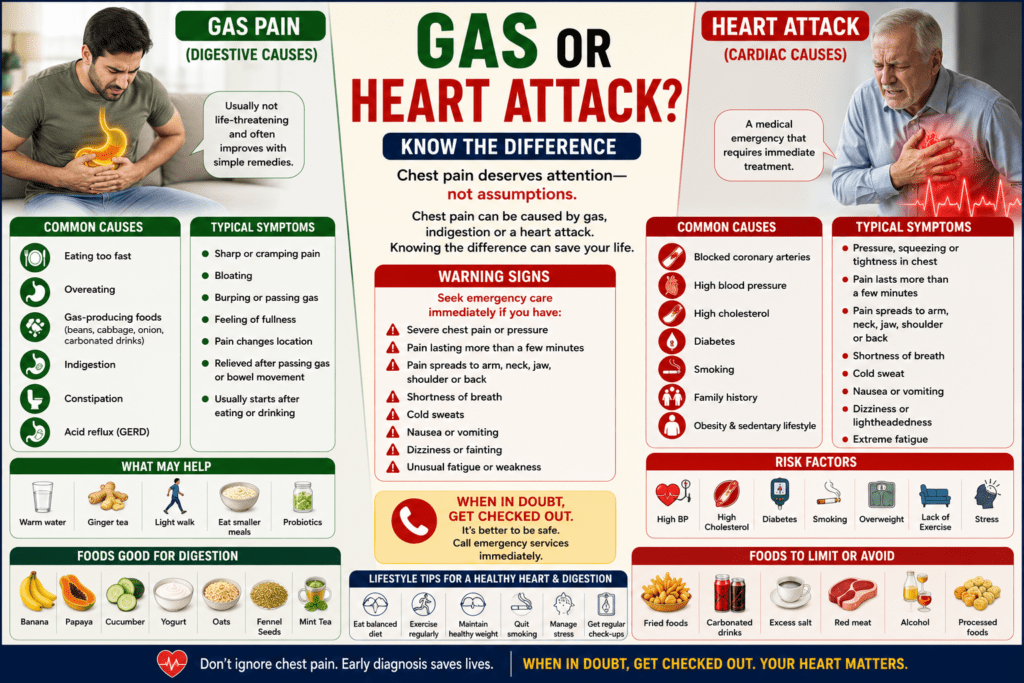
Gas or Heart Attack? Know the Difference
Chest pain deserves attention—not assumptions.
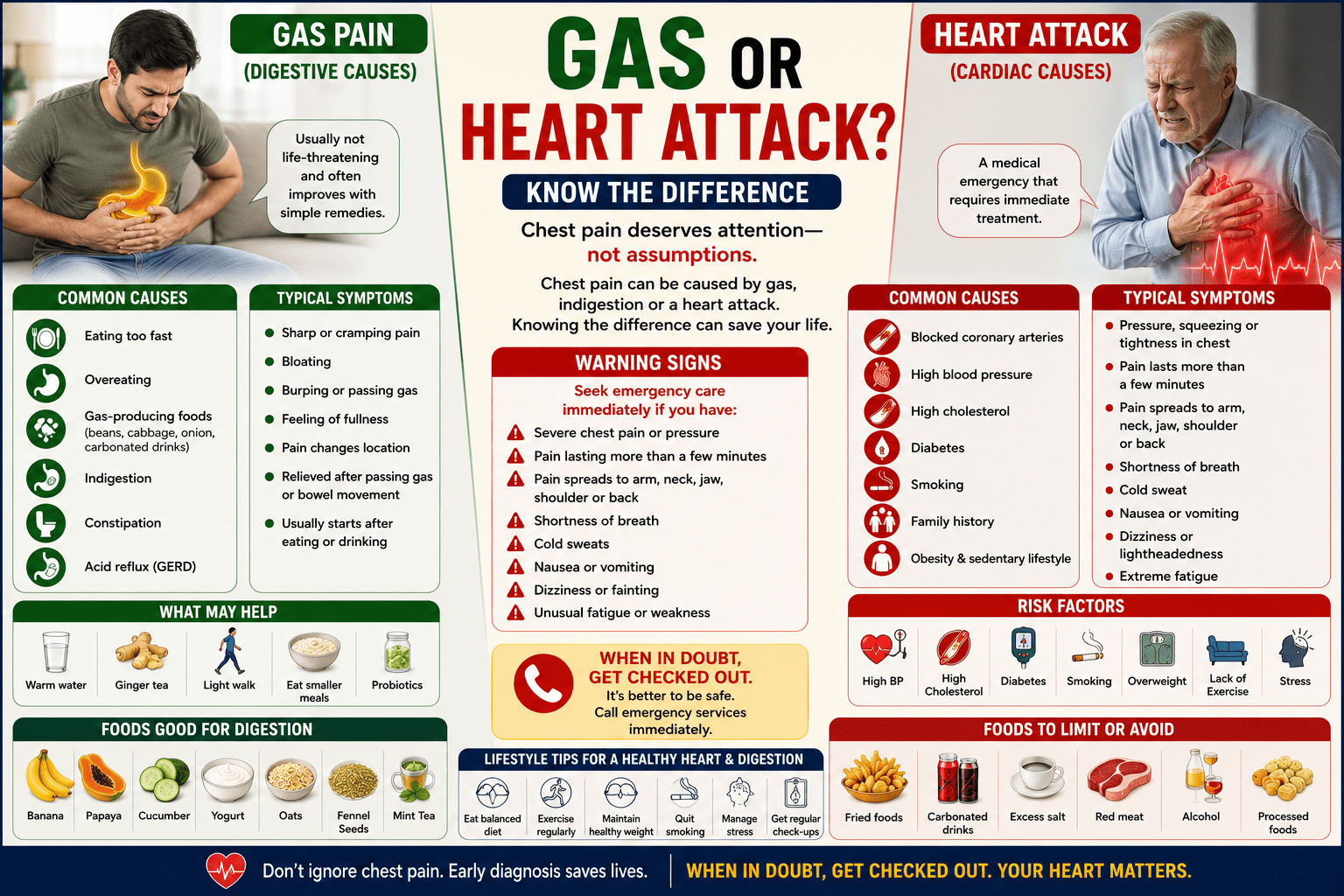
Chest pain is one of the most alarming symptoms a person can experience. Many people immediately wonder whether it is “just gas” or something much more serious, such as a heart attack. While trapped gas or acid reflux can indeed cause chest discomfort, assuming chest pain is only due to indigestion can be dangerous and even life-threatening.
Every year, countless people delay seeking medical care because they believe their chest pain is caused by gas, heartburn, or muscle strain. Unfortunately, some heart attacks present with symptoms that closely resemble indigestion or gastric discomfort. On the other hand, digestive conditions such as acid reflux, gastritis, and excessive gas can also produce pain that feels surprisingly similar to heart-related discomfort.
Understanding the differences between gas pain and heart attack symptoms can help you make informed decisions, but chest pain should never be self-diagnosed. If there is any doubt, seeking immediate medical attention is always the safest choice.
In this comprehensive guide, we’ll explain the differences between gas pain and heart attacks, common digestive causes of chest pain, warning signs that require emergency care, diagnosis, treatment, and ways to reduce digestive discomfort.
Why Can Gas Cause Chest Pain?
Gas naturally forms during digestion. Normally, it passes through the digestive tract without causing significant discomfort. However, excessive gas or trapped gas can stretch the stomach or intestines, creating pressure that may radiate toward the chest.
Gas-related chest discomfort may occur due to:
- Swallowing excess air while eating
- Eating too quickly
- Carbonated beverages
- Certain gas-producing foods
- Constipation
- Irritable Bowel Syndrome (IBS)
- Indigestion
- Acid reflux
Because the digestive organs are located close to the chest, the pain can sometimes feel intense.
What Does Gas Pain Feel Like?
Gas pain often has certain characteristics.
Common symptoms include:
- Sharp or cramping pain
- Bloating
- Feeling of fullness
- Frequent burping
- Passing gas relieves discomfort
- Pain that changes location
- Abdominal swelling
- Symptoms after eating
Gas pain may come and go rather than remain constant.
What Is a Heart Attack?
A heart attack occurs when blood flow to part of the heart muscle becomes blocked, usually due to a blood clot forming in a narrowed coronary artery.
Without prompt treatment, heart muscle begins to die.
A heart attack is a medical emergency that requires immediate care.
Common Symptoms of a Heart Attack
Not everyone experiences the same symptoms.
Classic symptoms include:
- Pressure, squeezing, or tightness in the chest
- Pain lasting more than a few minutes
- Pain spreading to the left arm, shoulder, neck, jaw, or back
- Shortness of breath
- Cold sweating
- Nausea
- Vomiting
- Dizziness
- Extreme fatigue
- Feeling faint
Women, older adults, and people with diabetes may have less typical symptoms, such as nausea, unusual fatigue, or discomfort in the back or jaw.
Gas Pain vs. Heart Attack: Key Differences
| Gas Pain | Heart Attack |
|---|---|
| Often starts after eating | Can occur at any time, including during rest or exertion |
| Usually relieved by burping or passing gas | Not relieved by passing gas |
| Often associated with bloating | Often associated with sweating and breathlessness |
| Pain may move around the abdomen | Pain usually feels like pressure or heaviness in the chest |
| May improve with antacids in some cases | Does not reliably improve with antacids |
| Rarely causes severe shortness of breath | Often accompanied by shortness of breath |
Although these differences are helpful, they are not enough to rule out a heart attack.
Can Acid Reflux Mimic a Heart Attack?
Yes.
Gastroesophageal Reflux Disease (GERD) can cause:
- Burning chest pain
- Acid taste in the mouth
- Regurgitation
- Chest discomfort after meals
- Pain when lying down
Because GERD-related chest pain can resemble heart pain, medical evaluation is important, especially if symptoms are new or severe.
Digestive Conditions That Can Cause Chest Pain
Several gastrointestinal disorders can mimic heart-related discomfort.
GERD (Acid Reflux)
One of the most common causes of non-cardiac chest pain.
Gastritis
Inflammation of the stomach lining may cause burning pain in the upper abdomen and lower chest.
Peptic Ulcers
Ulcers may cause burning discomfort after meals or when the stomach is empty.
Hiatal Hernia
Can contribute to reflux and chest discomfort.
Gallstones
Pain from the gallbladder may spread to the chest, shoulder, or upper back.
Esophageal Spasm
Abnormal contractions of the esophagus may cause severe chest pain that resembles angina.
Who Is More Likely to Have a Heart Attack?
Risk factors include:
- High blood pressure
- Diabetes
- High cholesterol
- Smoking
- Obesity
- Family history of heart disease
- Physical inactivity
- Older age
- Chronic kidney disease
Having these risk factors increases the importance of seeking prompt evaluation for chest pain.
Warning Signs You Should Never Ignore
Call emergency medical services immediately if chest pain is accompanied by:
- Pain lasting longer than a few minutes
- Pain spreading to the arm, jaw, shoulder, or back
- Severe shortness of breath
- Cold sweating
- Fainting
- Sudden weakness
- Persistent nausea or vomiting
- Confusion
- Chest pressure or tightness
Do not drive yourself if you suspect a heart attack. Seek emergency medical assistance immediately.
How Doctors Diagnose the Cause of Chest Pain
The first priority is ruling out a heart attack.
Possible tests include:
Electrocardiogram (ECG)
Measures the heart’s electrical activity.
Blood Tests
Cardiac biomarkers such as troponin help detect heart muscle injury.
Chest X-ray
May identify lung-related causes of chest pain.
Echocardiogram
Evaluates heart function and structure.
Coronary Angiography
Used when blocked coronary arteries are suspected.
If heart disease is excluded, additional tests may include:
- Upper GI Endoscopy
- Abdominal Ultrasound
- CT Scan
- Esophageal pH Monitoring
- Stool tests (when appropriate)
Treatment for Gas Pain
Treatment depends on the underlying cause.
Your doctor may recommend:
- Dietary modifications
- Eating smaller meals
- Avoiding gas-producing foods
- Managing constipation
- Treating acid reflux or gastritis
- Medications for IBS when indicated
Avoid self-medicating repeatedly without understanding the cause of recurrent chest discomfort.
Lifestyle Tips to Reduce Gas and Digestive Chest Pain
Eat Slowly
Chew food thoroughly and avoid swallowing excess air.
Avoid Carbonated Drinks
These beverages increase gas formation.
Limit Trigger Foods
Some people experience symptoms after:
- Beans
- Onions
- Cabbage
- Broccoli
- Carbonated beverages
- Fried foods
Food triggers vary between individuals.
Exercise Regularly
Walking after meals may support healthy digestion.
Maintain a Healthy Weight
Weight management reduces both acid reflux and cardiovascular risk.
Quit Smoking
Smoking increases the risk of both GERD and heart disease.
Limit Alcohol
Excess alcohol may worsen digestive symptoms and increase cardiovascular risks.
Common Myths
Myth: Chest pain after eating is always gas.
Fact: A heart attack can occur after meals and may resemble indigestion.
Myth: If burping helps, it can’t be a heart attack.
Fact: Some people having a heart attack may also burp. Relief after burping does not completely rule out a heart problem.
Myth: Heart attacks always cause severe crushing pain.
Fact: Some heart attacks cause only mild discomfort, nausea, or fatigue—especially in women, older adults, and people with diabetes.
Myth: Young people never have heart attacks.
Fact: While less common, heart attacks can occur in younger adults, particularly those with significant risk factors.
Frequently Asked Questions
Can gas cause pain on the left side of the chest?
Yes. Trapped gas can occasionally cause discomfort on the left side of the chest. However, left-sided chest pain should always be evaluated if there is concern about a heart problem.
Can a heart attack feel like acidity?
Yes. Some heart attacks are mistaken for indigestion or acid reflux.
Should I take an antacid first?
If chest pain is severe, persistent, associated with sweating, breathlessness, or radiating pain, seek emergency medical care immediately rather than trying home remedies first.
How long does gas pain last?
Gas pain often improves after burping, passing gas, or having a bowel movement. Persistent or worsening chest pain requires medical evaluation.
When Should You See a Gastroenterologist?
If heart disease has been ruled out and you continue to experience:
- Frequent acid reflux
- Recurrent chest discomfort after meals
- Bloating
- Difficulty swallowing
- Persistent upper abdominal pain
- Black stools
- Vomiting blood
A gastroenterologist can evaluate you for digestive conditions such as GERD, gastritis, ulcers, or other gastrointestinal disorders.
Final Thoughts
Chest pain should never be dismissed as “just gas” without proper evaluation. While digestive problems such as acid reflux, trapped gas, gastritis, or peptic ulcers can certainly cause chest discomfort, heart attacks can present with similar symptoms and require immediate treatment.
The safest approach is to treat new, severe, or unexplained chest pain as a medical emergency, especially if it is associated with shortness of breath, sweating, nausea, dizziness, or pain radiating to the arm, jaw, or back.
If a heart-related cause has been excluded and your symptoms persist, consulting a gastroenterologist can help identify digestive disorders and provide appropriate treatment.
When it comes to chest pain, it’s always better to be evaluated and reassured than to ignore a potentially life-threatening condition. Early medical attention can save lives.