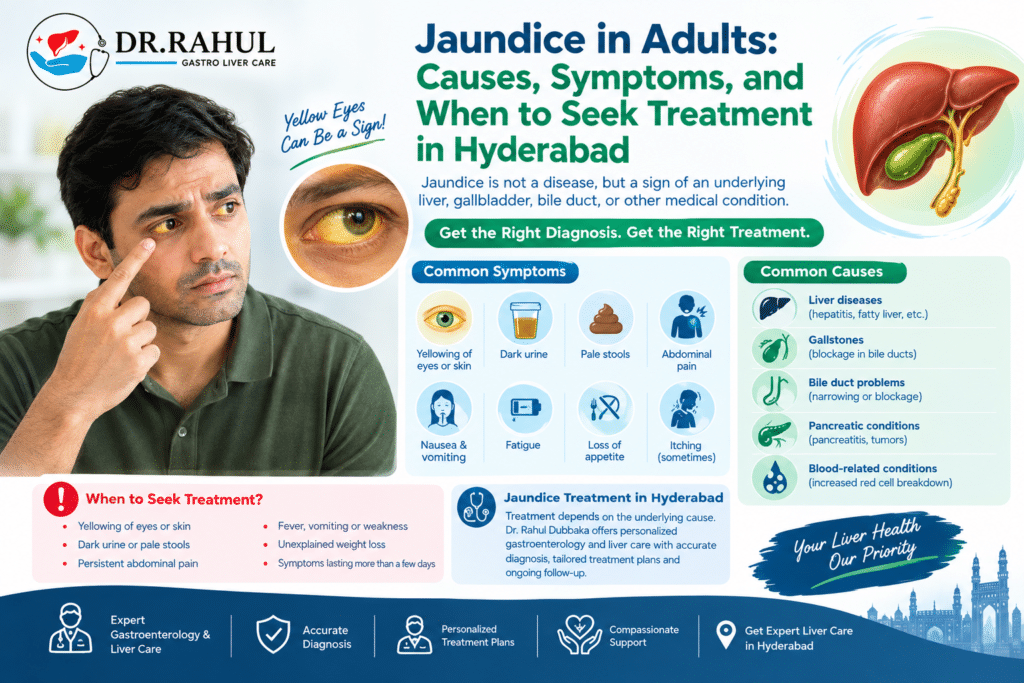
Jaundice in Adults: Causes, Symptoms, and When to Seek Treatment in Hyderabad
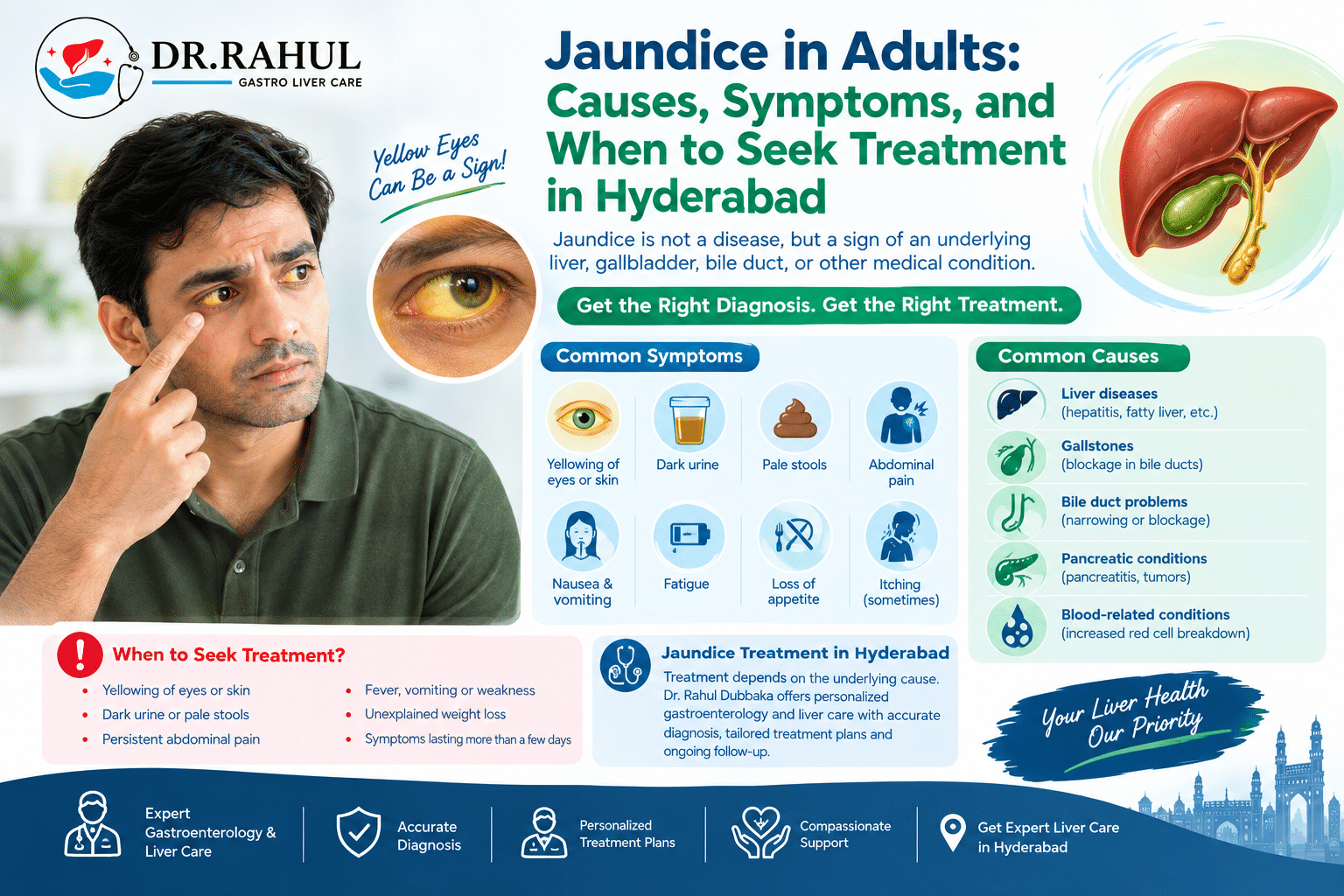
Jaundice is a condition in which the skin and whites of the eyes become yellow because of increased bilirubin in the blood. It is not a disease itself but can be a sign of an underlying liver, gallbladder, bile duct, blood, or other medical condition. Early evaluation can help identify the cause and guide appropriate treatment.
If you are looking for jaundice treatment in Hyderabad, Dr. Rahul Dubbaka provides personalized gastroenterology and liver care focused on accurate diagnosis and condition-specific treatment.
What Is Jaundice?
Bilirubin is a yellow substance produced when red blood cells are broken down. Normally, the liver processes bilirubin and helps remove it from the body through bile.
When bilirubin builds up, it can cause:
- Yellowing of the eyes or skin
- Dark urine
- Pale or clay-colored stools
- Fatigue
- Nausea
- Loss of appetite
- Abdominal discomfort
- Itching in some cases
The symptoms and their severity depend on the underlying cause.
Common Causes of Jaundice in Adults
1. Liver Diseases
Conditions affecting the liver can interfere with bilirubin processing. Examples include viral hepatitis, fatty liver-related liver disease, alcohol-related liver disease, and other liver disorders.
The appropriate evaluation depends on the individual’s symptoms, medical history, and test results.
2. Hepatitis
Hepatitis means inflammation of the liver. Viral hepatitis, including hepatitis A, B, and C, can cause jaundice along with fatigue, nausea, abdominal discomfort, dark urine, and loss of appetite.
Testing can help determine whether hepatitis is responsible for the symptoms.
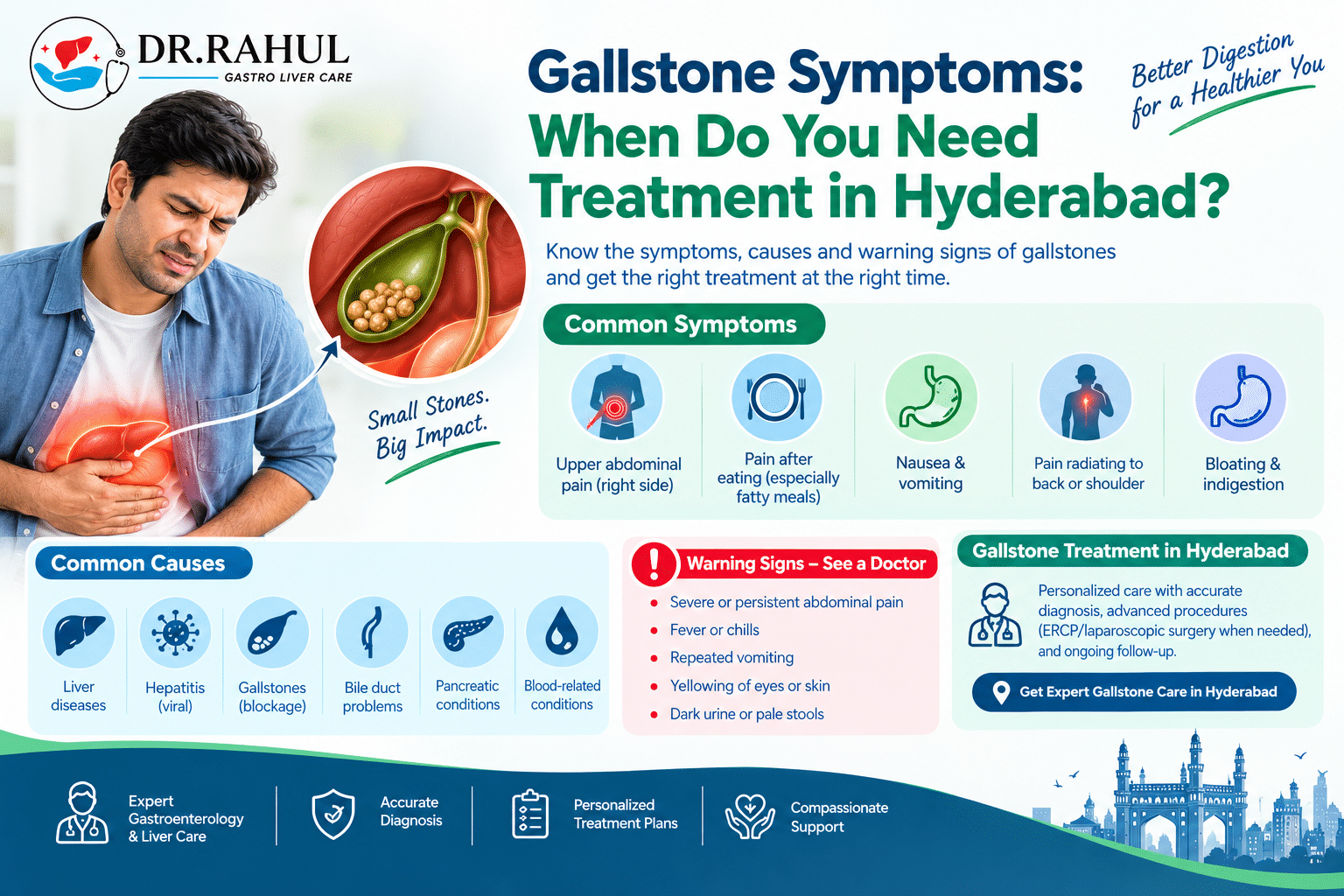
3. Gallstones
Gallstones can sometimes block the bile ducts and prevent bile from flowing normally. A blockage may result in jaundice, abdominal pain, dark urine, and pale stools.
When a bile duct stone is suspected, additional imaging or procedures such as ERCP may be considered depending on the clinical situation.
4. Bile Duct Problems
Narrowing or blockage of the bile ducts can interfere with bile flow and cause jaundice. Causes may include gallstones, inflammation, strictures, or other conditions.
Specialized imaging and gastroenterology evaluation may be required to identify the source of obstruction.
5. Pancreatic Conditions
Conditions affecting the pancreas can sometimes compress or obstruct the bile duct, leading to jaundice. Additional symptoms may include abdominal pain, nausea, loss of appetite, or unexplained weight changes.
Further evaluation is important when jaundice occurs alongside persistent digestive symptoms.
6. Blood-Related Conditions
Certain disorders involving increased breakdown of red blood cells can increase bilirubin levels and contribute to jaundice. Doctors may use blood tests to determine whether the bilirubin elevation is related to increased red-cell breakdown or a liver or bile-flow problem.
Symptoms of Jaundice You Should Watch For
The most recognizable symptom is yellowing of the eyes or skin. Other symptoms may include:
- Dark-colored urine
- Pale stools
- Persistent fatigue
- Nausea or vomiting
- Loss of appetite
- Abdominal pain
- Fever
- General weakness
- Itching
Jaundice can have many different causes, so symptoms alone cannot establish the diagnosis.
When Should You Seek Treatment for Jaundice?
You should arrange medical evaluation if you notice unexplained yellowing of your eyes or skin, particularly if it is accompanied by dark urine, pale stools, abdominal pain, fever, vomiting, or significant weakness.
Jaundice with severe abdominal pain, confusion, persistent vomiting, high fever, bleeding, or marked drowsiness requires urgent medical attention.
How Is Jaundice Diagnosed?
A doctor may first review your symptoms, medical history, medications, and physical examination findings. Investigations may include:
- Bilirubin testing
- Liver function tests
- Complete blood count
- Hepatitis testing when indicated
- Abdominal ultrasound
- CT or MRI when appropriate
- Specialized bile duct investigations
The tests selected depend on the suspected cause.
Jaundice Treatment in Hyderabad
There is no single treatment for jaundice because treatment depends on its underlying cause.
For example, jaundice caused by a bile duct stone may require treatment to relieve the obstruction. Jaundice associated with hepatitis, liver disease, or another condition requires management appropriate to that diagnosis.
Dr. Rahul Dubbaka provides gastroenterology and liver care with an emphasis on accurate diagnosis, personalized treatment, dietary guidance, and appropriate follow-up.
Can Diet Help During Jaundice?
Dietary needs can vary depending on the underlying condition and liver function. Instead of following an unverified “jaundice diet,” patients should discuss their nutritional needs with their doctor.
General measures may include:
- Maintaining adequate hydration
- Eating balanced, nutritious meals
- Avoiding alcohol
- Avoiding unnecessary supplements or medications
- Following the dietary recommendations provided by your healthcare professional
Why Choose Dr. Rahul Dubbaka?
With 9+ years of experience, 2,546+ patients, and 3.5K+ families, Dr. Rahul Dubbaka provides personalized gastroenterology care focused on accurate diagnosis, tailored treatment plans, compassionate support, and evidence-based medical practices.
His care covers liver and digestive conditions, including jaundice and related liver or bile duct disorders.
Frequently Asked Questions
What is the main symptom of jaundice?
Yellowing of the eyes and skin is the most recognizable symptom. Dark urine and pale stools may also occur depending on the cause.
Is jaundice always caused by a liver problem?
No. Jaundice can result from liver disease, bile duct obstruction, gallstones, increased breakdown of red blood cells, and other conditions.
Can gallstones cause jaundice?
Yes. A gallstone that blocks the common bile duct can interfere with bile flow and cause jaundice.
Which doctor should I see for jaundice in Hyderabad?
A gastroenterologist can evaluate jaundice and investigate possible liver, gallbladder, bile duct, and digestive causes.
Is jaundice an emergency?
Jaundice should be medically evaluated. Severe abdominal pain, confusion, persistent vomiting, high fever, or significant weakness alongside jaundice may require urgent medical attention.
Conclusion
Jaundice is a symptom that should not be ignored. Yellow eyes or skin, dark urine, pale stools, abdominal pain, and other associated symptoms can have several causes, ranging from hepatitis and liver disease to gallstones and bile duct obstruction.
If you are searching for jaundice treatment in Hyderabad, timely evaluation by a gastroenterologist can help identify the underlying cause and determine the appropriate treatment plan. Dr. Rahul Dubbaka provides personalized gastroenterology and liver care based on individual patient needs.